
Grains & legumes
Whole Wheat Flour
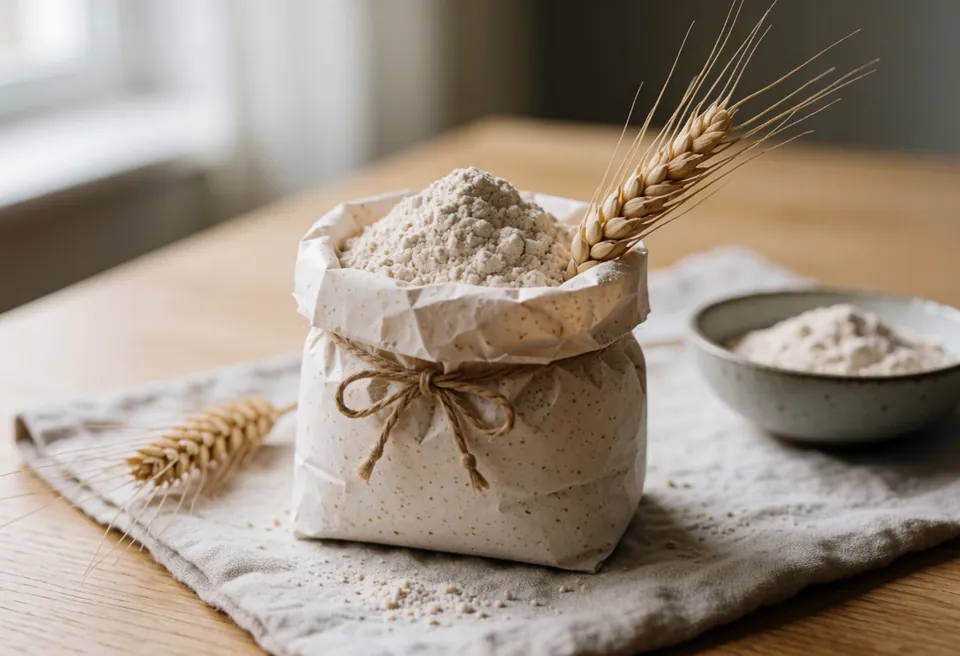
Whole wheat flour is milled from the entire wheat kernel, including the bran and germ. It's used for bread, baked goods, and pancakes with a denser texture.
370 kcal per 100 g
Nutrition per 100 g
370 kcal
| Protein | 15.1 g |
|---|---|
| Fat | 2.7 g |
| Carbs | 71.2 g |
| Fiber | 10.6 g |
Source: USDA FoodData Central, 2026-09-21. Per 100 g of product.
Good to know: Whole Wheat Flour
Whole wheat flour is wheat that keeps its bran and germ instead of losing them to the sieve. That's the whole story of how it behaves. The bran comes as little flecks, and you'll see them scattered through the dough as you knead. It stays heavier, denser, less stretchy than dough made from white flour, no matter how long you work it. That's not a flaw. That's just what bran does to a loaf.
Choose it by smell first. Good whole wheat flour smells faintly sweet, almost nutty. If it smells sharp, like old cardboard or paint, the oil in the germ has gone rancid — walk away. Look at it too: fresh flour looks lively, with a clean, even tan to light brown color, no clumping, no dull or dusty look.
Some people say whole wheat flour makes bread that won't rise. No! It rises less, with a tighter crumb and a darker crust, not because something is wrong with it. That misconception leads bakers to dump in extra yeast or sugar to force a rise this flour was never built to give — and the bread ends up smelling of yeast instead of wheat, for nothing.
Store it cold. The germ has fat in it, and fat turns on you if you let it sit in a warm cupboard.