
 AI photo
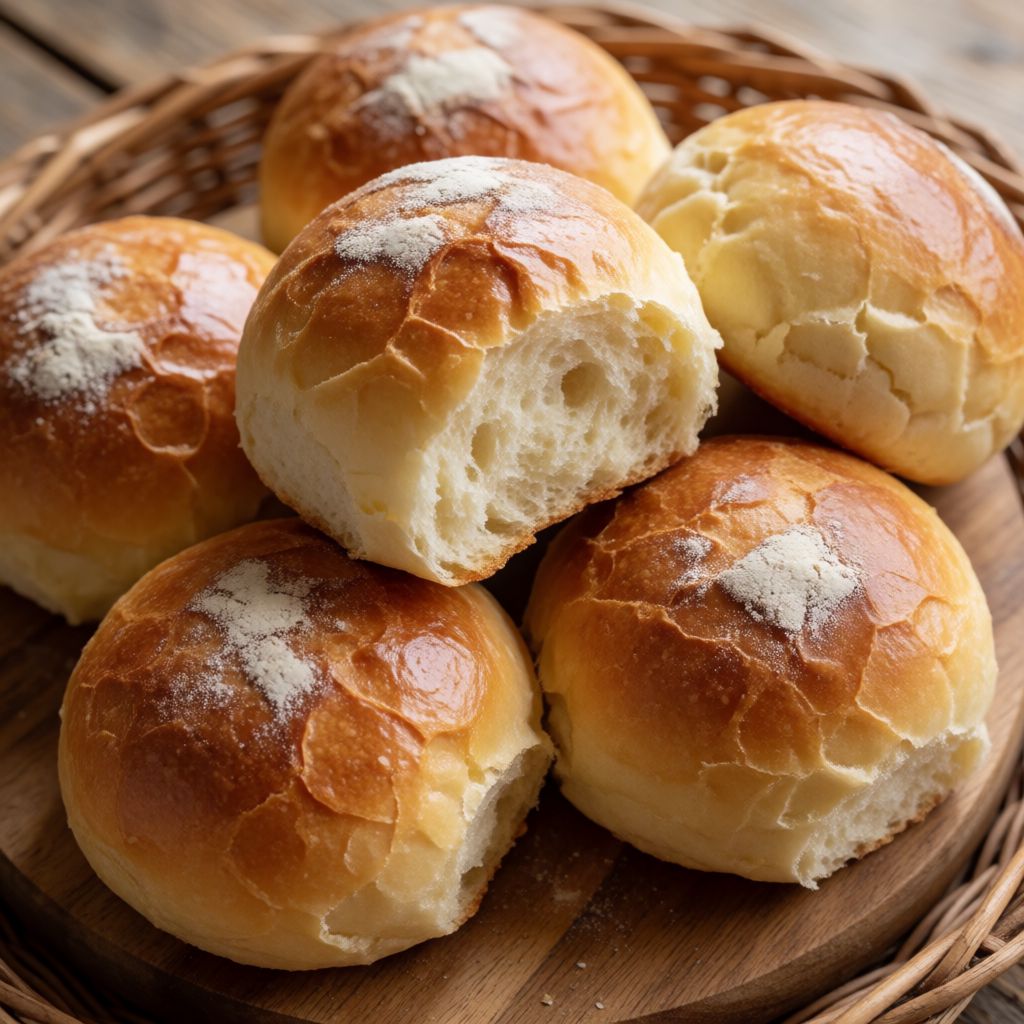
The World's Best Homemade Bread Rolls – And the Simplest
Simple homemade bread rolls made from just four ingredients, left to rise overnight for a soft, flavourful crumb.
Labels are worked out automatically from the ingredients and can be wrong. Check the packaging if it matters to you.
Ingredients
- 500 ml Water
- 5 g Yeast
- 2 tsp Salt
- 400 g Plain Flour
- 250 g Wholemeal Flour





Steps
Mix the water with the yeast. Add the plain flour together with the salt, then stir in the remaining flour. Mix until everything just comes together — there's no need to knead for long.
5 minCover the bowl with a lid or a clean tea towel. Leave on the kitchen counter overnight, or for at least 10 hours.
600 minHeat the oven to 250 °C. Tip the dough onto a floured work surface, fold it 2–4 times and cut into even pieces.
Bake the rolls for 10 minutes at 250 °C.
10 minLower the temperature to 230 °C and bake for a further 10–15 minutes.
12 min
What was changed
The oven setting changes partway through baking , exactly as in the original recipe.
This is bread for people who think they don't have time to bake bread. The trick is simple: you swap your arms for the clock. Kneading does one job only — it stretches and aligns the gluten strands so the dough can hold gas. Ten hours of sitting quietly under a tea towel does exactly the same job, just slower and for free. Every fold the dough makes on its own, settling and spreading in the bowl overnight, is a knead you didn't have to do.
Some say good bread needs a warm airing cupboard to rise properly. No — because warmth only speeds up fermentation, it doesn't improve it. A cool kitchen counter overnight gives the yeast time to work gently, converting starch to sugar and sugar to the mild acids that give the crumb its flavour. Rush that stage with heat and you get a loaf that's risen but tastes of nothing much. Patience here isn't a virtue, it's an ingredient, and it's the main one.
What decides whether these rolls work is wetness and time, in that order. The dough should be slack, almost too sticky to shape with your hands — that's not a mistake, that's what lets it rise without kneading. If your dough feels firm and easy to handle like pastry, you've added too much flour and you've built yourself a dense roll by accident.
Water is doing more work here than it looks like. Five hundred millilitres against six hundred and fifty grams of flour is a wet dough — close to three-quarters of its weight in water. That ratio is the whole reason you don't need to knead: a slack dough lets gluten strands find each other on their own as the dough slumps and resettles over the night, instead of you forcing them together with your knuckles. Less water, and you're back to needing muscle.
Five grams of yeast for that much flour looks stingy, and it is meant to. It has ten hours to work, not ten minutes, so it only needs to be a spark, not a bonfire. Too much yeast with that much time and the dough rises fast, falls back, and tastes faintly sour and boozy — that's the defect of over-fermentation, and it traces straight back to too much yeast or too warm a spot, never to the flour.
Salt does two jobs at once: it seasons, and it puts a brake on the yeast so a ten-hour rise doesn't turn into a six-hour collapse. That's why it goes in with the flour here rather than held back — with this much time on the clock, there's no danger of it stunning the yeast before the dough's had its chance.
The two flours split the work between them. Plain flour supplies most of the gluten — the scaffolding that traps the gas. Wholemeal brings bran and colour and a nuttier taste, but bran also cuts those gluten strands short, so the more of it you use, the denser and lower the roll. If all you've got is one flour, use it — any flour with enough protein to form a stretchy dough will do, strong bread flour included, you'll just need slightly less time because its gluten starts from a stronger position. What you're substituting for, always, is gluten strength, and time is the cheapest substitute there is.
Folding the dough two to four times before cutting isn't shaping for looks — it's knocking out some gas while keeping most of it, and tightening the surface so the rolls hold their shape in the oven instead of spreading into puddles. Cut them even so they bake at the same rate; a roll twice the size of its neighbour will still be doughy in the middle when the small ones are done. Forget counting minutes for doneness — tap the base of one, it should sound hollow, like knocking on a door, not dull like knocking on a table.
Twelve rolls from this amount, roughly fist-sized if you divide evenly — right for a Sunday roast table, good for mopping gravy, and they keep their crust better than a loaf because there's more surface to volume. None of this is complicated. It's slow, which in a flat with a normal oven and no steam injector is the one piece of bakery magic you actually have access to for free.