
Baking
Yeast
Yeast is a living microorganism that ferments dough, making it rise and become airy. It's used for baking bread, buns, and pastries.
105 kcal per 100 g
Nutrition per 100 g
105 kcal
| Protein | 8.4 g |
|---|---|
| Fat | 1.9 g |
| Carbs | 18.1 g |
| Fiber | 8.1 g |
Source: USDA FoodData Central, 2026-09-21. Per 100 g of product.
Good to know: Yeast
Listen, yeast is alive, and that's the whole point of it. It's a fungus, a living culture, and it eats sugar and breathes out carbon dioxide. That gas gets trapped in the gluten net of your dough, and the dough rises. No mystery, no magic — just a hungry microorganism doing its job. That's why yeast is fussy about temperature. Cold, it sleeps. Too hot, it dies. Warm milk or water, like a baby's bath, and it wakes up happy.
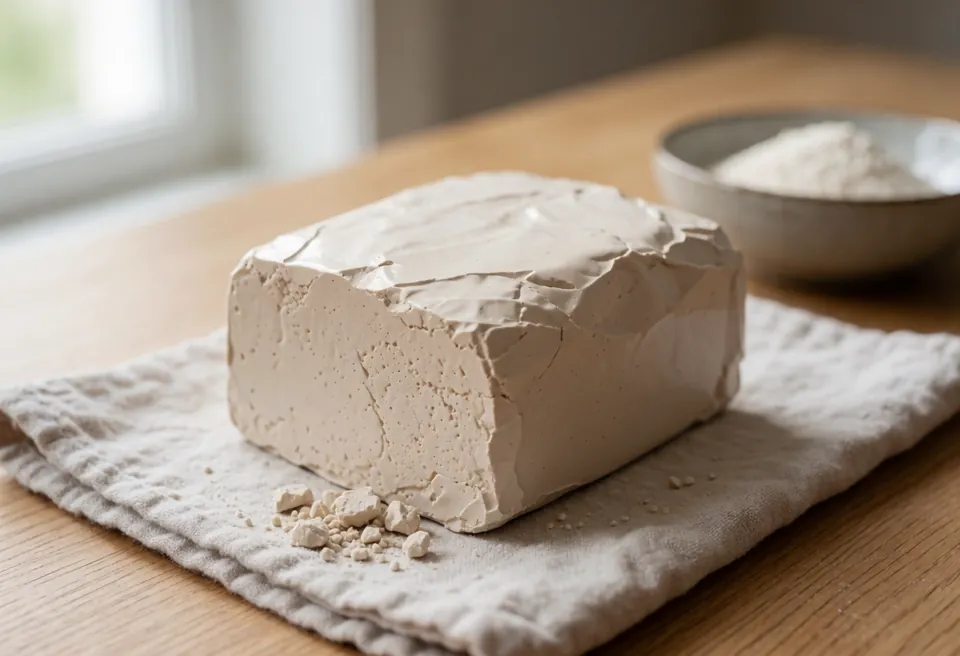
Choose fresh yeast by smell first — it should smell like bread already, faintly sweet, a little like fermentation, never sour or sharp. Look at it: pale beige, moist, crumbly, not slimy, not dry and cracked. Dry yeast should look like fine, even granules, no clumps.
Some people say salt has no business near yeast, that you must keep them at opposite ends of the bowl. No! Mix them thoughtfully, don't dump salt straight onto yeast, and you'll be fine. That nervous habit of keeping salt away from everything makes people undersalt the whole dough out of caution — and the bread rises beautifully, then tastes of nothing. Bite into it and you'll know at once: flat, dull, missing that quiet savor a well-salted loaf always has.
Keep yeast cold, use it while it's lively, and it will reward you every time.