
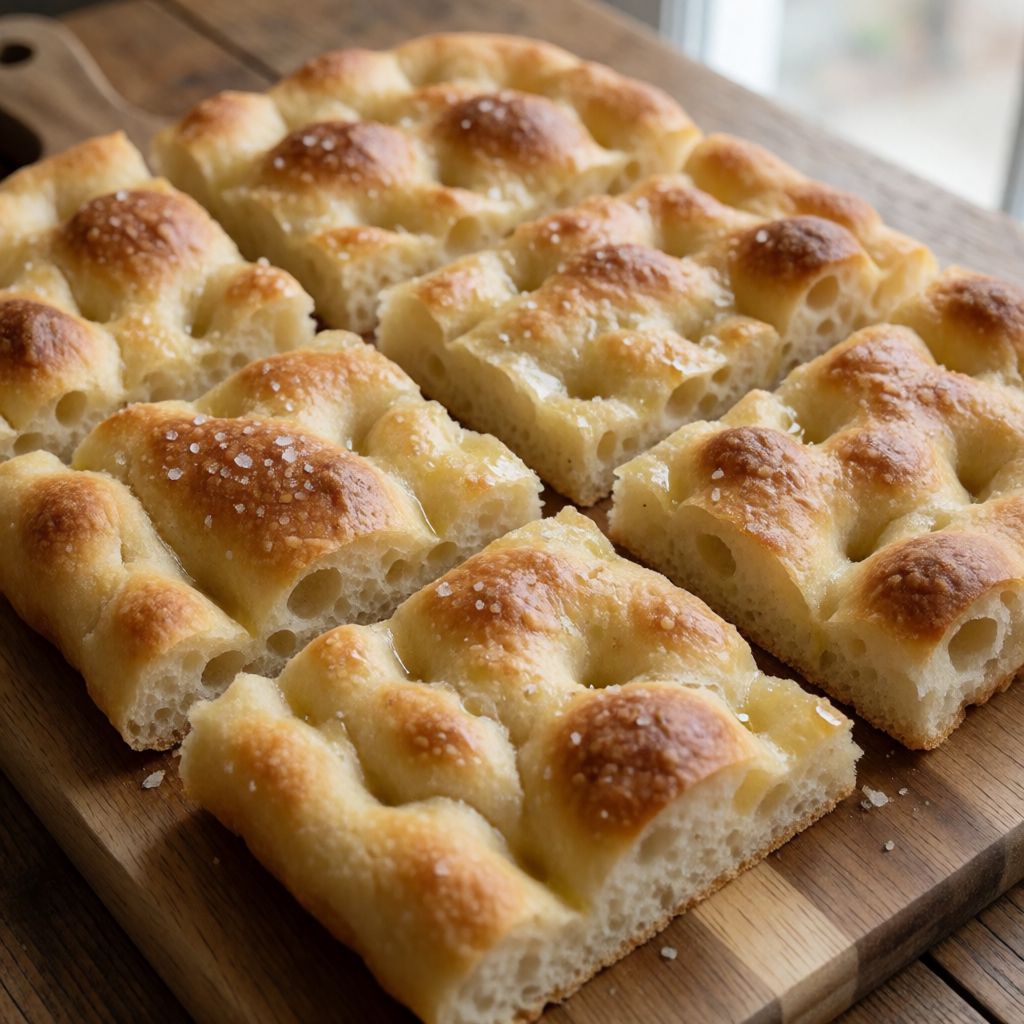
 AI photo
Yogurt Focaccia
A soft, pillowy focaccia enriched with yogurt and finished with olive oil and rosemary.
Labels are worked out automatically from the ingredients and can be wrong. Check the packaging if it matters to you.
Ingredients
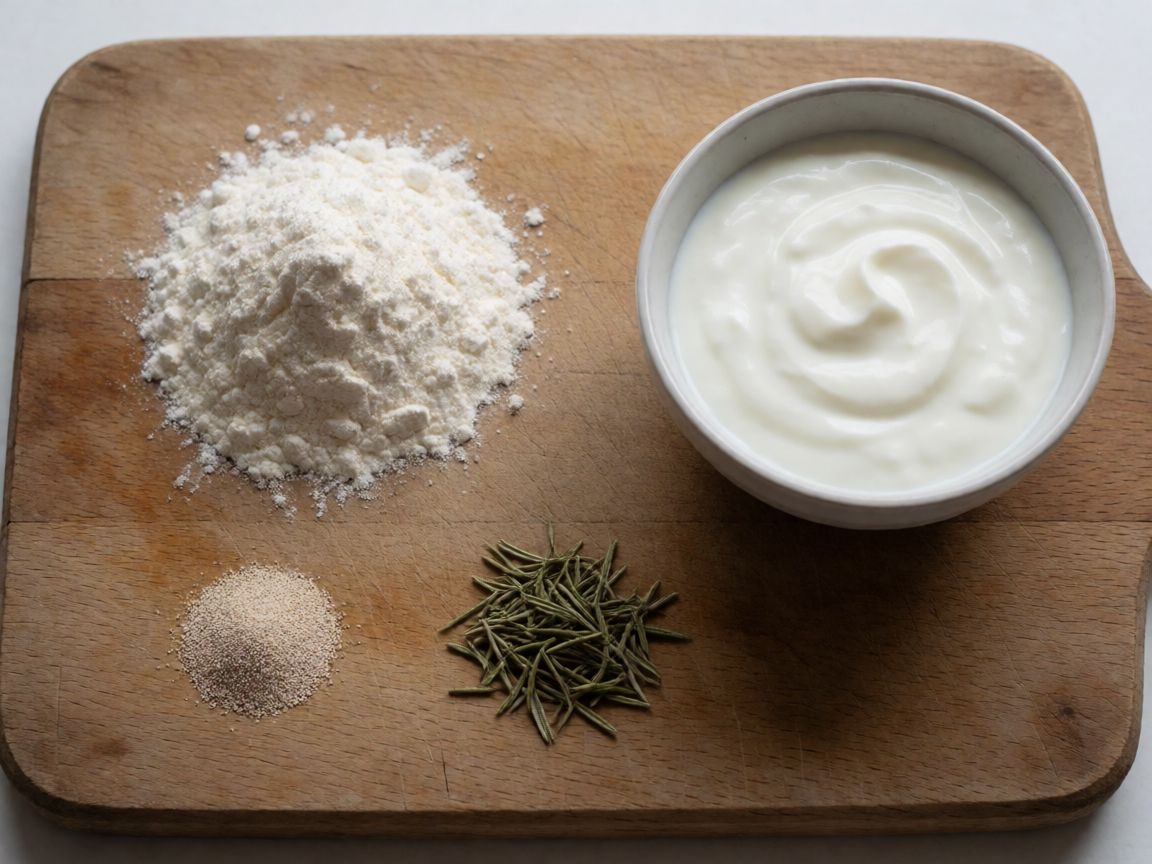
- 250 g Plain Flour
- 200 g Yogurt
- 5 g Dried Yeast
- 100 ml Water warm
- 2 tbsp Olive Oil
- Salt to taste
- Rosemary to taste, or oregano if preferred







Steps
Pour the warm water into a bowl, add the dried yeast, stir and leave for 10 minutes.
10 minAdd the flour, yogurt, olive oil and a pinch of salt, and mix thoroughly until you get a soft dough.
Cover the bowl with a towel and leave to rise for two hours, until the dough has doubled in size.
120 minGrease a baking tin with oil, place the dough in it and stretch it out to the edges with your fingers.
Sprinkle the surface with coarse salt and rosemary, and bake in an oven preheated to 180°C for 15-20 minutes until golden.
18 min
Focaccia, in its proper home, is a scrap of bread dough someone flattened, oiled and salted to find out if the oven was hot enough yet — bakers in Liguria used it to test the fire before risking the real loaves. This version swaps half the liquid for yogurt. That's not tradition, that's a flat with a fridge full of yogurt and no sourdough culture, looking for the same softness and a bit of tang without the three-day wait. It works. The mechanism doesn't care where the acid came from.
What decides whether this comes out right is not minutes, it's three moments you can feel with your hands. First: the water for the yeast has to be warm like bathwater on your wrist, not hot — hot kills the yeast outright, cold just leaves it asleep, and either way you get a flat slab instead of a risen one. Second: when you stretch the dough into the tin, it should give under your fingers like warm wax, not tear like a sheet of paper. If it tears, the dough was too dry or you rushed the rise — gluten needs the full two hours to relax, not just to inflate. Third: the oven must already be at heat when the dough goes in. A cold oven creeping up to temperature gives the crust time to form before the last burst of yeast gas pushes the crumb up — so you get a dense, flat biscuit instead of something full of holes.
Flour: plain flour, nothing fancier needed, because you're not after the tall, chewy structure of a strong bread flour — the yogurt and oil are already softening the crumb, so a high-protein flour would just fight them and make the dough tougher to stretch by hand. If all you have is self-raising, leave out any extra raising agent elsewhere in your head — you won't need it, the yeast is doing the lifting.
Yogurt: plain, full-fat if you can, because the fat carries flavour and keeps the crumb from drying into cardboard once it's baked. The job it does is twofold — moisture that doesn't thin the dough the way plain water would, and a mild acidity that relaxes gluten slightly, which is why this dough stretches by hand instead of springing back and tearing. No yogurt in the house? Sour cream does the same job, or a splash of buttermilk topped up with a bit less water — look for something cultured and a little fatty, that's the criterion, not the brand name on the pot.
Yeast: dried, 5g is roughly half a sachet — and it needs that ten minutes in warm water not as ritual but as proof of life. If it doesn't foam a little, it's dead, and no amount of extra rising time later will fix that; better to find out now than after you've mixed flour into it. Fresh yeast works too, roughly double the weight, crumbled into the same warm water.
Olive oil: this one earns its place by history as much as flavour — in Liguria it was the cheap local fat, so it went into everything, including the bread meant for the workers rather than the table. In your flat it does three jobs: greases the tin so the base doesn't weld itself to the metal, carries into the dough for tenderness, and fries the underside slightly as it bakes, which is where a good bit of the flavour actually comes from. Any neutral oil will grease the tin, but olive oil is the one with a flavour worth having here — rapeseed or sunflower would just be silent about it.
Salt and rosemary: coarse salt on top, not fine, because fine salt dissolves into the dough and disappears, while coarse salt sits as little bursts you actually taste as you eat. Rosemary (or oregano) goes on dry, scattered rather than buried, because herbs pushed down into wet dough steam rather than roast, and steamed rosemary tastes of nothing in particular.
On stretching the dough: use your fingers, oiled, not a rolling pin. A rolling pin compresses the gas pockets the two-hour rise just built — you'd be undoing the one slow thing you did right. Pushing with fingertips instead keeps those air pockets more or less intact, which is where focaccia's open, uneven crumb comes from.
This makes a flat loaf for four as bread alongside something else — a Sunday roast, a soup, cheese — not a meal by itself. And the two hours of rising genuinely are an ingredient, not dead time: walk away, do something else, and don't try to rush it with extra yeast or a warmer spot than the recipe gives you reason to use. Dough that's forced to rise fast with too much heat blows up with big uneven holes and collapses back down before it even reaches the oven.