Baking
Almond Flour
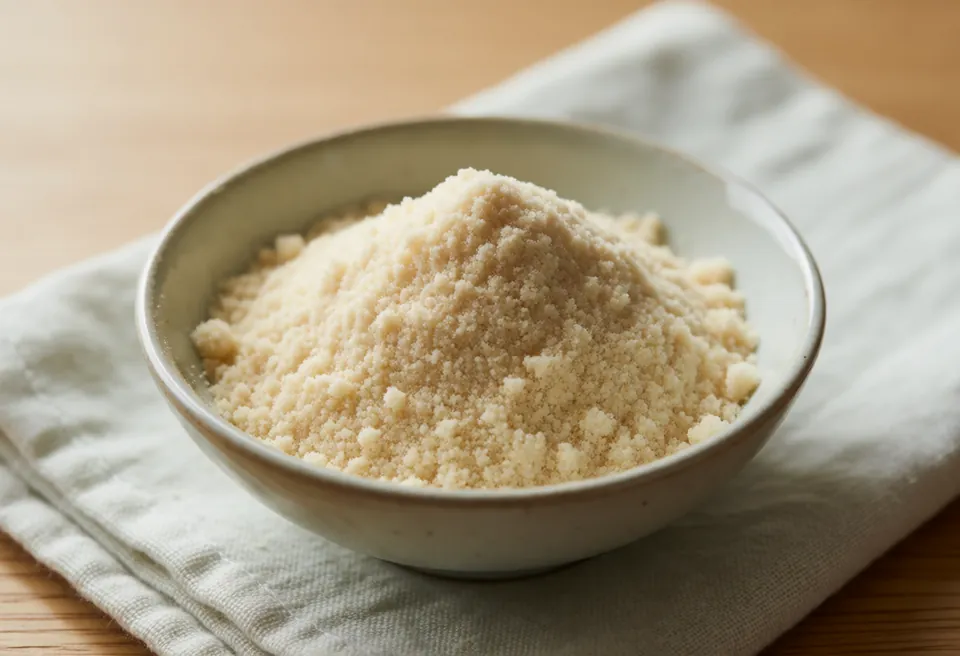
Almond flour is finely ground almonds used as a substitute for regular flour in baking, especially for cakes, cookies and other desserts.
622 kcal per 100 g
Nutrition per 100 g
622 kcal
| Protein | 26.2 g |
|---|---|
| Fat | 50.2 g |
| Carbs | 16.2 g |
| Fiber | 9.3 g |
Source: USDA FoodData Central, 2026-10-03. Per 100 g of product.
Good to know: Almond Flour
Let me tell you what Almond Flour really is: it's almonds, ground fine, nothing else. No wheat, no starch tricks — just nuts reduced to powder. That is why it never behaves like regular flour, and why you can't swap one for the other without thinking first.
Wheat flour gives structure because of gluten. Almond Flour has none. There is no gluten in a nut. So a cake made with Almond Flour alone won't rise and stretch the way a wheat sponge does — it will be dense, moist, close-crumbed, more like a good halva than a soufflé. That's not a flaw, that's its nature.
Choose it by smell, not by colour. Good Almond Flour smells sweet and milky, like fresh almonds just cracked open. If it smells sharp, bitter, almost like varnish — that's rancid fat, and with fifty grams of fat per hundred grams, it goes off fast. Keep it cold, keep it sealed.
Some people say Almond Flour is "just a gluten-free substitute, use it anywhere wheat flour goes." No! It has no gluten to replace what gluten does. Treat it as an exact equivalent and your batter turns loose and oily, your crumb heavy and damp. Respect what it is, and it rewards you generously.