
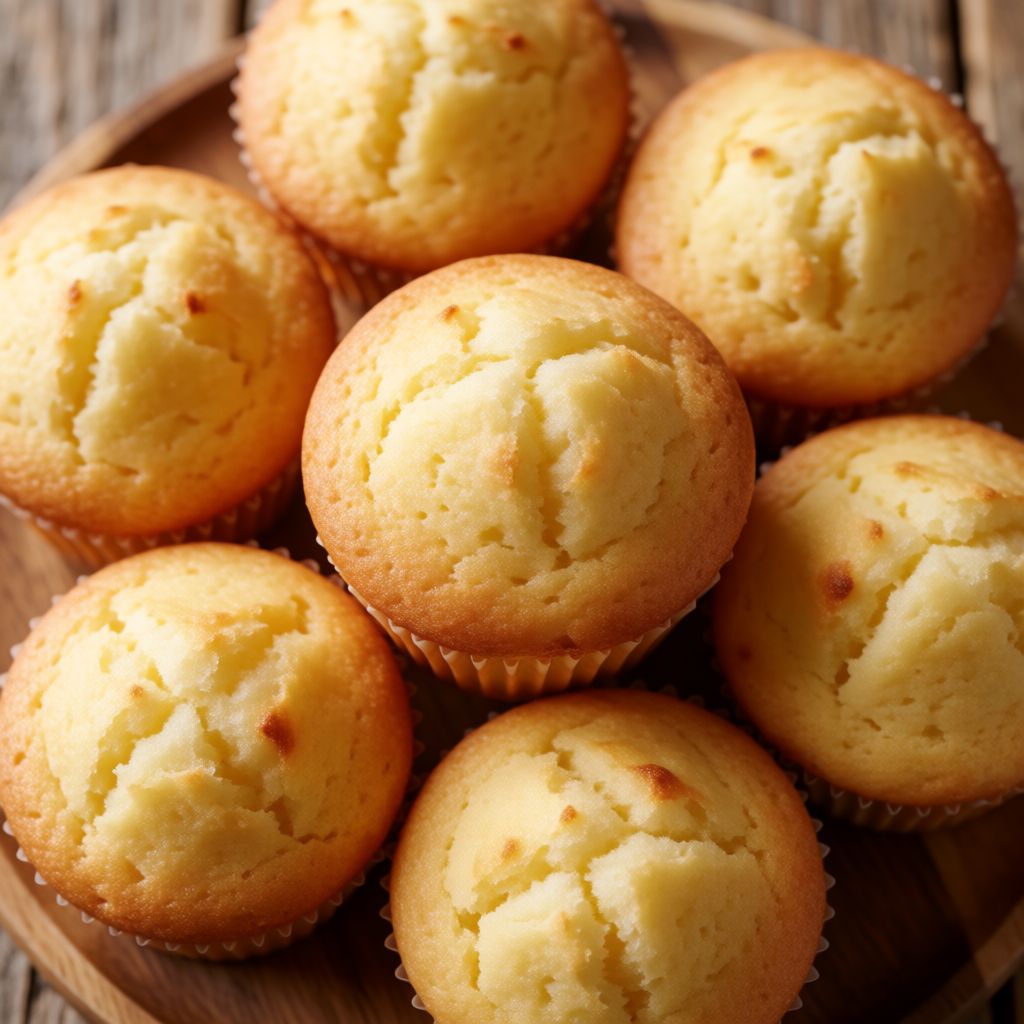
 AI photo
Cream Muffins
Light, fluffy muffins made with cream, perfect for a cosy afternoon treat.
Labels are worked out automatically from the ingredients and can be wrong. Check the packaging if it matters to you.
Ingredients
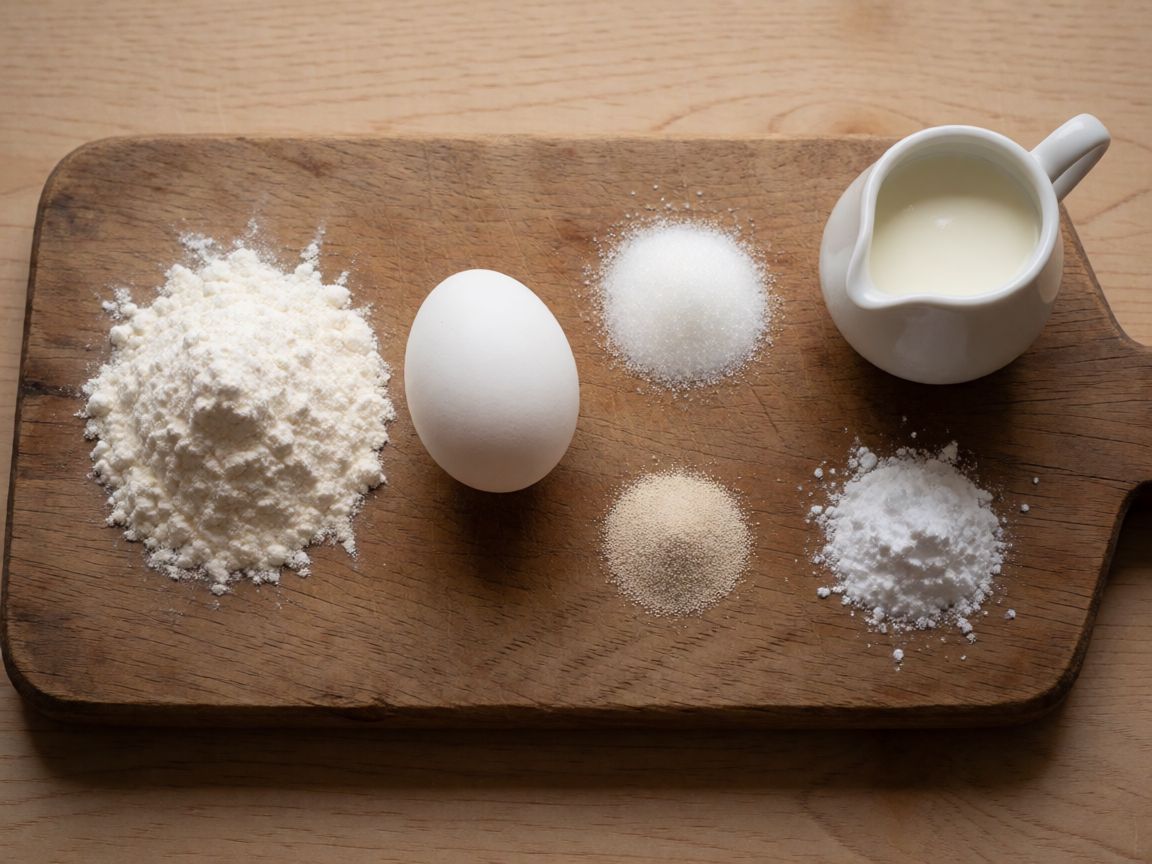
- 130 g Plain flour
- 1 pcs Egg
- 70 g Caster sugar
- 100 ml Double cream
- 1 pinch Salt
- 5-6 g Yeast
- Icing sugar to taste







Steps
Whisk the egg with the caster sugar using a mixer until light and fluffy.
Add the double cream and mix until smoothly combined.
Sift in the salt, yeast and flour, add to the egg mixture and mix into a thick batter.
Divide the batter among muffin cases, filling each about two-thirds full.
Bake in an oven preheated to 170°C for 23 minutes.
23 min
These aren't yeasted buns pretending to be fancy — they're a featherlight egg-and-cream batter baked in paper cases, closer kin to a small sponge cake than to bread. What decides whether they rise into a proper dome or sit flat and leaden is almost entirely decided before the oven door even opens: how much air you've beaten into the egg and sugar, and whether you trust what you see over what the dial says.
The egg-sugar stage is the engine. Whisked properly, the mixture goes pale, thick, and leaves a ribbon when you lift the beater — that's air trapped in a lattice of egg protein and sugar syrup. Everything you add after that, you're folding into a structure that already exists, not building one from scratch. Rush this stage and the batter stays thin and heavy no matter what else you do right.
Now the word that will trip you up: "yeast", 5–6 grams of it, going straight into a batter that gets no time to prove and goes straight into a 170°C oven. Some say this recipe calls for live yeast and you should let it sit on the counter first, the way you would with bread dough. No — real yeast at that weight, with no rise time, with cream and sugar diluting it, would do almost nothing in 23 minutes except sit there confused. What's actually meant — and what behaves exactly as written — is baking powder: a chemical raising agent that starts working the moment it meets liquid and heat, no waiting required. Treat it as yeast and let it "prove" on the side, and you've just dried out your batter for nothing.
Go through what each ingredient is actually doing and the choices get easier.
The egg is both lift and glue. Whisked with sugar it carries the air that makes these rise without any proper leavening muscle behind it; once baked, its protein sets and holds the crumb's shape so the muffin doesn't collapse the second it leaves the heat. One egg, one batch of three — don't scale this up without scaling the egg with it, or you'll have plenty of flour and cream looking for something to hold them together.
Caster sugar earns its place by being fine. It dissolves into the egg fast, which is what lets you reach that pale ribbon stage in a reasonable time without your arm giving up first. Granulated sugar will get there eventually, just slower, and if you don't whisk long enough you'll bite into a faint grit later — the sugar never fully melted into the foam. If caster isn't in the cupboard, blitz ordinary sugar for a few seconds, or just whisk longer and accept the wait.
Double cream is doing the job that butter and milk would normally split between them — fat for tenderness, liquid for a pourable batter — in one pour, no melting, no extra washing up. That's the actual case for using cream here rather than tradition for tradition's sake: fewer steps, fewer bowls, in a kitchen where you're not running a bakery, just a Sunday tea tray. The test for a substitute isn't a brand name, it's richness: anything thick enough to sit on a spoon rather than run off it will do the same work — full-fat crème fraîche at a pinch, or melted butter loosened with a splash of milk if cream's genuinely not there, though the crumb will be a touch less soft.
Plain flour, not strong or bread flour, because you want a tender crumb, not a chewy one — plain flour's lower protein means less gluten forms when you mix, so the crumb stays short rather than elastic. The pinch of salt isn't there to make these taste salty; it's there so the sugar doesn't taste flat and one-note, the way food tastes slightly wrong with none at all.
Icing sugar at the end is finishing, not baking — dust it once the muffins have cooled a little, not straight out of the oven, or the warmth melts it into a wet patch instead of a soft white dusting. And on the oven itself: domestic thermostats lie by five or ten degrees in either direction more often than people admit, so 170°C and 23 minutes is your starting point, not your proof — the dome, the spring-back, the skewer are what actually tell you. This is a small batch by design, three or so to a tray — exactly enough to go round with tea once the roast is resting and everyone's waiting for the gravy to be ready.