
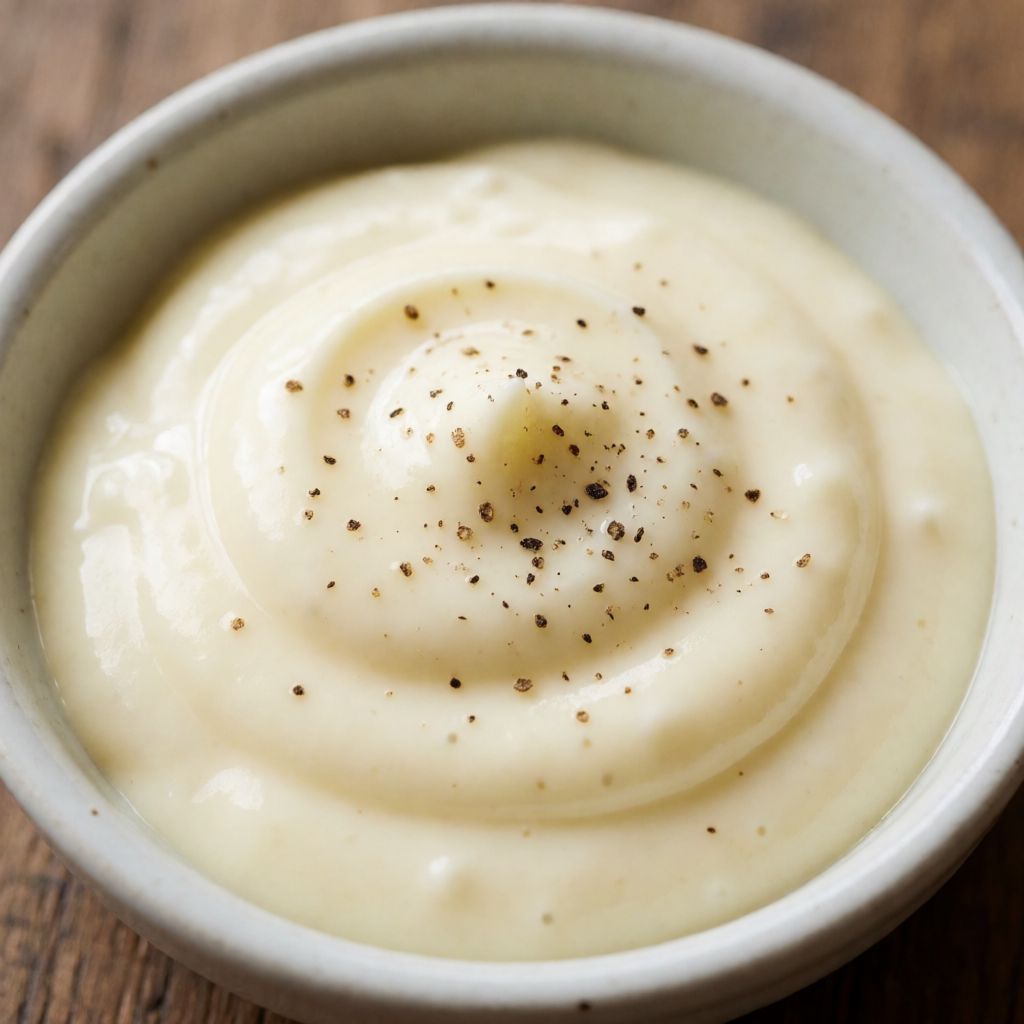
 AI photo
Aioli – Garlic Mayonnaise
A rich, garlicky mayonnaise whipped up with egg yolks, garlic, lemon juice and mustard.
Labels are worked out automatically from the ingredients and can be wrong. Check the packaging if it matters to you.
Ingredients
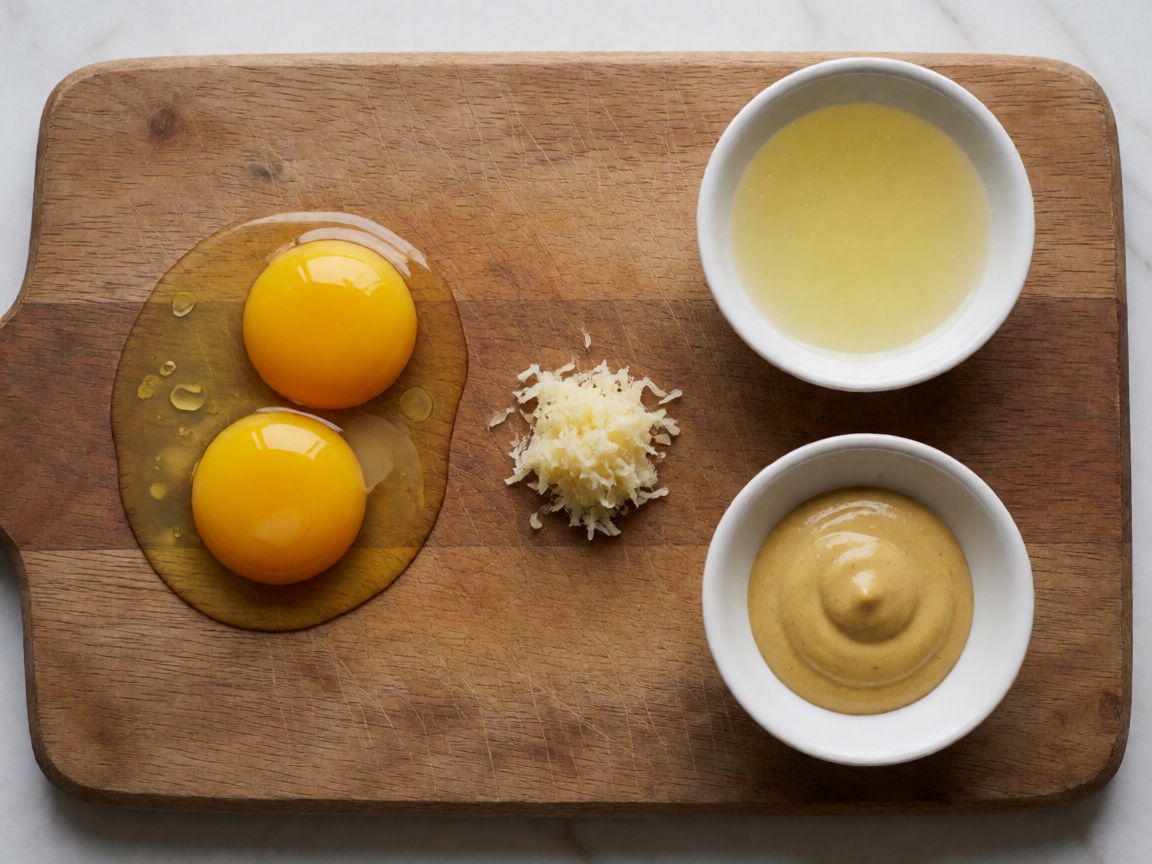
- 2 pcs Egg yolks
- 1 clove Garlic finely grated
- 1 tbsp Lemon juice
- 1 tsp Dijon mustard
- Salt
- Black pepper freshly ground
- 180 g Sunflower oil







Steps
Take all the ingredients out of the fridge beforehand and let them sit on the kitchen counter for 30 minutes.
30 minPut the egg yolks, garlic, lemon juice, Dijon mustard and salt into a blender jug and set an immersion blender on the bottom of the jug.
1 minPour in half the oil and blend, without lifting the blender at first.
2 minWhen the mayonnaise starts to come together in the jug, raise and lower the blender until the aioli is smooth.
2 minKeep blending, adding the rest of the oil in a thin stream.
3 minSeason with salt to taste.
Chill in the fridge until serving.
30 minWith a mixer or a whisk: take all the ingredients out of the fridge beforehand and let them come to room temperature before making the aioli.
30 minPut the egg yolks, garlic, lemon juice, Dijon mustard and salt into a bowl and whisk for about a minute.
1 minAdd a tablespoon of oil and whisk well, then add the oil little by little in a thin stream.
5 minStop when the garlic mayonnaise has reached the desired consistency, and season with salt to taste.
Keep the aioli in the fridge until serving.
30 min
Aioli, in the way most kitchens actually make it, is not the stone-and-pestle Provençal garlic paste at all — it's garlic mayonnaise. Call it what it is: egg yolk emulsifying oil, with raw garlic doing the flavour work that tradition once did with nothing but garlic, olive oil and a mortar. That older version exists, no eggs, just garlic bruised to a paste and oil worked in by hand until it thickens on emulsified garlic starch alone — a trick that only works with very fresh, very strong garlic and a lot of arm patience. Nobody in an ordinary flat is doing that on a Tuesday. This recipe uses the yolk as the emulsifier, which is forgiving, fast, and exactly why mayonnaise took over the name.
What decides whether it works is temperature, not time. Everything — eggs, mustard, oil — has to be the same temperature, and that temperature should be "room", not fridge-cold. Cold yolk meets cold oil and the fat seizes into droplets that won't marry; the egg's lecithin needs some warmth to wrap around oil molecules properly. That's the whole reason step one exists: not tradition, not fussiness — physics of fat and protein.
The second thing that decides it is the order and pace of the oil. Pour it all in at once and you've handed the blender an impossible job — one yolk trying to coat a lake of oil. Thin stream, oil chasing the blade, the emulsion thickening visibly as you go: that's your doneness marker, not a stopwatch. "Blend 3 minutes" in the method is a lower bound, nothing more. You stop when it holds a ribbon off the blender, not when a timer dings.
Eggs: use yolks only, and they're doing a genuine job, not padding. Lecithin in the yolk is the only thing standing between oil and water-based lemon juice refusing to mix — it grabs both ends at once. If you've only got whole eggs, use the whole egg; you'll get a looser, slightly less rich aioli, which is how most shop-bought mayonnaise is actually made, and it's not a failure, just a different texture. Very fresh eggs, room temperature, work better because cold protein is stiffer and slower to unfold and start gripping oil.
Garlic: finely grated, not crushed through a press and definitely not chopped. The point is maximum surface area with minimum fibrous bite — grated garlic releases its allicin smoothly into the yolk rather than dropping lumps of raw garlic into your mouth later. One clove for this quantity is a start, not a rule: garlic varies wildly in strength depending on age and season, so taste before you commit more. If raw garlic's bitterness bothers you, you can mellow it by letting the grated garlic sit in the lemon juice for a few minutes before you start — the acid takes some of the edge off.
Mustard: Dijon isn't there for flavour alone, though it adds plenty — it's a second emulsifier, full of its own mucilage that helps bind oil and water just like the yolk does, as backup insurance against a mayonnaise that splits. English mustard is hotter and thinner and will work in a pinch, but use less, or you'll fight the garlic for dominance.
Oil: "sunflower oil" here really means "any oil with no smell of its own." The whole dish depends on garlic, lemon and mustard carrying the flavour; a fruity extra virgin olive oil will fight them and can turn bitter once whipped hard by a blender, because aggressive blending can break olive oil's phenolic compounds into something sharper than you want. Rapeseed oil is the honest British swap — neutral, cheap, local, does the same job. Save actual olive oil for drizzling on top at the end if you want that flavour, not for the base.
Lemon juice: acid for flavour and also a stabiliser — it keeps the pH on the side where the proteins in egg yolk hold their shape rather than curdle the wrong way. Bottled juice works; fresh is better only because it's more reliably acidic and less likely to carry a tinny off-taste.
On technique: the immersion blender method is the modern, reliable one, because the narrow jug keeps oil and yolk in forced contact under the blade — that's why you don't lift it at first. The whisk method is the old hand method, and it works, it's just more honest about effort: thin stream, steady whisking, patience as the actual ingredient, because rushing the oil in is the single most common reason a hand-whisked mayonnaise splits. If it does split — oil pooling, sauce looking curdled and thin — don't throw it out. Start a fresh yolk in a clean bowl and whisk the broken mixture into it slowly, as if it were the oil; that nearly always saves it, which is worth knowing before you panic and bin a good batch of eggs and oil.
Serving size here is nominal — one person on paper, but 180g of oil with two yolks makes a proper bowlful, easily enough to go alongside a Sunday roast for four as a sharper alternative to gravy, or to sit next to roast potatoes and vegetables where its garlic bite cuts the richness. Keep it chilled until it's going on the table; raw yolk sauce left warm on a counter is not where you want bacteria setting up home.