
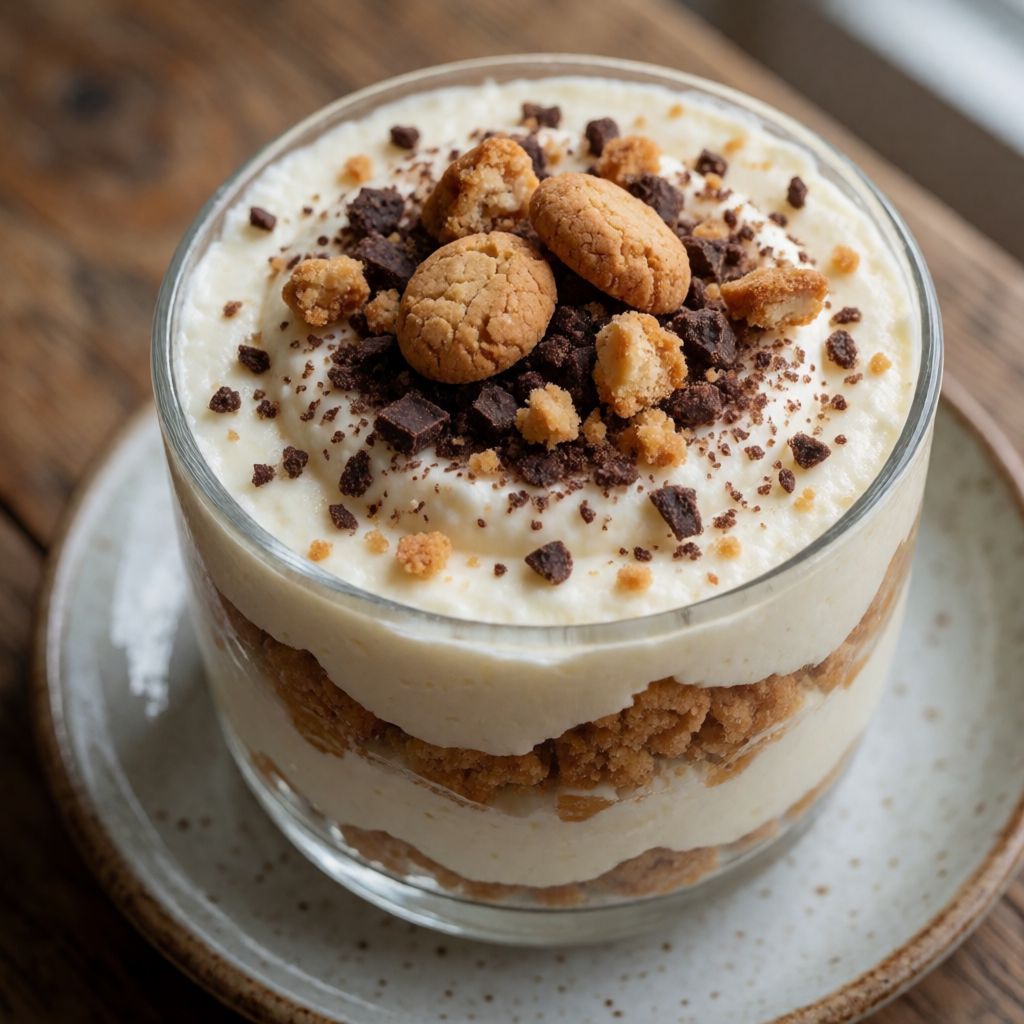
 AI photo
Amaretti Dessert in Glasses
A creamy no-bake dessert of ricotta, whipped cream and crushed amaretti biscuits, flavoured with rum and served in individual glasses.
Labels are worked out automatically from the ingredients and can be wrong. Check the packaging if it matters to you.
Ingredients
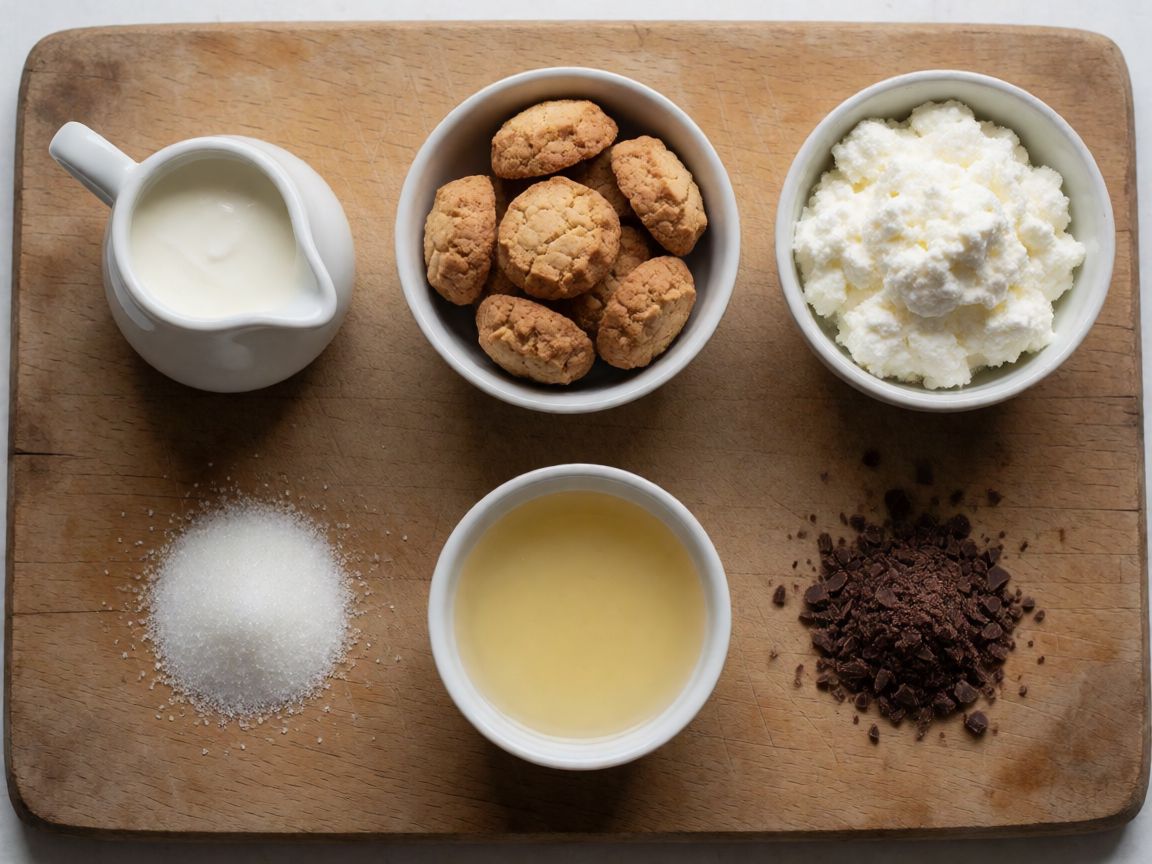
- 250 ml Double cream
- 200 g Amaretti biscuits
- 200 g Ricotta
- 50 g Caster sugar
- 1 pcs Rum small glass
- Grated chocolate to taste






Steps
Whip the cream until thick and fluffy.
Blitz the amaretti biscuits in a blender into fine crumbs.
Beat the ricotta with the caster sugar until light and smooth.
Fold in the whipped cream, crushed amaretti biscuits and rum, and mix well.
Divide the mixture among individual glasses, sprinkle with grated chocolate (or chopped hazelnuts or almonds) and chill in the fridge until ready to serve.
No oven here, no gelatine, no eggs doing the binding work. What holds this dessert together in the glass is just two things: fat (cream plus ricotta) and a dry crumb that drinks moisture slowly. Nothing is cooked — the "cook: 0 min" in the recipe isn't a typo, it's the whole point. The only heat involved is the one you take away, in the fridge.
What decides whether it works has nothing to do with skill and everything to do with the state of two ingredients before you touch them. Your ricotta has to be properly drained, firm, not swimming in its own whey — wet ricotta means a wet dessert, no amount of folding fixes that later. And your cream has to be whipped to the point where it holds a soft peak and stays there — half-whipped cream folded into ricotta just turns the whole bowl back into liquid, because there's no structure to lose.
Some call this "tiramisu without eggs" — no, because that's backwards. Ricotta desserts built on crushed almond biscuit are older and plainer than mascarpone-and-coffee tiramisu, which only became fashionable in the 1960s. This is the cheaper, earlier idea: a soft cheese, a bit of sugar, a crunchy leftover-style biscuit, and whatever spirit was in the cupboard. Tiramisu dressed it up later.
Double cream is the only cream in the UK with enough fat — around 48% — to whip into a structure stiff enough to carry crumbs and cheese without sagging. The mechanism: fat globules, kept cold, clump together as you beat air into them, trapping that air in a semi-solid lattice. Warm cream won't do this — the fat's too soft to hold a shape, it just swirls. So keep the cream cold until the moment you whip it, and don't expect whipping cream (35% fat) to give quite the same backbone — it'll whip, but softer, and the dessert will slump a little sooner. Single cream has too little fat to whip at all; don't bother.
Ricotta is doing the opposite job — it's not aerated, it's smoothed. Beating it with sugar isn't just sweetening; the sugar crystals act almost like a fine abrasive, breaking down ricotta's natural graininess while dissolving into it, since nothing here gets heated to melt the sugar any other way. Caster sugar is chosen for exactly this — it's fine enough to dissolve under a whisk at room temperature. Granulated sugar would stay gritty. If your ricotta is the wet, tub-of-whey kind, tip it into a sieve lined with a napkin for twenty minutes first — this isn't optional, it's the single most common reason this dessert turns soupy. Mascarpone will substitute for ricotta and give you something richer and closer to tiramisu, but you lose the slight tang and lightness that's the point of using ricotta in the first place.
Amaretti biscuits need to be the dry, crisp kind — amaretti secchi, not the soft chewy amaretti morbidi some shops sell under the same name. Only the dry ones blitz into a fine, absorbent crumb; the soft ones turn to paste in a blender and give you no texture at all. No blender in the flat — fine, put them in a bag and go over them with a rolling pin, it's traditional practice, not a compromise. Worth knowing: proper amaretti get their bitter edge from apricot kernels, not sweet almonds — that bitterness is what keeps this dessert from tasting like plain sugar and cream, so don't swap in a sweet almond biscuit expecting the same effect.
Rum here isn't decoration. Its job is to cut the sweetness and soften amaretti's bitter edge into something rounder, and because nothing's cooked, the alcohol doesn't burn off — it stays, mellowing slowly as the dessert chills. Any spirit with its own clear backbone that won't clash with almond works on the same logic: dark rum, Marsala, or amaretto liqueur itself if you want to push the almond note harder rather than soften it. Skip it for a child's portion and the dessert will just taste sweeter and flatter — not wrong, just one-dimensional.
Individual glasses aren't an affectation — this country already has a drawer full of trifle glasses from Sunday tradition, so use them; no special dish to buy. Two tall ones or four smaller ones, it feeds two generously or four modestly. The grated chocolate on top earns its place by being the one bitter, crunchy thing left untouched by moisture — dark chocolate works better than milk for the same reason the amaretti needs its bitterness: too much sweetness with nothing to cut it just tires the palate halfway through the glass. Chopped hazelnuts or almonds do the same job if you're out of chocolate, or just want the crunch without the bitterness.