
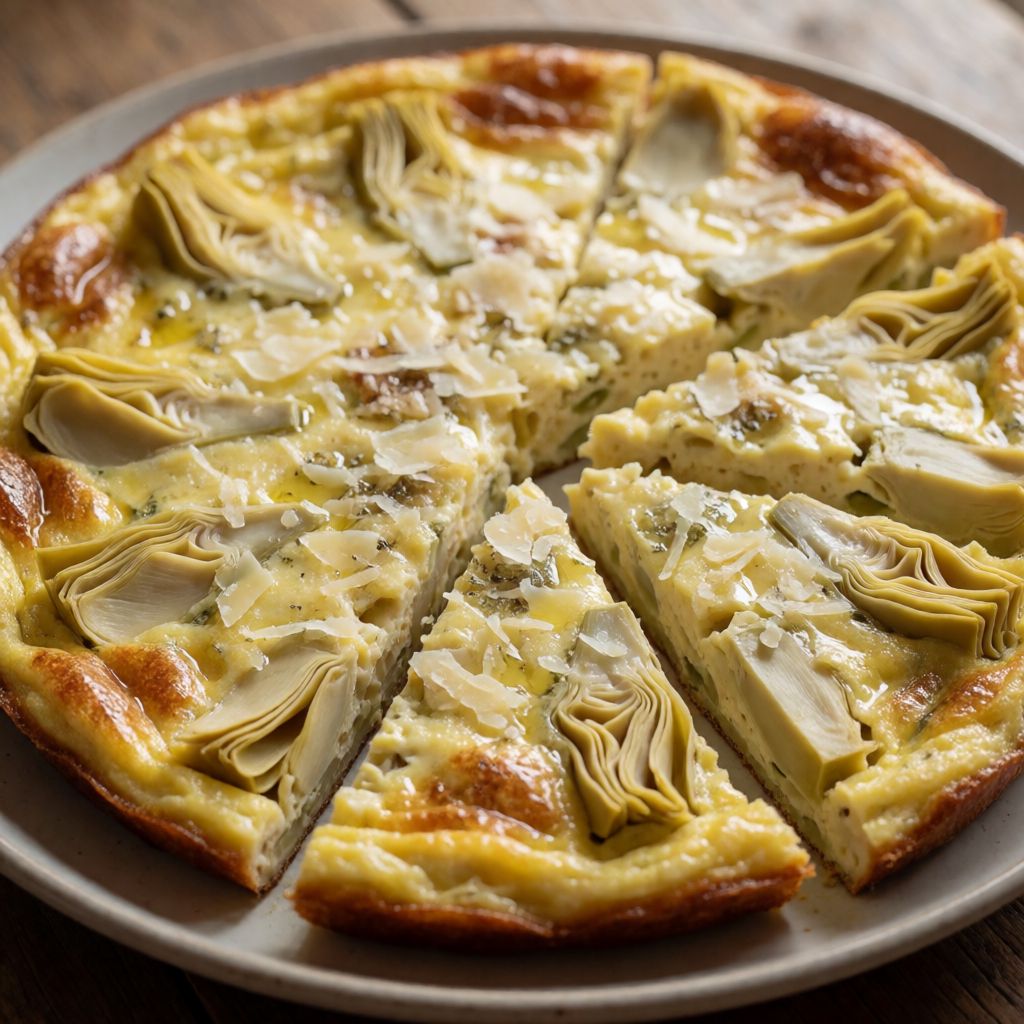
 AI photo
Artichoke Frittata
A light frittata made with thinly sliced artichokes and eggs, finished with a touch of parmesan.
Labels are worked out automatically from the ingredients and can be wrong. Check the packaging if it matters to you.
Ingredients






Steps
Wash the artichokes, remove the tough outer leaves, trim the tips, cut into quarters, remove the fuzzy inner part and slice thinly.
Soak the artichoke slices in water with lemon juice for 5 minutes, then drain.
5 minPour three tablespoons of olive oil into a pan, heat, add the artichokes and fry over high heat with the lid on.
Season with salt, stir and let cool.
Crack the eggs into a bowl, season with salt, beat with a fork, then add the artichokes and parmesan (if using).
Pour one tablespoon of olive oil into a pan and set the heat to low.
Pour in the egg mixture and cook covered over low heat until the frittata sets inside.
10 minFlip the frittata so it cooks on both sides, and serve immediately.
This is a Roman trick, not a fancy omelette: you cook the artichoke until it gives up its fight against your teeth, then you let the egg hold it together and set it slow. Seven artichokes and four eggs sound like a strange ratio until you remember the egg's job here is not to be the meal — it's the glue. The vegetable is the point. The egg is the frame.
What decides whether this works is the state of the artichoke before it ever meets the egg. Slice it thin, fry it hard and covered until it bends rather than resists, let it sit and cool — then mix. Skip the cooling and the hot artichoke starts setting the egg around it unevenly, patches firming before you've even poured the pan; the result is a frittata with a grainy ring where egg met heat too soon and a wet centre where it didn't.
The second thing that decides it is how you treat the egg once it's in the pan. Low heat, lid on, no stirring. Some say a frittata is just an omelette you're too lazy to fold — no, because an omelette is cooked fast and folded while still soft in the middle; a frittata is cooked slow until it sets through, then turned whole. That's a different structure entirely, and it's why a frittata slices into wedges the next day and an omelette doesn't.
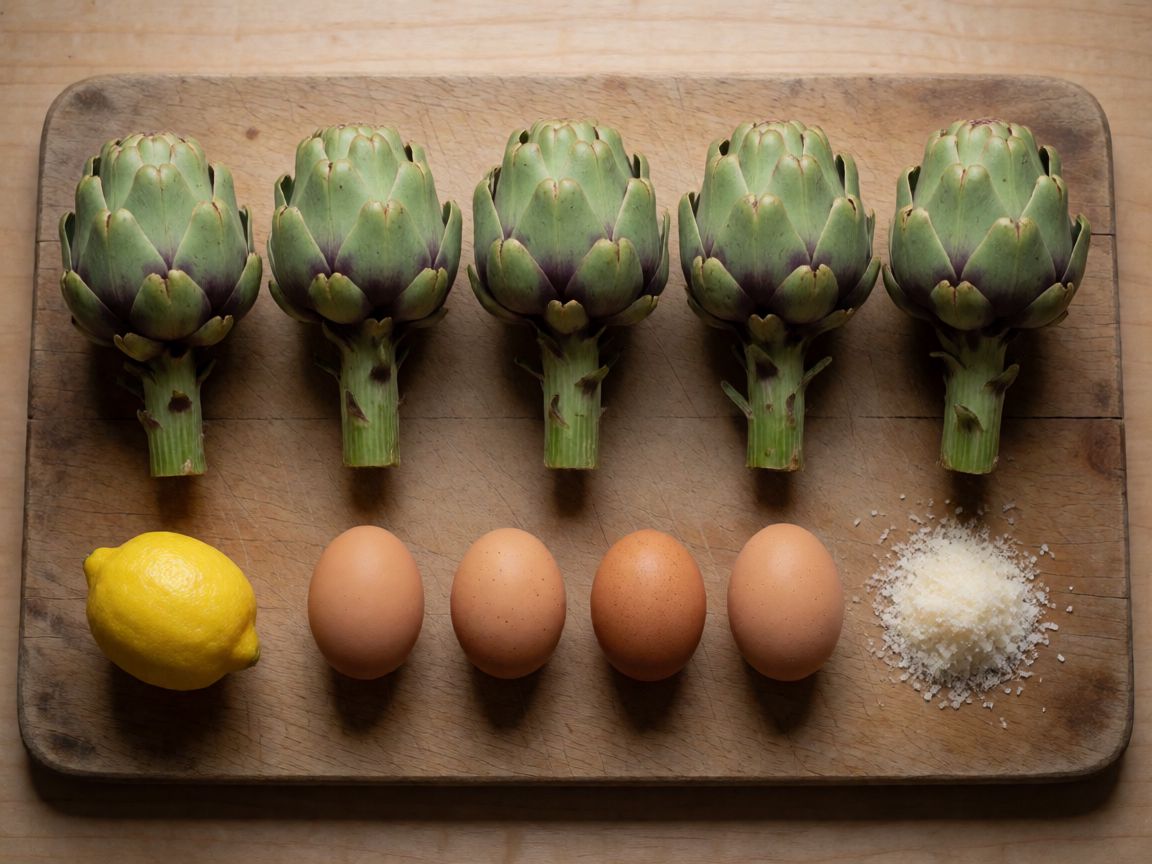
Artichokes: what you're buying is mostly fibre and water held together by pectin that needs heat and steam to break down — which is why the lid goes on during frying, not to speed things, but to trap moisture so the inside softens instead of just browning on the surface while staying raw and woody within. The tough outer leaves get removed for the same reason in reverse: no amount of cooking will soften leaves that have already lignified, so cutting them away isn't fussiness, it's avoiding a mouthful of inedible string later. The fuzzy choke in the centre is the part that would otherwise catch in your throat — remove it and you remove the only genuinely unpleasant part of the vegetable. If fresh artichokes feel like a performance for a Tuesday, frozen or jarred artichoke hearts work, as long as they're sitting in plain water or brine — not oil, not vinegar marinade, which will fight the egg for flavour instead of disappearing into it.
Lemon: its only job here is acid, not taste. Cut artichoke browns within minutes in air because an enzyme in it reacts with oxygen — the same reaction that darkens a sliced apple. The acid in the lemon water slows that enzyme down. It's chemistry, not seasoning, so bottled lemon juice does the job almost as well as fresh; you lose nothing you'd have noticed in the final dish anyway.
Eggs: four eggs for two people is generous but not showy — this is meant to feed two properly, with maybe a slice left for the next morning. Let them come to room temperature before beating if your kitchen's cold; eggs straight from the fridge take longer to find an even consistency and that unevenness shows up later as patches that set at different rates. Beat them enough to break the mixture up, no more — over-beating adds air you don't need, since this isn't a soufflé.
Olive oil: it's doing two different jobs here and both matter. In the first fry, three tablespoons at a decent heat is there to brown and soften the artichoke quickly before the lid goes on — any oil that can take that heat without smoking and without pushing its own flavour onto the vegetable would do, though olive oil is traditional here because the dish is Italian and olive oil is what an Italian kitchen has always had on hand, not because some rule demands it. In the second use, one tablespoon under low heat is just there to stop the egg sticking — a non-stick pan with no oil at all would also work, but then you lose the faint crust the oil gives the underside.
Parmesan is optional because it's there for salt and a savoury backbone, not for the dish's identity — any hard grating cheese with that same salty bite will stand in for it, pecorino especially, since it's actually closer to what a Roman kitchen would reach for first.
Patience is the one ingredient not on the list and the one most often skipped. Letting the fried artichoke cool before it meets the egg, letting the frittata actually set under its lid rather than flipping it the moment it looks vaguely firm — both of those cost you nothing but a few minutes of standing near the pan instead of walking off to do something else. Rush either step and you get a dish that looks right in the pan and falls apart, wet in the middle, the moment you cut into it.