
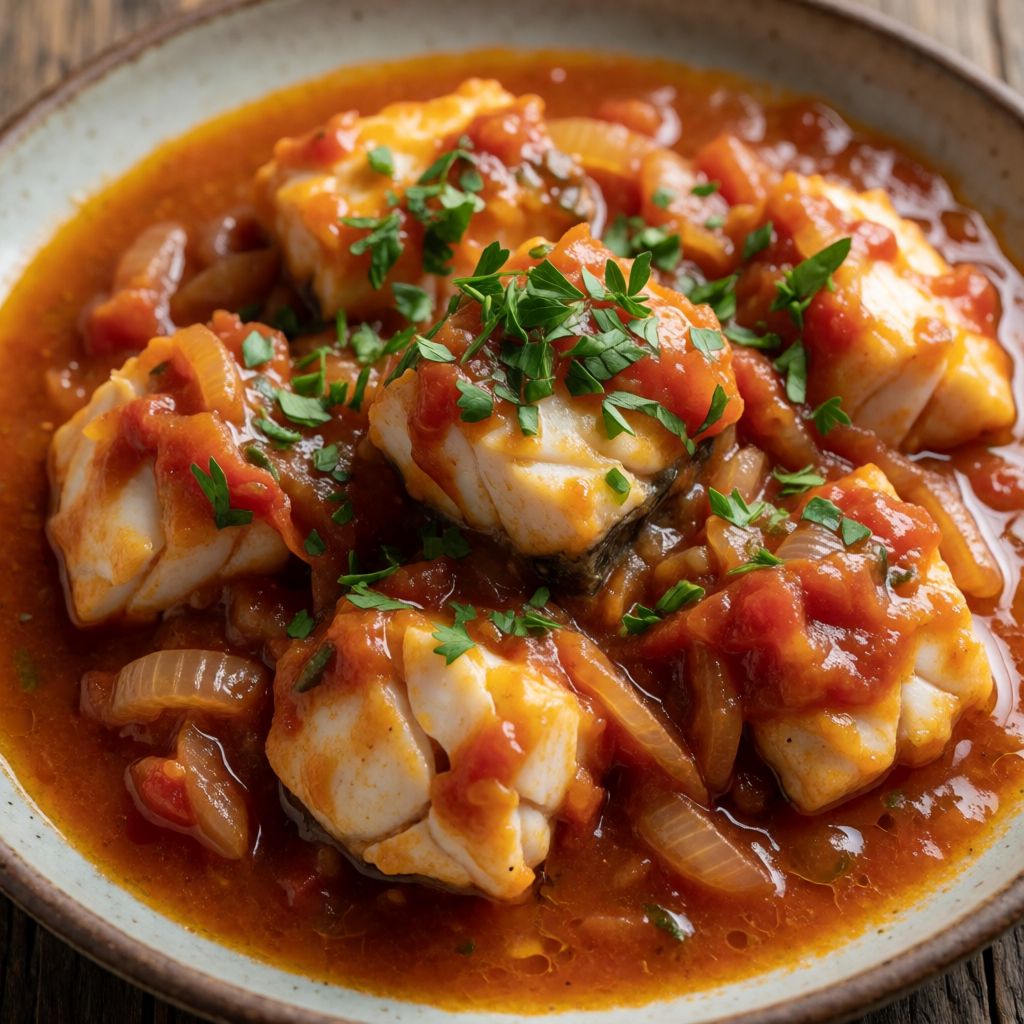
 AI photo
Braised Baccalà
A simple Ukrainian-style braised salt cod with onion and tomato, lightly dusted in rice flour before frying.
Labels are worked out automatically from the ingredients and can be wrong. Check the packaging if it matters to you.
Ingredients
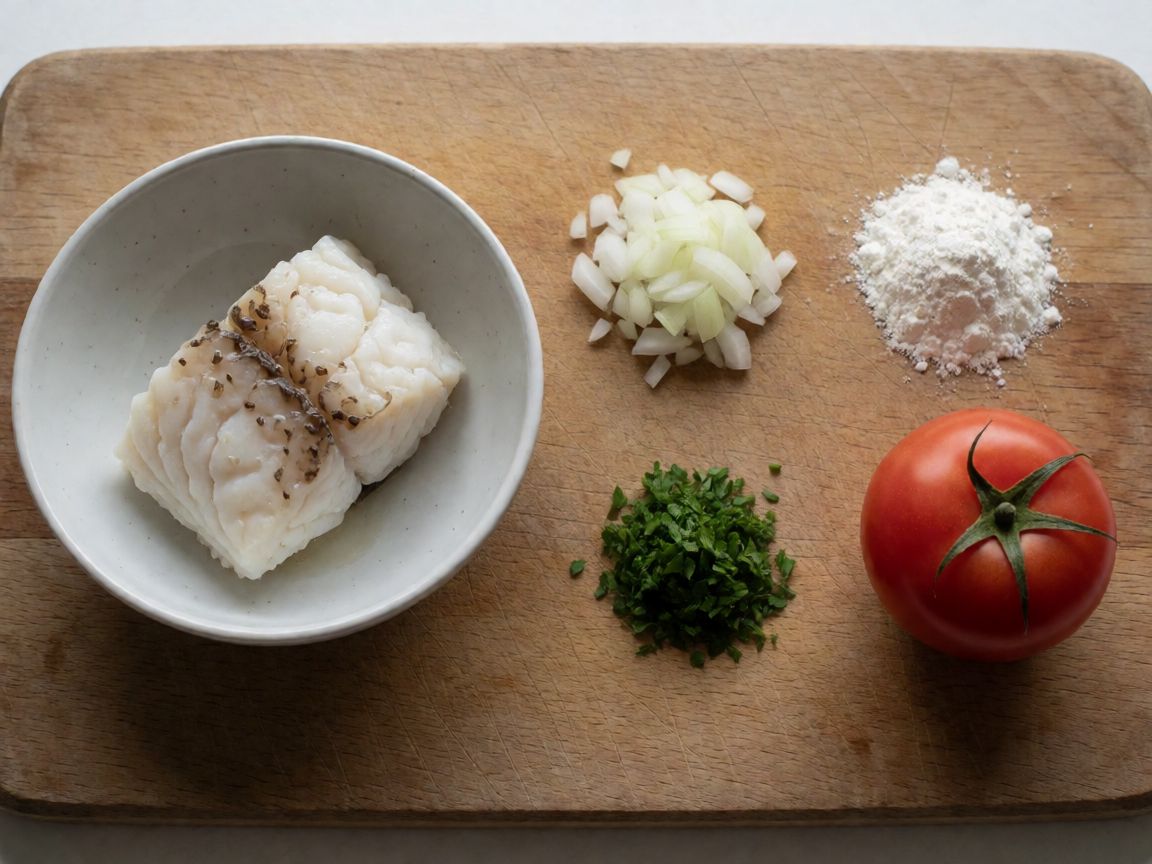
- 700 g Baccalà (salt cod)
- 300 g Onion
- 50 g Rice flour
- 1 pcs Tomato
- Parsley to taste
- Olive oil to taste
- Vegetable oil for frying
- Salt to taste
- Black pepper to taste









Steps
Soak the baccalà in cold water for at least 12 hours, then rinse and pat dry with a paper towel.
Coat the baccalà fillets in rice flour.
Heat the vegetable oil in a large frying pan.
Fry the fish for a few minutes until evenly golden on all sides.
Peel the onion, dice it finely and fry it in a saucepan with the olive oil.
Add the chopped tomato, season with salt to taste, then add the fried baccalà fillets.
Sprinkle with black pepper, cover with a lid and braise.
10 minSprinkle the dish with fresh chopped parsley and serve hot.
This is a fish that was never meant to see salt water again — baccalà is cod gutted, salted hard and dried until it's practically a plank, and the whole dish is really the story of bringing it back to life: soak it soft, fry it for a skin, then let it finish its journey in tomato and onion until it's tender the way fresh fish never quite is. What decides whether it works isn't the braise, it's the soak. Rush that twelve hours and you get either a fillet still too salty to eat, or one gone mushy because you let it sit too warm and the flesh started to break down before you ever touched a pan.
The fry is the second hinge point. Some people think you fry fish to cook it — no, because this fish is already most of the way there just from the soaking; the oil is there to set a crust, a little armour of browned rice flour, so that when the fillet goes into the simmering tomato it holds its shape instead of dissolving into flakes and sauce. Skip the fry, braise it raw, and you'll still eat it, but you'll eat it as fish stew, not as this dish.
The braise itself is short and gentle on purpose — a lid on, a low simmer, ten minutes is the floor, not a deadline. You're not cooking the fish here, you already did that with salt, water and oil. You're marrying it to the onion and tomato, letting the crust soften just enough at the edges to take on sauce while staying a crust in the middle. Lift the lid too soon, too often, and you lose the steam that's doing that softening work; lift it at the end, poke the thickest piece, and it should give like good flaked fish, not resist like raw.
Baccalà itself is an economic artefact before it's a flavour — cod caught in the North Atlantic, salted hard enough to survive months without ice, so that landlocked towns far from any coast could still eat sea fish. That's the whole reason it exists: refrigeration is young, salt is old. Buy it as pale, stiff, almost white-grey fillets, usually sold already split and boned; if your fishmonger only has fresh cod, you can use it, but expect a softer result since none of the firming that salt does to the protein has happened — salt lightly and watch it in the pan, it'll flake sooner.
The twelve-hour soak in cold water isn't a suggestion to shorten if you're impatient — patience is the actual ingredient doing the work here. Salt moves out of the fish into the water because there's more of it inside than out; cold water keeps that exchange slow enough that the fish doesn't start breaking down bacterially before the salt has had time to leave. Warmer water would pull salt out faster, but you'd be racing spoilage to do it, which is a bad bet in a home kitchen with no fish-market turnover.
Rice flour for the coating, not wheat flour, because wheat has gluten, and gluten plus oil plus moisture from the fish gives you a slightly gluey, chewy skin instead of a light, almost brittle one. The real criterion for a coating here is: a starch, finely milled, with nothing to gum up when it meets hot oil. Cornflour does the same job if that's what's in your cupboard.
Onion, 300 grams for 700 grams of fish, is more than a flavour note — it's the body of the sauce, cooked slowly enough in olive oil to go from sharp and raw to sweet, which is a colour change you can watch: pale gold, not browned, is where you want it before the tomato goes in. Push it to brown and you get bitterness sitting underneath everything else for the rest of the dish, and no amount of braising fixes that.
The two oils aren't interchangeable despite both being called oil. Vegetable oil for frying the fish because you need it hot enough to crust the coating fast without the oil itself breaking down or tasting of anything; olive oil for the onion and tomato because there you're cooking gently enough that its own flavour survives and actually adds something, rather than just being a cooking medium. If you've only got one oil in the house, use the neutral one for frying and don't worry — you'll lose a little roundness in the sauce, not the dish.
One tomato, parsley at the very end, salt added cautiously since the fish is still carrying some residual salt even after a proper soak — taste a flake before you reach for the salt again, don't trust the recipe's say-so over your own tongue. That's really the whole lesson of baccalà: it was salted by someone trying to make it last, and your job now is partly to undo that, carefully, and know when to stop.