
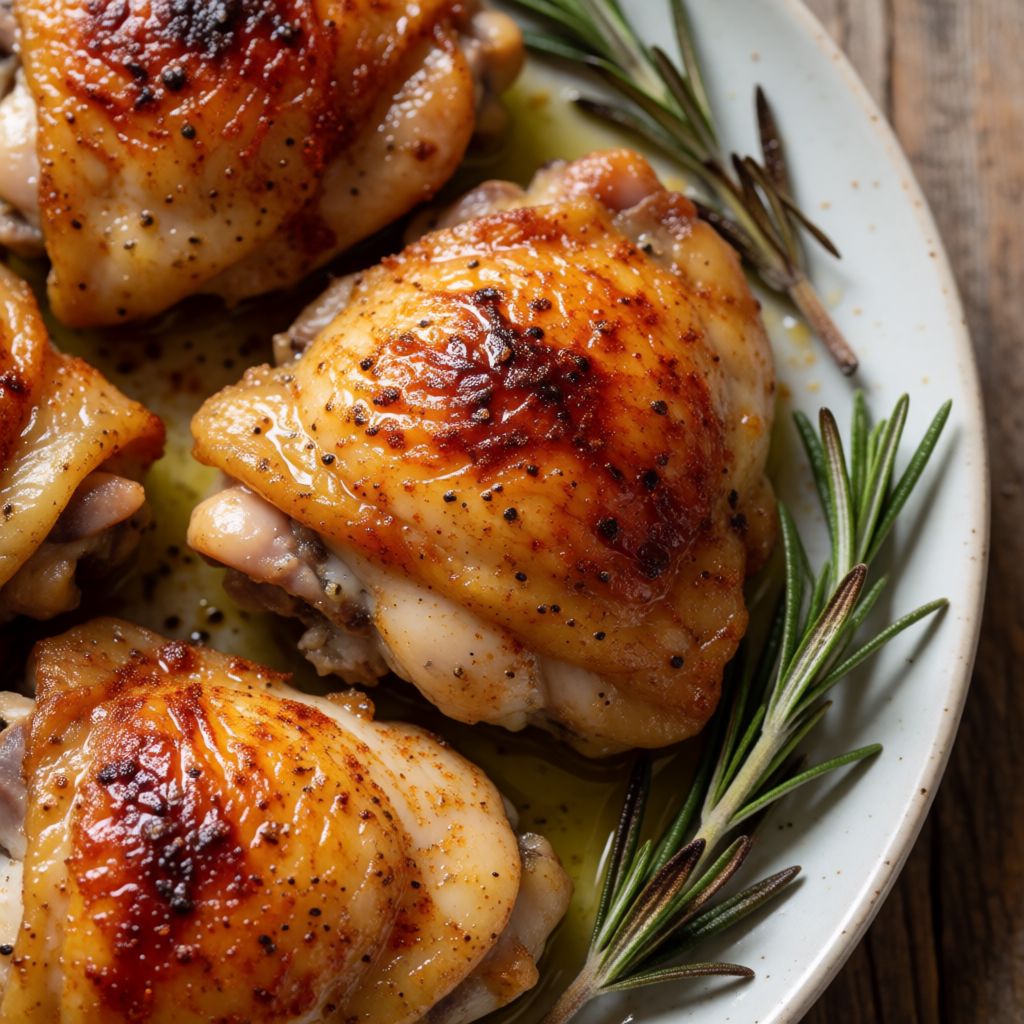
 AI photo
Baked Chicken Thighs
Juicy chicken thighs roasted with olive oil, paprika and rosemary until golden and crispy.
Ingredients
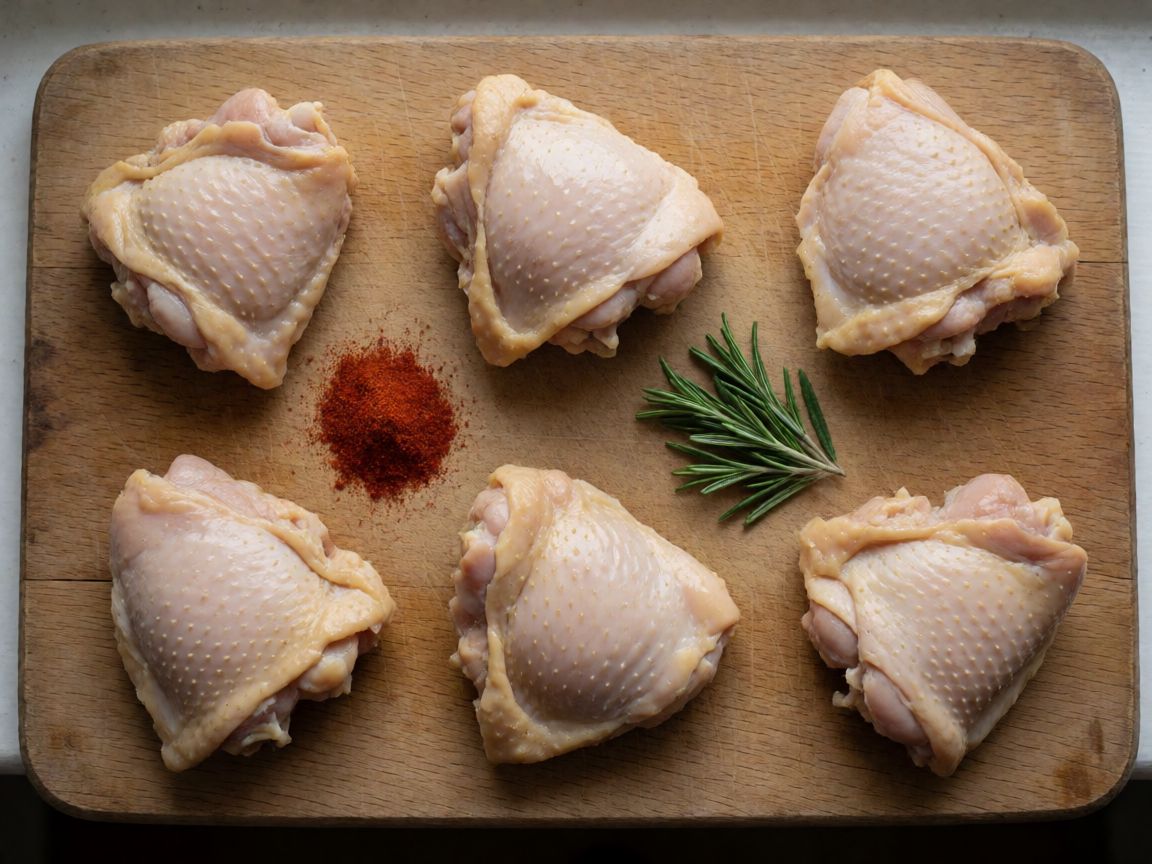
- 6 pcs Chicken thigh
- Olive oil
- Salt to taste
- Black pepper to taste
- Paprika to taste
- Rosemary to taste






Steps
Pour olive oil into a baking dish and arrange the chicken thighs so they don't overlap.
Season the thighs with salt and black pepper, then sprinkle with paprika and rosemary.
Place the dish in an oven preheated to 180°C (conventional/static setting) and bake for about 60 minutes.
60 minIn the last 5-10 minutes, switch on the grill setting so the thighs turn golden and crispy.
7 minRemove the cooked chicken thighs from the oven and serve hot.
Six thighs, not one bird — that's the whole shape of this dish. A bird demands you solve breast and leg at once, two different speeds of cooking in one carcass. Thighs skip that argument: dark meat, a seam of fat under the skin, and enough connective tissue that forty minutes either way won't ruin them. This is why thighs are the forgiving cut, the one home ovens were basically built for.
What decides whether it works isn't the clock, it's two things: did the skin get a chance to sit in dry air before anything tried to brown it, and did you let the grill finish what the oven started rather than asking it to do both jobs. Lay the pieces so they don't touch — skin against skin means trapped steam, and steam is the enemy of crisp skin, no matter how hot you eventually go.
Some say turn the oven up high from the start and you'll get crackling skin faster. No — because fat under chicken skin needs slow heat first to melt and work its way out through the surface. Push the heat up too soon and you catch the skin before the fat's rendered: pale and rubbery underneath, scorched on top, worst of both. The 180°C stretch is doing patient, invisible work — rendering, softening collagen, turning tight muscle loose around the bone. You can feel this is done: the leg bone wiggles easily in its socket, where ten minutes earlier it was locked solid.
Chicken thighs: buy them bone-in, skin-on, and don't trim the fat before cooking — that fat is the whole engine of the dish, melting slowly through the roast and basting the meat from inside instead of you having to baste it by hand. Pat the skin dry with a paper towel before seasoning; water sitting on the surface is what stops skin crisping even under a grill, because the heat spends its first minutes boiling that off instead of browning anything. Boneless thighs will work in a pinch but cook faster and give you none of that joint-test for doneness — you're down to colour and feel alone.
Olive oil in the dish isn't there to fry anything or to perfume the meat — the thighs are sitting mostly in it, not swimming, and oil's real job here is contact: it conducts heat evenly from the metal or glass up into the skin and stops the meat welding itself to the dish. Any oil with no smell of its own does this job — sunflower, groundnut, a neutral vegetable oil. Use a fruity olive oil only if you actually want to taste it, because under an hour of heat it will contribute flavour whether you meant it to or not.
Salt goes on before the oven, not as a last-minute dusting. Early salt draws a little moisture to the surface, then that moisture dissolves the salt and gets drawn back in — seasoning the meat, not just coating it. Pepper: go coarse if you can. Fine ground pepper exposed on a surface that's about to see a grill scorches and turns bitter; coarse grains survive the heat and give you a hit of flavour instead of ash.
Paprika is doing two separate jobs depending on which kind you reach for — sweet paprika gives colour and a round, mild background taste, smoked paprika gives colour plus an actual smoky edge, useful precisely because you have no open fire here, only an oven. Either way, check the tin isn't old: paprika that's gone from red to a tired brownish-orange has lost both its colour power and most of its flavour, and no amount of it will fix that.
Rosemary: fresh sprigs release their oil slowly and gently as they warm, which suits the long low stretch at 180°C. Dried rosemary, left loose on exposed skin, tends to char and turn bitter the moment the grill comes on — tuck it under the skin or between the pieces rather than scattered on top, and it'll flavour the fat as it renders instead of burning on the surface.
Six thighs for three people is two each, which is a generous but not excessive British portion — think of it as the weekday, no-fuss cousin of a Sunday roast: the oven does the long patient part on its own while you do something else, and only in the last stretch do you need to stand there and watch. That waiting is not dead time, it's the ingredient doing its work — don't rush the render to save ten minutes, because that's exactly the ten minutes that turns rubbery skin into crisp skin.