
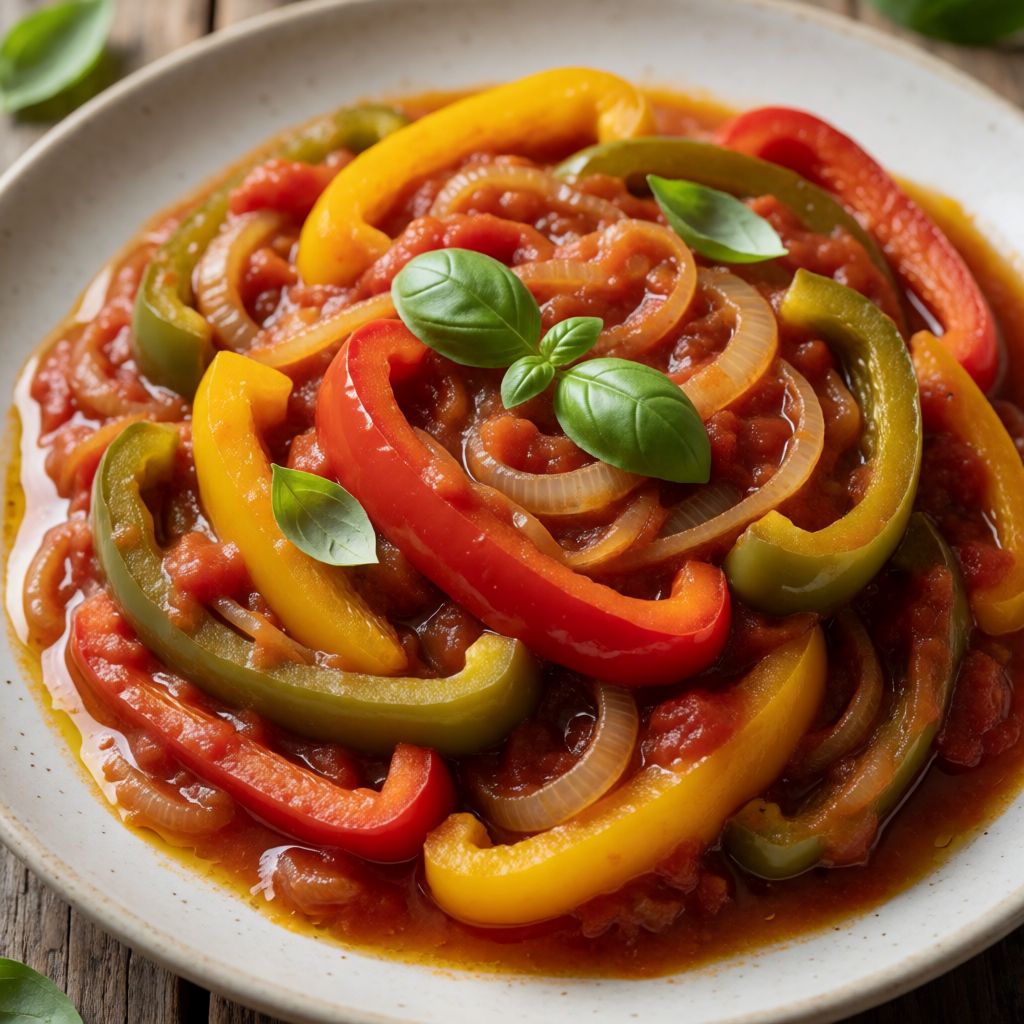
 AI photo
Peperonata
A simple Italian-style stewed pepper dish made with mixed peppers, onion and tomato passata.
Labels are worked out automatically from the ingredients and can be wrong. Check the packaging if it matters to you.
Ingredients
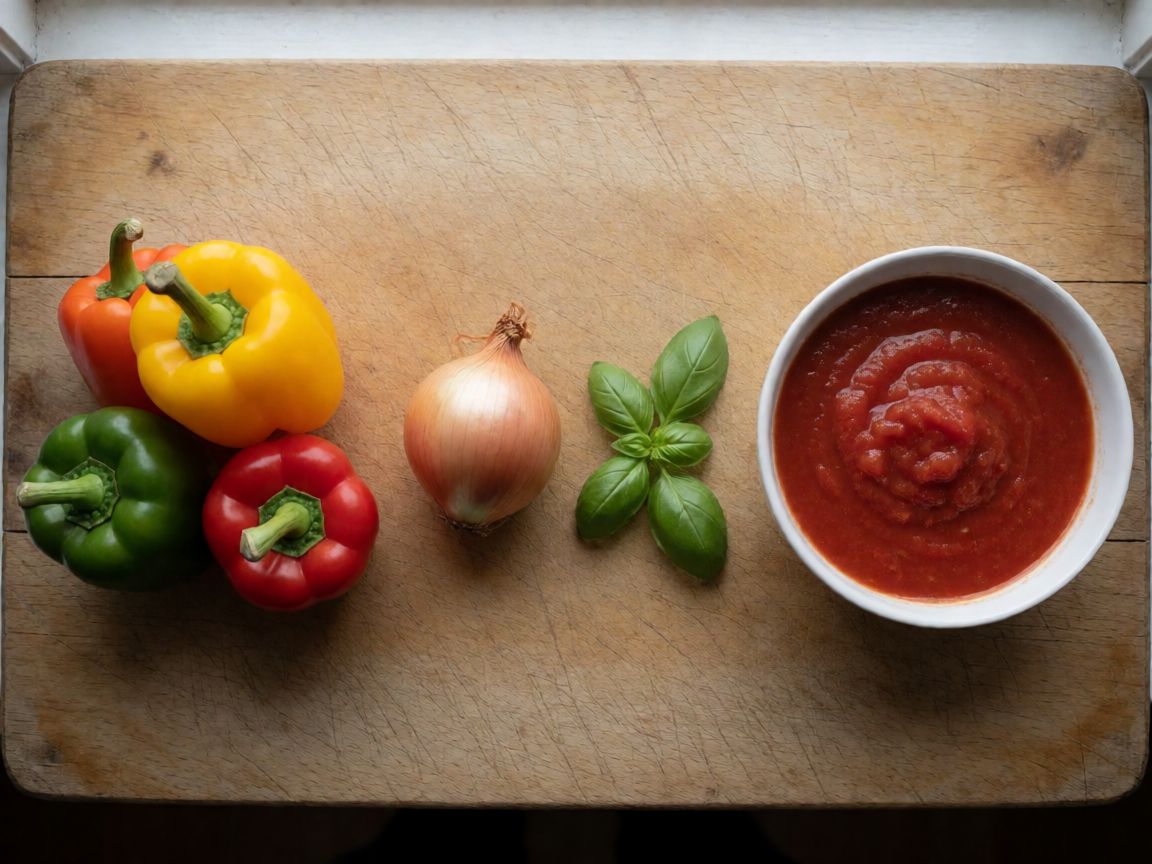
- 650 g Bell peppers mixed colours
- 1 pcs Onion
- 500 ml Tomato passata
- Olive oil to taste
- Salt to taste
- 1 pcs Basil




Steps
Peel the onion and cut it into thin slices. Remove the seeds from the peppers and cut them into strips.
Heat 2 tablespoons of olive oil in a large pan, add the onion, season with salt, cover and cook gently until softened.
5 minAdd the peppers, season with a little more salt, stir, cover and cook.
15 minPour in the tomato passata, add the basil, stir and continue cooking the peperonata.
22 minSeason with more salt if needed and serve the peperonata warm or at room temperature.
Peperonata is not a stir-fry, it's a stew that happens to be made of vegetables that look like they want a quick fierce heat. They don't. Peppers and onion here are meant to surrender — walls break down, water leaves, sugar concentrates — and that only happens slowly, under a lid, with patience doing half the cooking.
What decides the result is texture, not colour. The onion has to go soft and faintly sweet before anything else happens, because it's the quiet base note the peppers lean on. The peppers themselves need to bend, not snap — a strip lifted on a spoon should flop, not crack. If the heat is too eager, the sugars in both scorch before they melt, and that's where the bitterness people blame on peppers actually comes from — it's not the vegetable's fault, it's the flame's.
Some say you must char and peel peppers first, like for a roasted pepper salad, or peperonata isn't "proper". No — that's a different dish solving a different problem. Charring is for when you want smoky skin off in seconds and raw crunch underneath gone fast. Here the skin softens on its own, over three-quarters of an hour of steam trapped under a lid; you don't need fire to do a job that time already does.
Peppers: buy mixed colours, not because it looks nice on the plate, but because green peppers are picked less ripe and carry more of that sharp, slightly bitter top note, while red and yellow are riper and sweeter. Mixing them balances the dish without needing sugar. If all you've got is green, a small pinch of sugar in with the tomato fixes what ripeness didn't finish. Cut them into strips, not rings — strips give more cut surface, which means faster, more even water loss, which means the pepper collapses through rather than staying crisp outside and raw in the middle.
Onion: its job is sweetness, not flavour fireworks. That's why it goes in first, covered, salted — salt pulls water out of the cells early, which stops the sugars inside from catching and browning before the onion has gone soft. A browned, caramelised onion would fight the tomato for attention; a softened one just supports it. Any mild allium with the same tendency to turn sweet when cooked slowly will do — shallot works, in smaller amount, since it's stronger per gram.
Tomato passata: it goes in after the vegetables are already soft, and that order matters more than it looks. Acid firms up pectin — it's part of why jam sets and why pickled vegetables stay crunchy. Add tomato too early and the peppers will take longer to soften, fighting the very collapse you're trying to get. Add it once they're already there, and the acid only has to season and thicken, not fight texture. If you've no passata, blitz tinned tomatoes smooth — the criterion is a puree without lumps of skin or seed, not a brand.
Basil: a sprig cooked for twenty-odd minutes in a simmering sauce won't give you that sharp raw-basil smell — the essential oils that carry it evaporate with sustained heat, and what's left is a soft, background green note, not a bright one. That's not a mistake, it's just what long cooking does to a fresh herb, and it's the right effect here — this isn't a salad. If you want a flash of the raw smell as well, tear a couple of fresh leaves over the top at serving; it costs nothing and doesn't contradict the method, it adds a second layer on top of it. Dried basil, by contrast, has usually already lost its oils to drying, so it brings little more than colour.
Olive oil: the brief is "to taste", but the real criterion is mildness — an oil assertive enough to have its own peppery bite will compete with the sweetness you've spent forty minutes building. A light, unaggressive olive oil, or any oil with no smell of its own, lets the pepper and tomato stay the point.
Salt goes in three times for a reason — with the onion, with the peppers, with the finish — not because the dish needs more salt overall but because each layer loses and gains water at a different stage, and seasoning once at the start either undersalts the vegetables or oversalts the final sauce. This is a wide-pan dish for a domestic hob: no kazan, no need for one — a lid, or a plate pressed over the pan if your lid doesn't fit, traps the steam that does the actual softening. Give it the full stretch of time the recipe allows before checking doneness by eye and by bite, not by the clock; the clock only tells you the earliest you're allowed to start looking.