
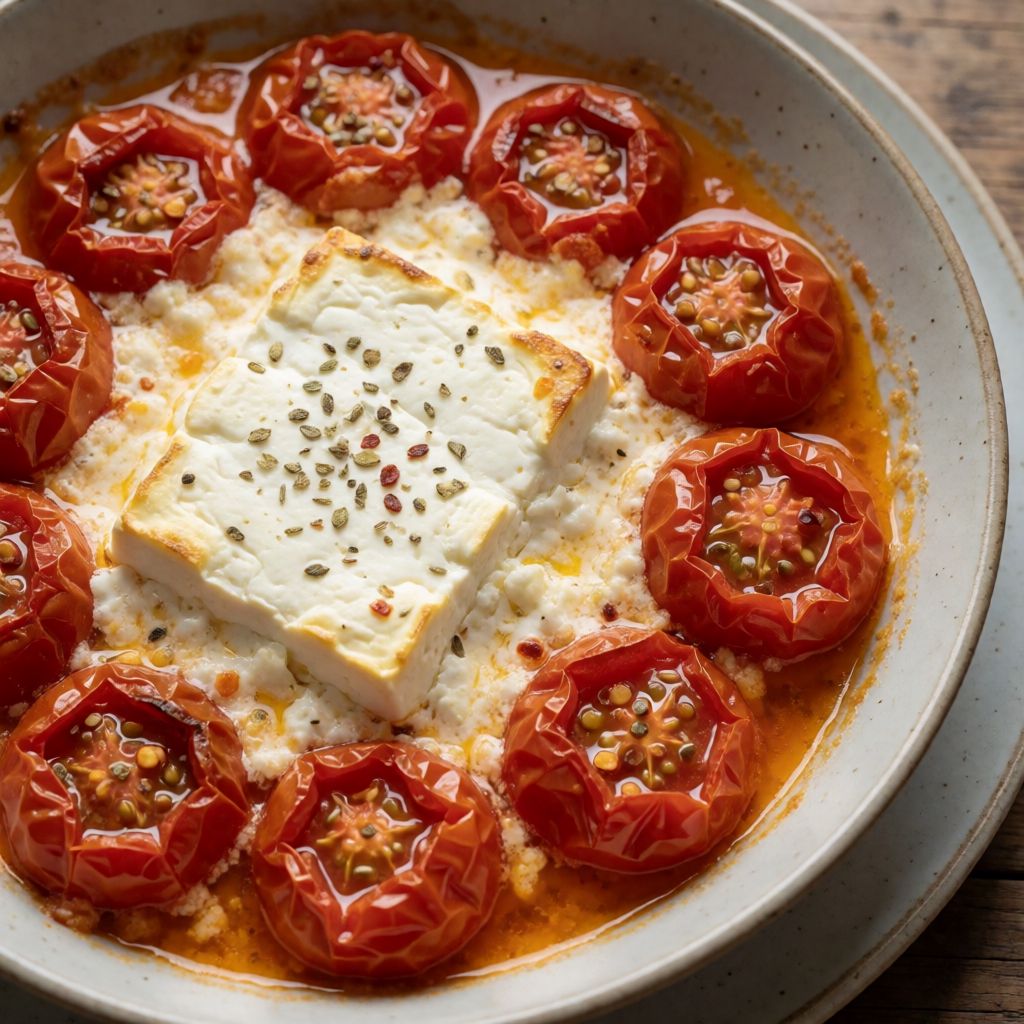
 AI photo
Baked Feta Pasta with Tomatoes
A simple bake of roasted tomatoes and feta, melted together into a creamy sauce for pasta.
Labels are worked out automatically from the ingredients and can be wrong. Check the packaging if it matters to you.
Ingredients









Steps
Place the tomatoes in a greased ovenproof dish and scatter over the garlic, olive oil, oregano, thyme, chilli flakes and freshly ground black pepper.
Finely chop half the basil, sprinkle over and mix well.
Place the feta in the middle of the dish on top of the tomatoes.
Bake in a preheated fan oven at 180°C for 25 minutes.
25 minMeanwhile, cook the pasta in lightly salted water until al dente.
Set aside about 200ml of the pasta water in a jug, then drain the rest.
Remove the dish from the oven and mash the tomatoes and feta together with a fork until smooth.
Add the remaining basil along with a splash of the pasta water to create a nice creamy consistency.
Season well with salt and pepper and mix with the freshly cooked pasta.
If needed, add more pasta water to make the dish even creamier.
Serve the hot pasta on plates, sprinkled with fresh basil on top.
This is the dish TikTok made famous, and for once the hype got the mechanism right. You put a block of feta in the middle of a dish of cherry tomatoes, oil and garlic, and the oven does two jobs at once: it blisters the tomatoes until their skins split and their water boils off into sauce, and it softens the feta until it's spreadable rather than crumbly. You're not melting the cheese — feta doesn't really melt, it sweats and loosens. Thirty minutes at a heat that makes tomatoes burst, not scorch, is what you're aiming for, and you'll know it's there because the tomatoes have collapsed and the feta has gone matte and soft at the edges, not browned.
What decides whether this works is what happens after the oven, not in it. You mash tomato and cheese together with a fork while everything's hot — hot fat and hot starch water bind; cold, the oil just sits on top and you get a puddle, not a sauce. The pasta water isn't an afterthought, it's the glue: it carries dissolved starch that lets oil and feta's milk solids hang together instead of splitting into grease and curd. Skip it and you'll be eating oily pasta with cheese crumbs on it, which is a different, worse dish.
Four people, one oven dish, one pot — this is a weeknight recipe dressed up as a dinner-party one, and that's the appeal. No béchamel, no reduction, no watching a pan. The whole method is "put it in the oven and let heat do what your arm would otherwise have to do with a wooden spoon."
Tomatoes: 400g of anything with enough water in it to make steam. Cherry or baby plum are usual because their skin-to-flesh ratio is high, so more of them bursts relative to the whole — more sauce, faster. Big tomatoes work too, just slower, and you'd want to quarter them so the heat gets in. What you're choosing against is the watery, pale winter tomato with no sugar in it: it'll still soften, but you'll get thin sauce instead of concentrated one, because there's less sugar to caramelise into flavour as the water leaves.
Feta: has to be a real brined sheep's-or-goat's-milk block, not the "Greek-style salad cheese" that's often cow's milk and firmer — that one holds its shape in the oven instead of softening, and you'll be chasing dry lumps round the dish with your fork. If feta's genuinely not available, a mild, crumbly goat's cheese log does a similar job of going creamy under heat without melting into oil the way a hard cheese would.
Garlic grated rather than sliced: more surface area meeting hot oil means it cooks through in the same time instead of staying raw and sharp in the middle, and grated garlic disperses into the sauce when you mash rather than sitting there as separate chewy pieces.
Olive oil: this is the fat that carries flavour and prevents the tomatoes catching on dry dish before they've burst. Any oil with no smell of its own and a reasonable smoke point would physically do the job, but olive oil's own flavour is doing real work here — it's half the sauce's character, so don't reach for something neutral unless you have to.
Oregano and thyme, dried: dried herbs survive twenty-five minutes of oven heat without burning to bitterness the way fresh ones would; that's why they go in before baking and the fresh basil goes in after, split in two — half stirred through raw at the start where it just wilts into the oil, half kept back entirely to go on at the very end, still green, still smelling of itself, because basil cooked twenty-five minutes tastes of nothing but "cooked leaf."
Pasta: 400g for four people, any shape that holds sauce in a crevice rather than sliding off a flat surface — a twisted or ridged short pasta does more work here than a long smooth one, though this isn't a rule carved in stone, just physics of surface area.
The pasta water you keep back: 200ml is more than you'll likely need, which is the point — you want margin, not a precise dose, because "add more pasta water to make it creamier" is a step that tells you doneness isn't a number, it's a texture you're reading with the back of a spoon.
One thing worth saying plainly: the dish rewards you stopping and looking rather than trusting the clock. Twenty-five minutes is where it usually gets there, but ovens lie to each other constantly — what matters is tomato skins split and gone soft, feta gone matte and yielding when you press it with the fork. That's patience doing its one actual job here: not waiting longer, but waiting for the right sign instead of the right number.