
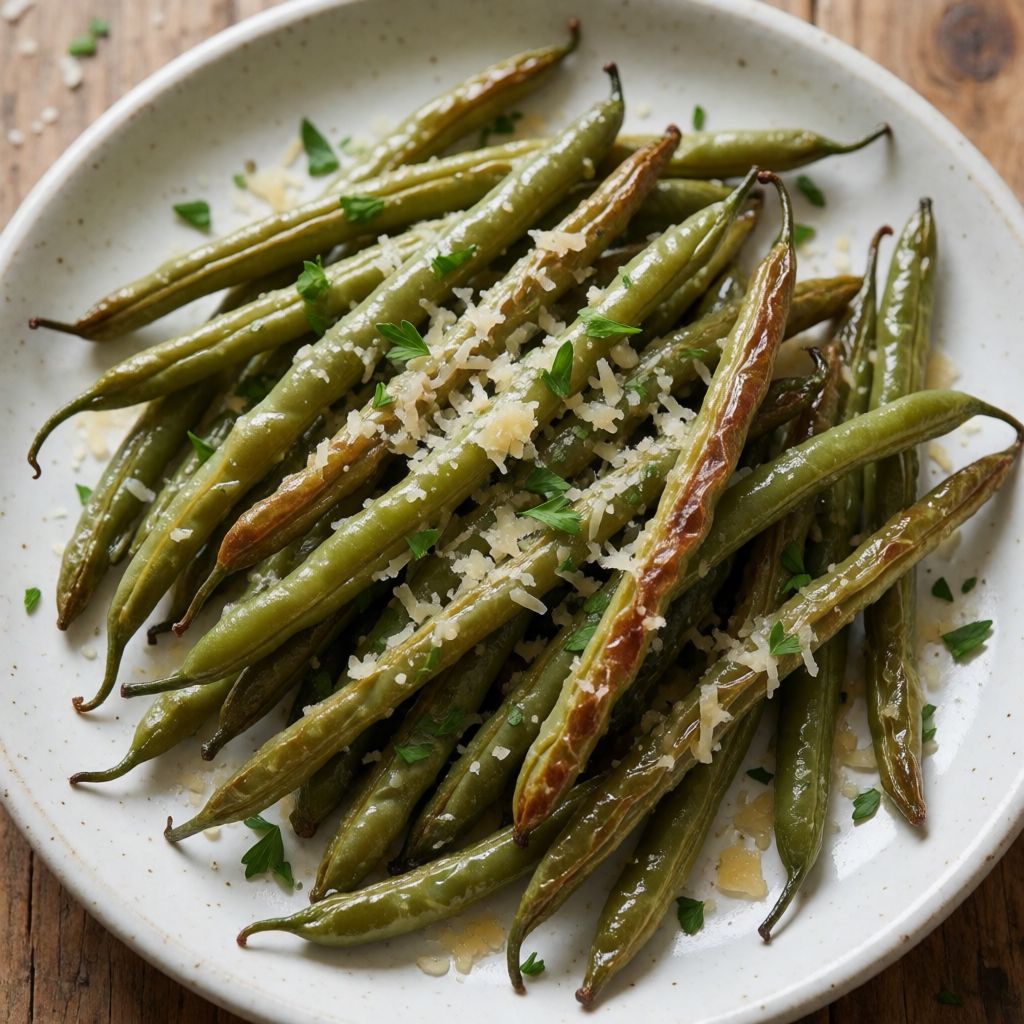
 AI photo
Baked Green Beans
A simple baked side of green beans with Parmesan and parsley.
Labels are worked out automatically from the ingredients and can be wrong. Check the packaging if it matters to you.
Ingredients
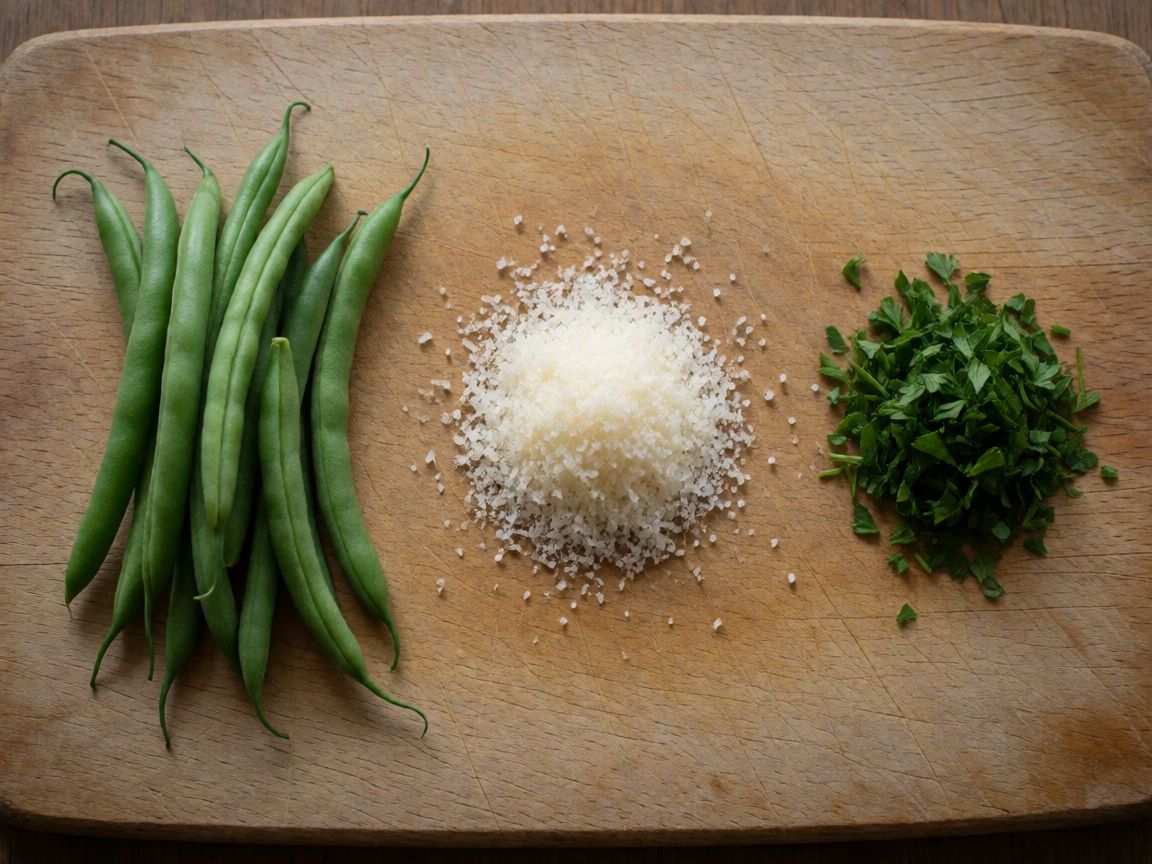
- 500 g Green Beans
- 40 g Parmesan
- Parsley to taste
- Olive Oil to taste
- Salt to taste





Steps
If the beans are fresh, rinse them and trim the ends.
Boil the beans in salted water, then drain and pat dry with a paper towel.
12 minGrease a baking dish with olive oil and arrange the beans inside.
Season with salt and sprinkle with Parmesan and parsley.
Preheat the oven to 170°C and bake the beans until the Parmesan melts.
5 minServe the beans hot.
This is a two-stage dish wearing the coat of a one-stage bake, and that's the whole trick of it. The beans are not cooked in the oven — they're cooked in water, then warmed through under cheese. Once you see that, you stop worrying about timing the oven for doneness and start worrying about timing the pot. The oven's only job here is to melt Parmesan and lift the parsley's smell into the beans. It is not asked to turn a raw vegetable into a cooked one.
That changes what you're watching for. In the pot: the bean goes from snapping clean in half to bending with a slight resistance, like a green twig instead of a dry one. That's done — not twelve minutes on a clock, which is only a guide for people who haven't learned to look yet. In the oven: you're watching cheese go from a dry dusting to something glossy and slumped over the beans. Five minutes at 170°C is roughly where that happens, but ovens lie to each other constantly, so trust the gloss over the dial.
The one step people skip, and shouldn't, is drying the beans after boiling. Skip it and you're not baking beans in oil and cheese — you're simmering them in their own bathwater, with a cheese raft floating on top that never quite melts into them. The paper towel isn't fussiness. It's the difference between a finish and a puddle.
Green beans, fresh or frozen, work here, and the step that only applies to fresh ones — trimming the ends — exists because the stem end is fibrous in a way the rest of the bean isn't; left on, it stays tough no matter how long you boil, and you end up chewing a thread. Frozen beans are already trimmed and already partly cooked by the freezing and blanching process before they ever reached your freezer, so they'll hit the bend-not-snap point faster than fresh ones — watch them, don't assume the same handful of minutes applies.
Parmesan is doing two jobs at once: salt, and a melt that goes glossy rather than greasy. That second part matters more than people think. A cheese with too much moisture will just go watery under heat; a cheese that's too young won't develop that nutty depth; Parmesan, aged and dry, melts by slumping rather than weeping. If you haven't got it, the criterion is a hard, aged cheese that melts without flooding the dish — a mature Pecorino, an aged Gouda, even a strong Cheddar at a push, though Cheddar will give you a different, sharper note and a slightly oilier finish. Forty grams on five hundred grams of beans is a dusting, not a crust — remember that Parmesan was always the expensive finishing touch in Italian kitchens, used by the spoonful, never the slab, and that habit carries over honestly here.
Parsley goes in before the bake in this recipe, which means it spends five minutes in a hot dish rather than being scattered fresh at the table. That's a choice, not an oversight: it mellows and loses a little brightness, but it also perfumes the cheese as it melts rather than just sitting on top of it. If you want the sharper, grassier hit instead, hold half the parsley back and add it after the dish comes out — nothing in the method forbids that, it's just a different intention.
Olive oil here isn't a cooking medium — the beans are already cooked by the time it touches them — it's a flavour layer, greasing the dish so nothing sticks and coating the beans so the cheese has something to cling to. The criterion for substituting is an oil with no competing smell of its own if you want the Parmesan and parsley to lead, but olive oil is specifically chosen for the opposite reason: its own flavour is meant to show through. A neutral oil like sunflower would work mechanically and change the dish's character.
Salt goes into the boiling water, not just onto the finished beans, because seasoning from inside the water means the bean absorbs it as it cooks rather than wearing it as a coat on the outside. Salting only at the end gives you a salty surface and a bland centre — a common fault in boiled vegetables generally, not just here.
If you're already running the oven for a Sunday roast at a higher heat, you can usually slip this dish in regardless — melting cheese is forgiving in a way roasting a joint is not, so a slightly hotter oven just means watch the gloss a little sooner rather than trusting the five minutes. And give the boiling its proper patience: rushing the pot to save time in the oven just moves the problem, it doesn't remove it.