
 AI photo
Hake in Parchment
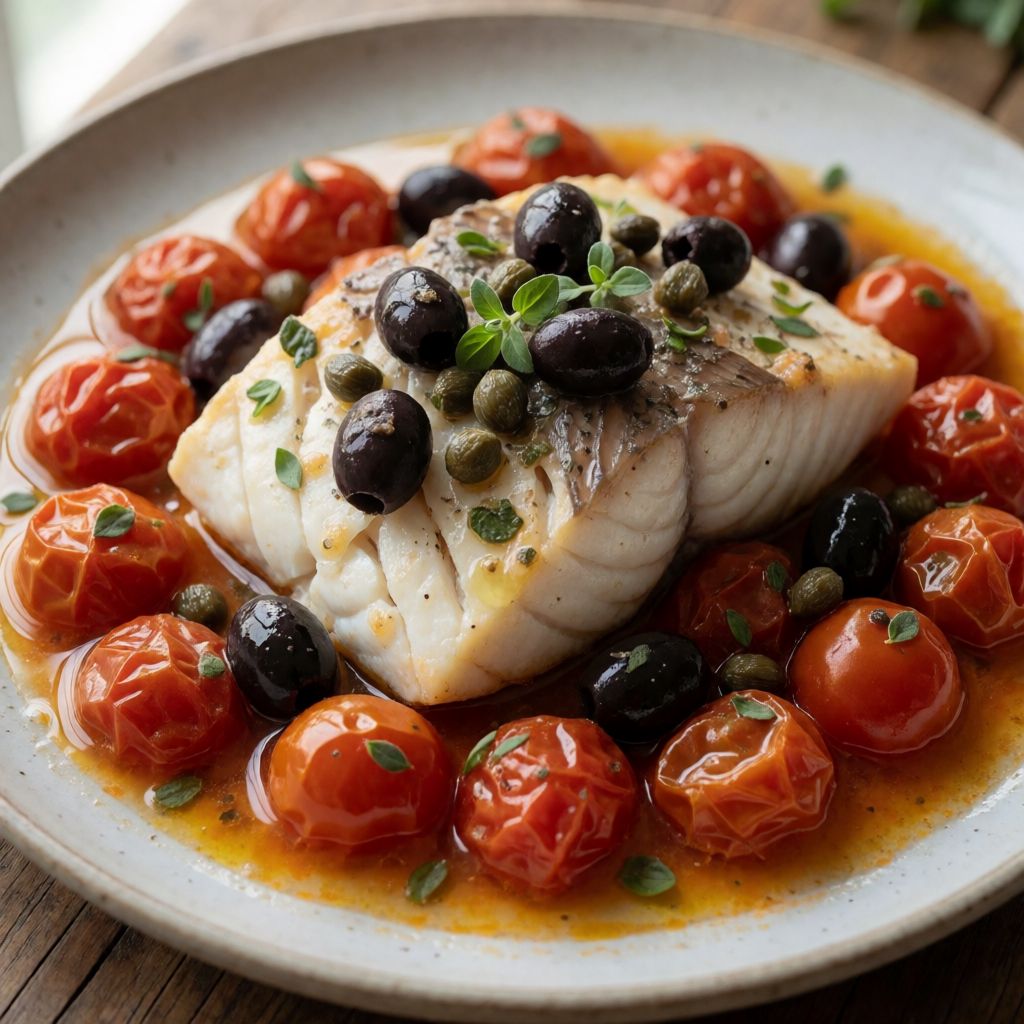
Hake fillets baked in parchment with cherry tomatoes, black olives and capers.
Labels are worked out automatically from the ingredients and can be wrong. Check the packaging if it matters to you.
Ingredients
- 1 pcs Hake
- 20 pcs Cherry tomatoes
- 20 pcs Black olives
- 2 tbsp Capers soaked
- 2 tbsp Olive oil
- Oregano to taste
- Salt to taste
- Black pepper to taste







Steps
Cut each hake fillet in half, then in half again, so you get four portions from each fillet.
Prepare four parcels for the fish: form each one from two sheets of parchment paper.
Pour a little olive oil into each parcel and place a piece of hake on top.
Halve about twenty cherry tomatoes and divide them evenly between the parcels.
Add ten black olives and one tablespoon of capers (pre-soaked) to each parcel.
Season the fish with salt and black pepper to taste, sprinkle with oregano and drizzle with a little more olive oil.
Seal each parcel tightly and place them on a baking tray.
Preheat the oven to 180°C and bake the hake for about 20 minutes.
20 minServe the hake in parchment hot, straight from the opened parcels.
This is not baked fish — it is steamed fish that thinks it's baked. The parchment parcel is the real cooking vessel: once you seal it, the oven's dry heat barely touches the hake at all. What actually cooks the fish is the steam that builds up inside the paper from its own juices, the oil, and the burst of twenty cherry tomatoes giving up their water. You've built a tiny pressure cooker out of baking paper. That's the whole trick, and once you see it, you stop worrying about 20 minutes as a fixed number and start worrying about the seal.
What decides whether it works is not the oven, it's your fold. If the parcel leaks steam at a corner, that corner dries out while the rest stays moist — you get one bite of rubber and the rest tender. Fold twice at every seam, like a greengrocer's twist, not a casual scrunch. Some cooks reach for foil here because it feels more secure. Don't — foil reacts with the acid in tomatoes and capers and leaves a faint metallic taste on the fish, something you'll taste and not be able to name. Parchment doesn't react with anything. That's the whole reason it's parchment and not foil.
Hake is the right fish for this because it's lean, mild, and holds its shape in steam rather than collapsing into mush — cod, haddock or pollock will all behave the same way, any firm white fish with no strong character of its own that would fight the tomatoes and olives for attention. Avoid anything oily like mackerel here; its own fat will clash with the olive oil doing the same job, and you'll end up with a parcel swimming in more liquid than the paper can hold.
The cherry tomatoes are not a garnish, they're your sauce-in-waiting. Cut small and heated gently inside a sealed parcel, their skins split and their water runs out slowly, building the braising liquid the fish actually cooks in — a few people use ordinary tomatoes diced instead, which works, but you lose the concentrated sweetness that cherry tomatoes carry in a small volume of flesh. Black olives bring salt and a bitter edge that stops the dish tasting like plain tomato soup; if all you have is green olives, use them, but expect a sharper, more vinegary note since they're brined younger and less oil-cured.
Capers are there for the same reason a squeeze of lemon would be — a small jolt of sharp acidity against the richness of the oil and the sweetness of the tomato — except capers give you that acidity as a burst, bite by bite, rather than all at once. Soak them first if they're salt-packed, to pull the raw salt out before it competes with the salt you add separately; if they're already in brine, a quick rinse does the same job. No capers in the cupboard? Chopped gherkin gets you partway there, though it's sourer and less floral.
Use an olive oil with enough character to survive gentle steam heat without being wasted — this isn't a dish where oil gets scorched and ruined, since nothing here reaches frying temperatures, so a decent extra virgin earns its place. A neutral oil works too if that's what you've got; you just lose a layer of flavour that costs you nothing to keep. Oregano dried is traditional here because this dish travelled out of a Mediterranean fisherman's habit of wrapping the day's catch to cook over embers without losing a drop of it — dried herbs were what kept through a season at sea, and the habit stuck even once the cooking moved indoors to an oven.
In an ordinary flat kitchen, you don't need anything special for this — a wide baking tray holds four parcels with room between them, and that room matters: crowd them and the steam from one parcel can't escape evenly, pushing the tray's hottest spots unevenly onto whichever parcels sit at the back, since most domestic ovens run hotter there than at the door. Turn the tray round once, halfway through, and don't trust the dial number blindly — if your oven runs hot or cold by habit, you already know it, so lean on the fish's own signal of doneness rather than the clock. And once they're baking, leave them alone. There's nothing to stir, nothing to baste, nothing to check every five minutes — the patience here is simply not opening the oven door, letting the parcel do the one job it was folded to do.