
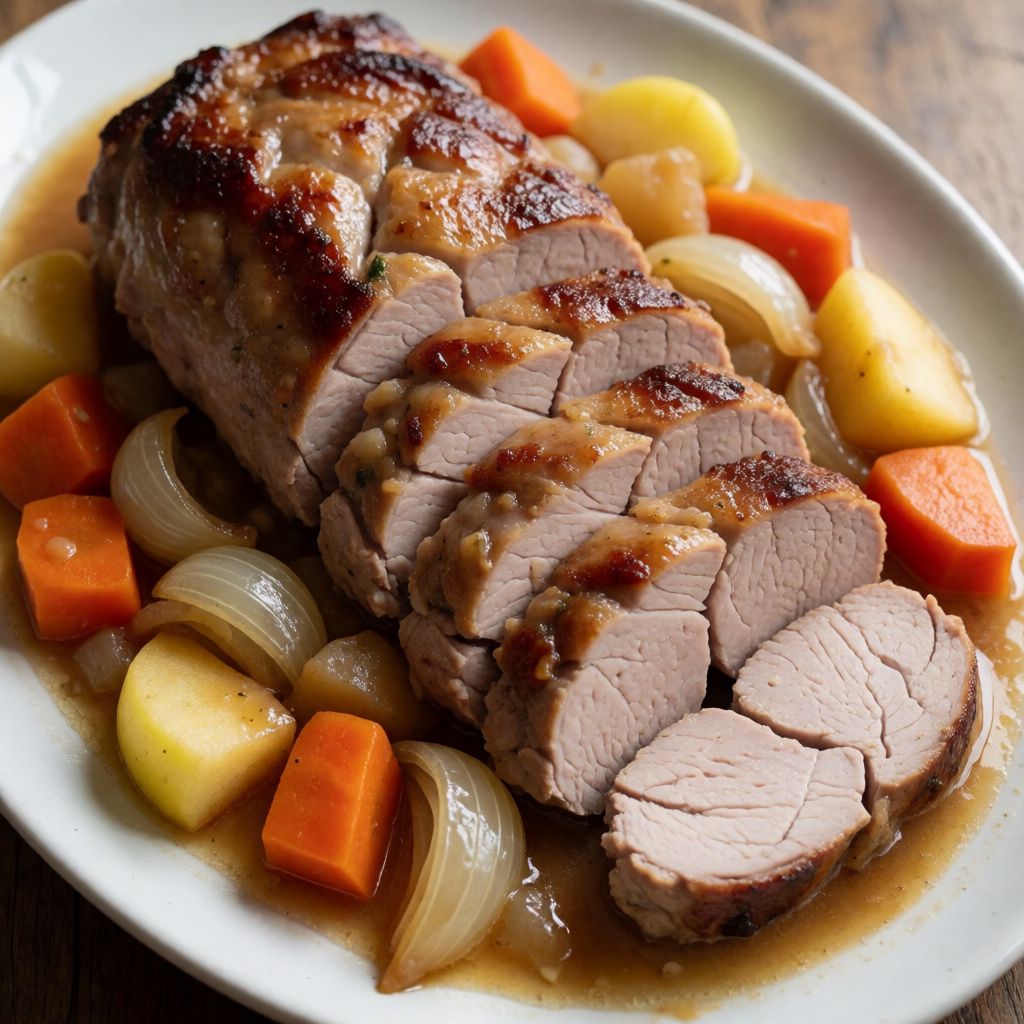
 AI photo
Baked Pork Loin
Tender pork loin braised with onion, carrot and apple, then sliced and baked until golden and juicy.
Ingredients
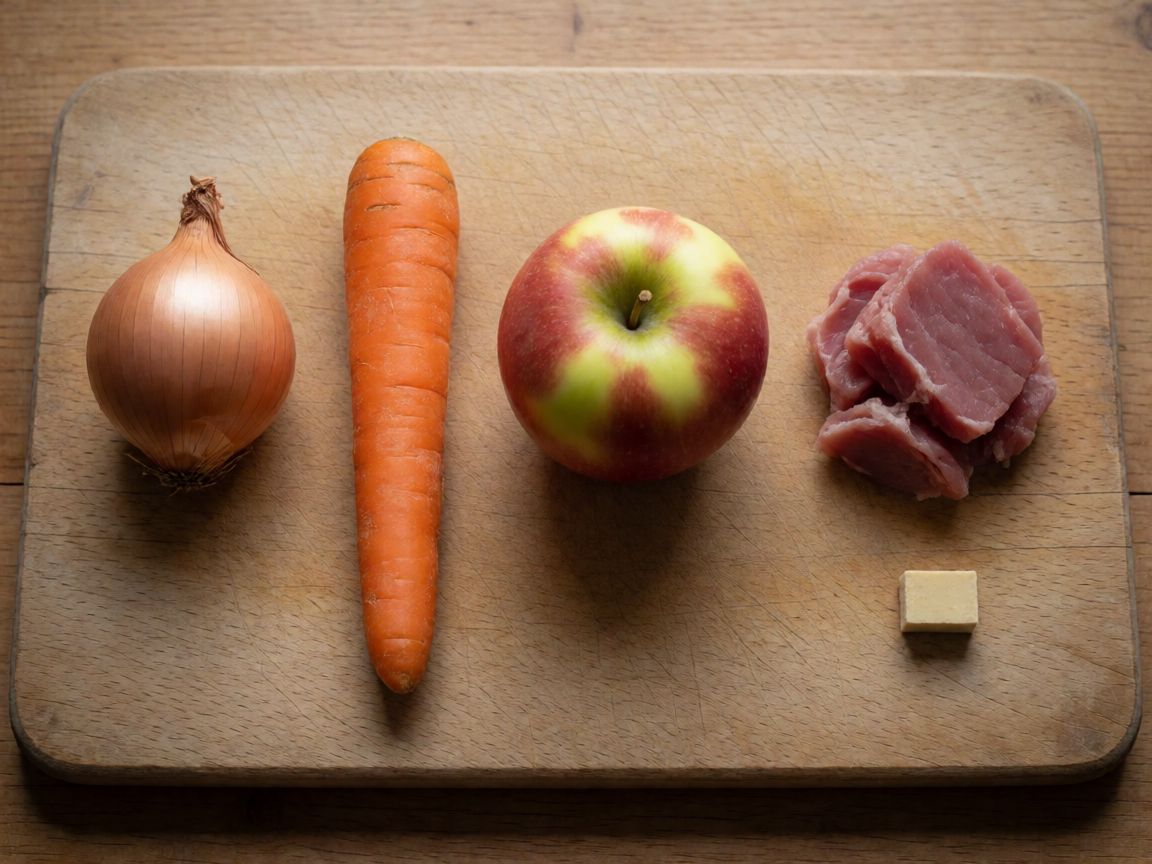







Steps
Pour 500 ml of water into a saucepan, add the stock cube and simmer until the cube has completely dissolved.
Peel and finely chop the carrot, apple and onion.
Heat the oil in a non-stick frying pan and fry the chopped vegetables with the apple.
Add the whole piece of pork loin, occasionally adding stock so the meat stays juicy.
Halfway through cooking, remove the pork loin, slice it and place it in a ceramic baking dish, pouring the sauce over the top.
Bake in a preheated oven at 180°C for 30 minutes. Doneness: 70°C inside.
30 min
This isn't the big slow Sunday joint going grey in the oven for three hours under foil. Loin is a lean, quick muscle — no marbling to protect it, no fat cap worth the name on most UK-butchered loins — so it behaves more like a large chicken breast than like shoulder or belly. What decides whether this works isn't oven time, it's what state the meat is in when it goes into that final heat.
The trick here is doing the cooking in two stages, and each stage has a job. On the stove, the meat goes in whole, sitting in the softened onion, carrot and apple, topped up now and then with stock. Whole, because a big single piece loses juice slower than cut pieces — less surface for the moisture to escape from. The stock does two things: keeps a moist, gentle environment around the meat (there's no fat here to baste with, so you baste with liquid instead), and starts building the sauce that will carry the dish.
Halfway through, you take the loin out and slice it — and only now, because slicing before this point would have let the meat weep its juices into the pan too early. Sliced and laid in the dish with the sauce poured over, the final 180°C blast in the oven only has to reach the centre of each slice, not drive heat through one thick log. That's why 70°C in the core is your target, not a clock. A thermometer earns its keep here; lean meat goes from perfect to dry in the gap of a few minutes, and you won't see it coming by eye the way you would with a fatty joint.
Start with the onion, carrot and apple going into the pan together, in oil, before the meat arrives. This is the part people are tempted to rush, and it's the part that decides your sauce. You're not just softening vegetables, you're building sweetness two ways — the slow caramelising of the onion and carrot, and the apple breaking down as it heats, releasing both sugar and a bit of acid. The carrot tells you when it's ready by bending instead of snapping if you press a piece against the pan; the onion tells you by turning from pale gold to something closer to ginger. Rush this stage and you get a thin, watery sauce later with no backbone to it — the vegetables haven't given up what they had to give.
For the pork loin itself, buy it as one piece if you can, not pre-sliced — you need that mass to hold moisture through the stovetop stage. If your butcher has left any fat on it, leave the fat on too; it's thin on loin but every bit helps a lean cut survive heat. No loin available — a boneless pork neck fillet or even a thick-cut pork chop joint will take the same logic, though neck has more fat and more forgiveness, so watch it less anxiously.
The stock cube matters more than its size suggests. Dissolve it fully in the water before anything else happens — a lump of undissolved cube means a pocket of raw salt sitting in your sauce later, and no stirring in the pan fixes that after the fact. If you've got proper stock — chicken, veg, whatever's in the freezer — use that instead and skip the cube; you're after a savoury, well-seasoned liquid, the cube is just the quick route to it, not the point.
Olive oil here is doing nothing fancier than carrying heat into the vegetables and keeping them from catching. The brief is: any oil with no strong smell of its own, so it doesn't fight the apple's sweetness. A mild olive oil works; a cheap sunflower or rapeseed oil works just as well and is what most kitchens already have open. Save your good peppery extra-virgin for a salad, not for this — its flavour would just get lost and wasted in the pan anyway.
On patience: the whole method only works if you let each stage actually finish before moving to the next — vegetables properly soft, stock properly absorbed, meat properly rested in its braise before you slice it. Push through any of these early because the clock says it's time, and you're not saving minutes, you're borrowing texture you'll have to pay back with a dry plate.