
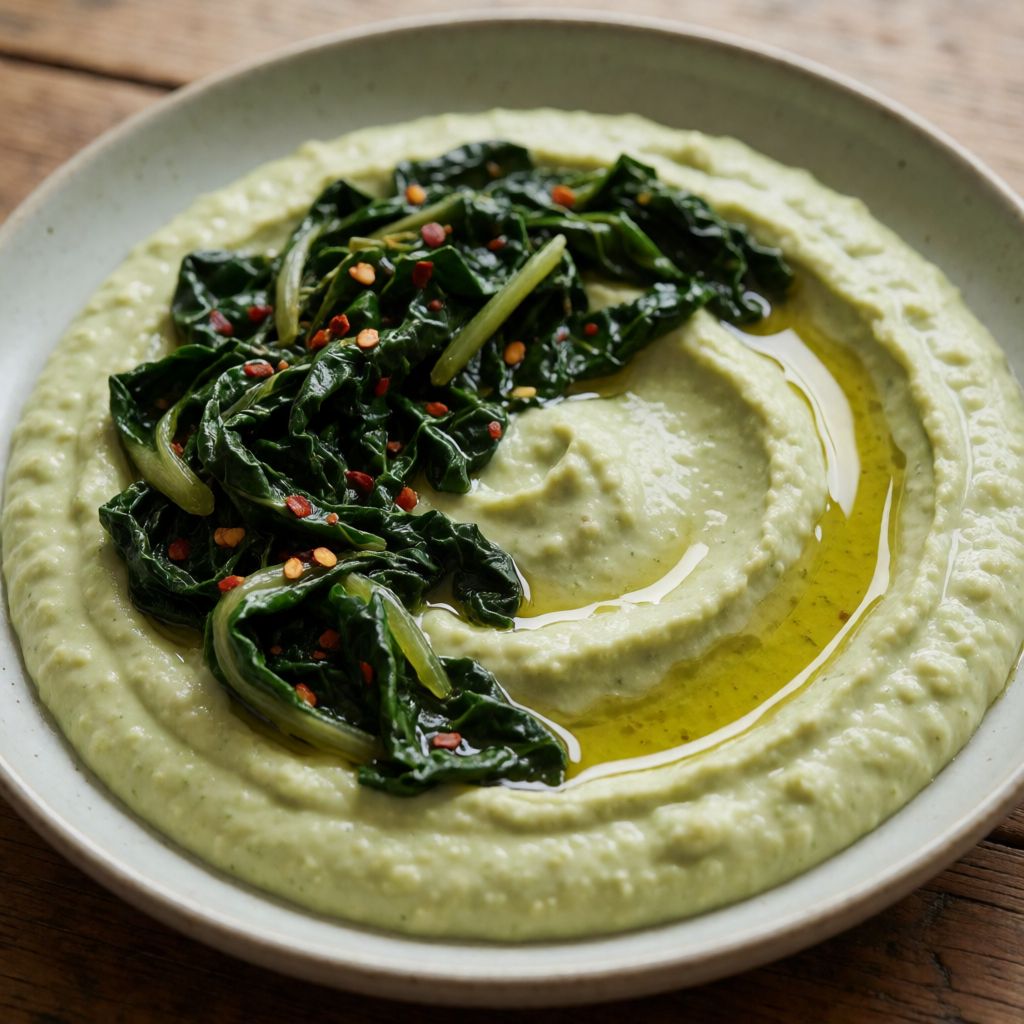
 AI photo
Broad Bean and Chicory Purée
A hearty purée of broad beans and potatoes topped with chicory sautéed with garlic and chilli.
Labels are worked out automatically from the ingredients and can be wrong. Check the packaging if it matters to you.
Ingredients
- 250 g Dried Broad Beans dried, broad/fava beans
- 1 kg Chicory wild leaf chicory, such as catalogna; curly endive or spring greens work as a substitute
- 2 pcs Potatoes
- 1 clove Garlic
- Dried Chilli Flakes to taste
- Olive Oil to taste
- Salt to taste







Steps
Rinse the dried broad beans under running water and leave to soak for at least 6 hours.
Drain the beans and put them in a pot. Wash, peel and thinly slice the potatoes, then add them to the beans and cover with at least 1 litre of water.
Cover the pot and cook over low heat for about 2 hours until thick, stirring occasionally.
120 minSeason with salt to taste and finish the purée with a little olive oil.
Thoroughly wash the chicory and cut it into pieces, not too short.
Bring a pot of water to the boil and cook the chicory for 5 minutes until tender.
5 minThinly slice the garlic clove and fry it in a pan with a few tablespoons of olive oil.
Add the cooked chicory and fry for a few minutes so it absorbs the flavour.
Season with [c1] to taste.
To serve, spoon the broad bean and potato purée onto the base of each plate and top with the chicory fried with garlic and chilli.
What was changed
Dried Chilli Flakes replaces the ground chilli with dried chilli flakes, the form UK shoppers usually find.
Fave e cicoria — broad bean purée with bitter greens — is Puglia's poverty dish wearing its best clothes. Dried beans were cheap protein when meat wasn't on the table; wild chicory grew free along field edges and olive groves. Put the two together and you had dinner that cost almost nothing and still filled you. Nothing mystical here — just a region working out how to eat well on little.
What decides whether this comes out right is not the recipe, it's what happens in the pot over two hours. The purée has to turn silky on its own — through broken-down bean starch and the potato's own starch released into the water — not through a blender smoothing out lumps you were too impatient to cook through. And the chicory has to keep some of its bitter backbone after blanching. Tame it completely and you've made spinach; you want it recognisable, just civil enough to sit on a plate.
Some say an overnight soak is tradition, non-negotiable, a ritual. No — the soak is plain physics. A dried bean is a dehydrated cell, and water has to get all the way to its centre before heat can do anything useful. Six hours is the floor because that's roughly how long it takes a fava's tough skin to let water through evenly; shortchange it and you get beans cooked soft on the outside, gritty in the middle, no amount of simmering fixes that afterwards.
Dried broad beans, skin on, is what the ingredient list assumes, and that skin is why the cooking takes two hours rather than forty minutes. Puglian kitchens often use skinned, split dried favas precisely to dodge this — they break down faster and the skins can't contribute their faint bitterness to the finished purée. If you find skinless ones, don't expect to need the full two hours; start checking once they're falling apart with no resistance from the spoon, that's the real marker, not the clock. Tinned or pre-cooked beans will get you dinner faster, but the purée loses the long, slow release of starch that gives it its cling — use that route only when you've genuinely run out of time, not as an improvement.
The potato is there to stretch the dish, plainly and honestly — more mouths fed per handful of beans, which were always the pricier ingredient of the two. Pick a floury variety that wants to fall apart under heat — Maris Piper, King Edward — rather than a waxy new potato that holds its shape and gives you lumps in an otherwise smooth purée. This is the same logic behind thickening a soup with potato instead of cream: starch does the binding, no dairy required, no dairy implied.
Catalogna, the wild leaf chicory this dish was built around, doesn't turn up in an ordinary UK greengrocer. Curly endive and spring greens are named as substitutes for a reason — the criterion is bitterness with enough physical backbone to survive blanching and then a second turn in the hot pan without collapsing to mush. Dandelion greens or turnip tops would do the same job if you can get them. The test is at the five-minute mark in the boiling water: the stem should bend, not snap. Snap means still raw; total collapse means you've gone past tender into spent.
Garlic goes in sliced, not crushed, because you're perfuming the oil, not frying the garlic itself crisp. Watch it, don't walk away — garlic's sugars caramelise fast once the oil's hot, and the line between gold and bitter-burnt is a matter of seconds, not a stage you can rescue once crossed. Pull it the moment it turns pale gold.
Olive oil does two different jobs here and deserves two different bottles if you have them. Finishing the bean purée raw, off the heat, is where you want a fruitier, more peppery extra virgin — that flavour is the point, and heat would have cooked it away. Frying the chicory is a different matter: the oil's getting hot anyway, much of any delicate character burns off regardless, so a plainer, cheaper olive oil does the same work for less money. Chilli flakes are just there for warmth, not character — start with a pinch, you can always add, you can't take it back out.
None of this is fast, and it isn't meant to be. Two hours of beans quietly thickening is the actual engine of the dish — start it, then go and do something else, Sunday-roast style, and come back to stir. Rush the simmer and you get a thin, grainy purée that tastes of nothing but boiled bean; give it the time and it turns into something that holds a spoon upright.