
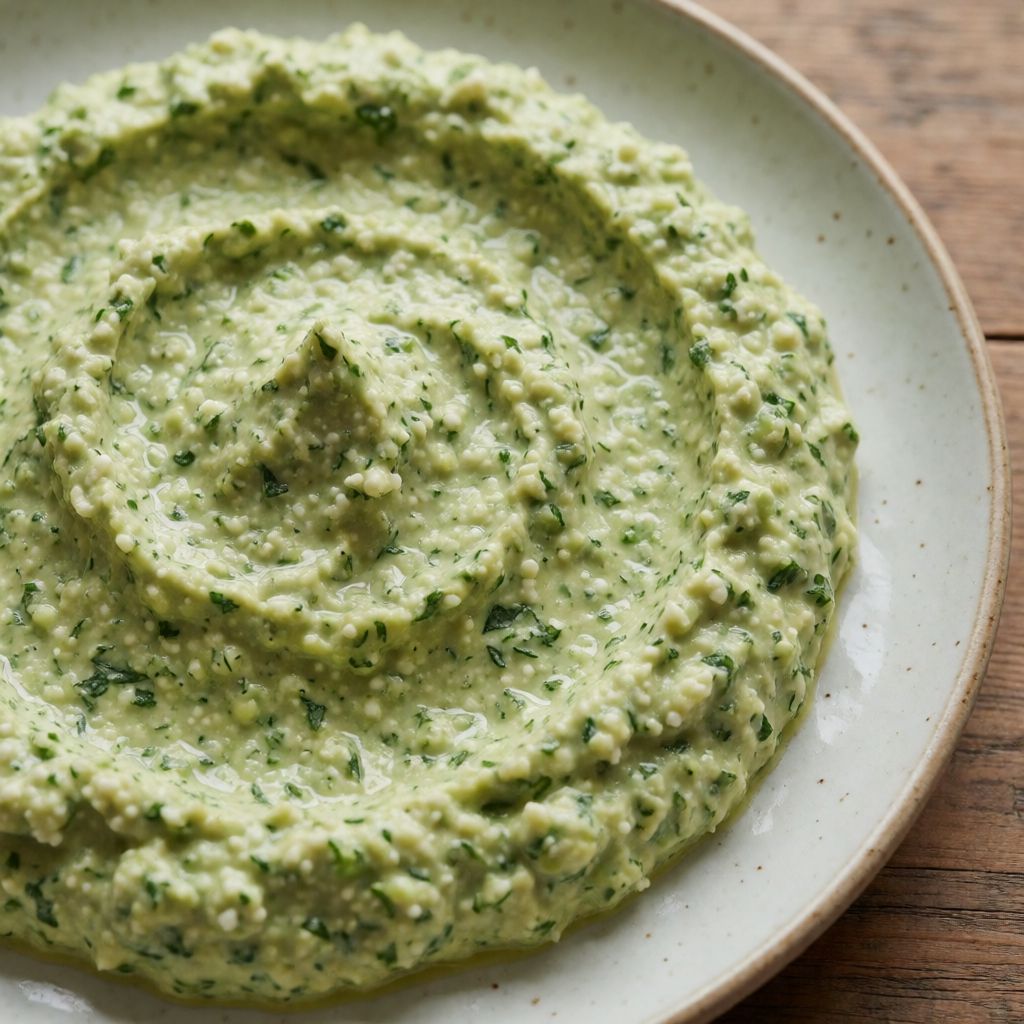
 AI photo
Broad Bean Pesto
A fresh, vibrant pesto made from tender broad beans, pecorino and mint, perfect stirred through pasta or spread on toast.
Labels are worked out automatically from the ingredients and can be wrong. Check the packaging if it matters to you.
Ingredients
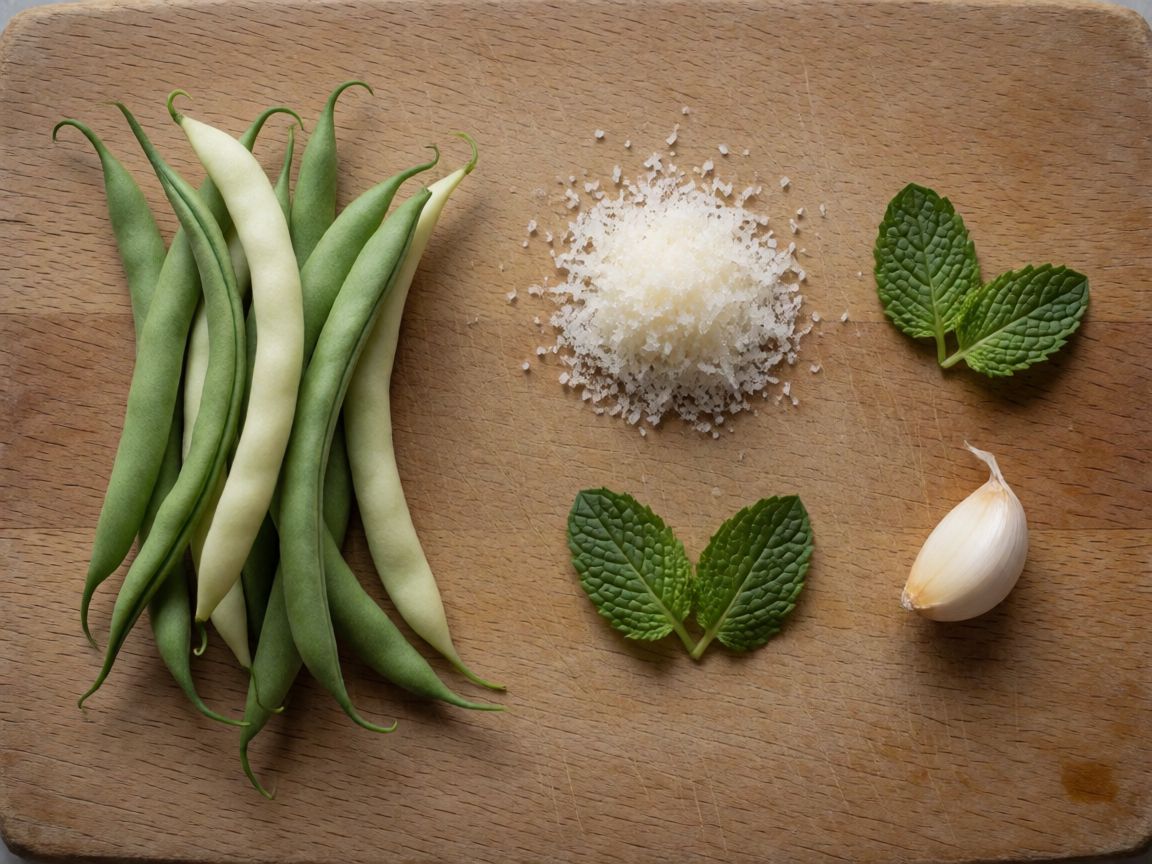
- 150 g Broad Beans fresh, shelled
- 75 ml Olive Oil
- 75 g Pecorino Romano grated
- 4 pcs Mint sprigs
- 1 clove Garlic
- 1 pinch Salt to taste






Steps
Shell the broad beans and remove the thin skin; if using frozen beans, blanch them briefly in salted water.
5 minPut the broad beans, garlic, mint sprigs and grated pecorino into the bowl of a food processor.
2 minAdd the olive oil in a thin, steady stream.
1 minBlend on medium speed, pulsing as needed, until smooth.
3 min
This is not the pesto you know from the basil jar — it's cousin to it by method only. Broad beans give you a paste that's starchy and sweet rather than resinous and sharp, so the whole thing behaves differently in the mouth: heavier, rounder, more like something you'd spread than something you'd toss through spaghetti thinly. Treat it as a base — for pasta, for toast, for a spoonful next to lamb on a Sunday plate — and it stops disappointing you for not being basil pesto.
What decides whether it works is not blending time, it's two small, boring jobs done properly: skinning the beans, and adding the oil slowly. Skip either and you get a pesto that tastes faintly of hay and separates into oil and grit on the plate — edible, not good.
Some say pesto has to be made in a mortar, by hand, or it isn't real pesto. No — that rule comes from Liguria defending basil leaves from bruising and going black under a metal blade. Broad beans don't bruise, they don't oxidise the same way, and a food processor doesn't fight you here. The mortar was never magic, it was the right tool for a different, more fragile ingredient.
Broad beans, fresh: in season — late spring into summer in Britain, brief and worth catching — pod them and then skin each bean. That inner skin is bitter and fibrous; leave it on and no amount of blending breaks it down, it just shreds into flecks that sit on your tongue like paper. The skin comes off easily when the bean is plump and recently podded — pinch one end and it slips. If it fights you, the bean's gone starchy and old; cook it a shade longer before skinning, don't force it raw.
Frozen beans are the honest answer for most of the year, and nothing to apologise for — British supermarkets freeze them at their best, often fresher in flavour than the ones that have sat three days in a punnet. The blanch isn't about cooking them through, it's about loosening that same skin, which clings harder once frozen. A minute in salted boiling water, into cold water after, and the skins peel the same way.
Pecorino Romano is sheep's milk, and that matters: it's saltier and sharper than Parmesan, with a tang that cuts through the flatness of the beans. Parmesan will work as a stand-in, but taste your salt again afterwards — Parmesan is gentler, and the pinch of salt in the recipe assumes pecorino's bite is doing some of that work for you.
Mint, not basil — this is the one deliberate swap that makes the dish its own thing rather than a basil substitute dressed up. Mint has a coolness that basil doesn't, and it's what stops a pesto this starchy from tasting heavy. If you've only got basil, use it, but add it later and taste as you go — it's sweeter and rounder, and too much tips the balance back toward soup.
Garlic goes in raw and uncooked, which is the whole point and also why one clove is enough — this isn't a sauce that mellows garlic over heat, it carries its sharpness straight through. Olive oil here is doing flavour work, not just lubricating the blade, so don't reach for a neutral oil to save money — a plain sunflower oil will blend fine and taste of nothing, which in this case is a loss, not a safety.
Add the oil slowly, in a thin stream, with the blade already running. This is the one place patience actually earns its keep: oil added all at once doesn't get folded into the paste, it just coats it, and the mixture splits — you'll see a slick on top and a dry clump underneath. Slow and steady lets the oil emulsify into the starch from the beans, the same logic as mayonnaise, just with far less fuss and no egg to curdle. Blend until it coats a spoon evenly and there's no grain left between tongue and palate — that's doneness here, not a clock. Four people, as a starter with bread or tossed through pasta for two as a light main — it's rich enough that you don't need much per plate.