
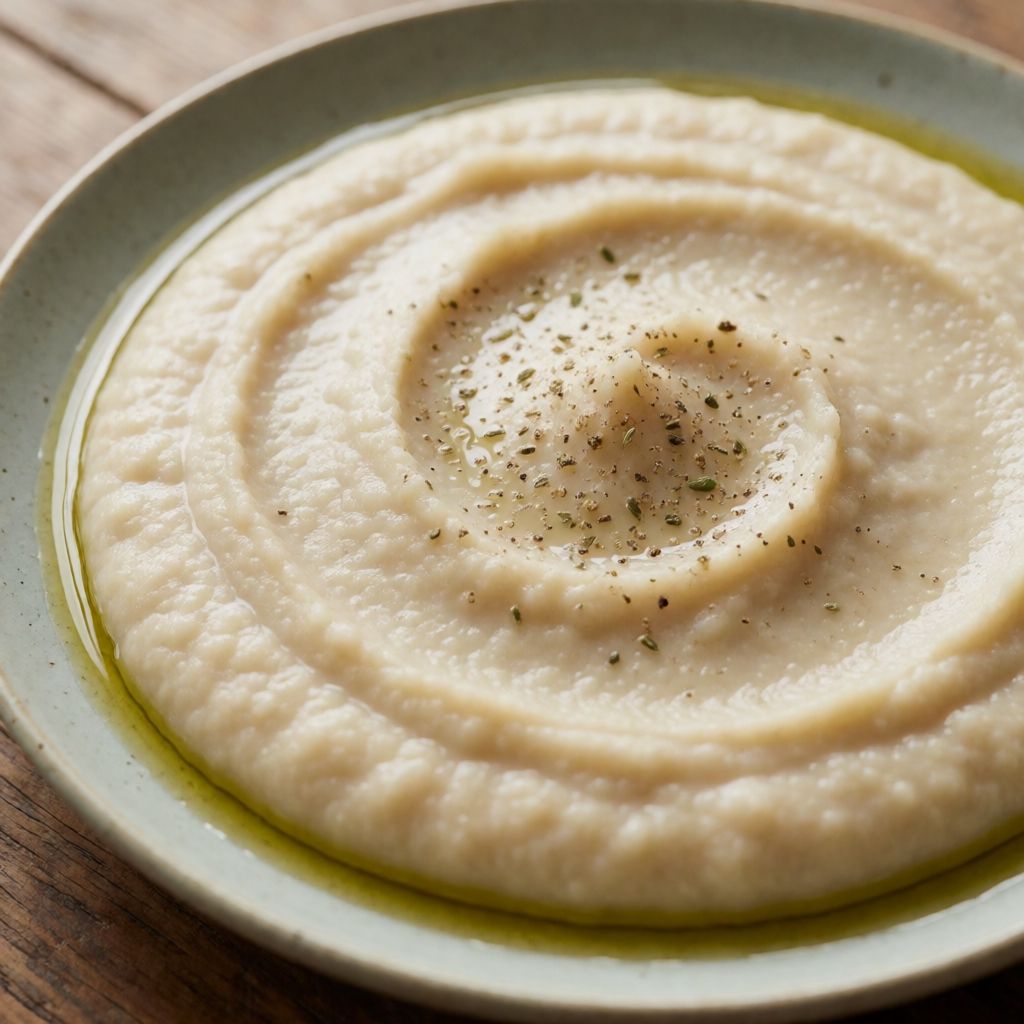
 AI photo
Bean Purée
A simple, creamy bean purée made from dried beans, garlic and olive oil.
Labels are worked out automatically from the ingredients and can be wrong. Check the packaging if it matters to you.
Ingredients
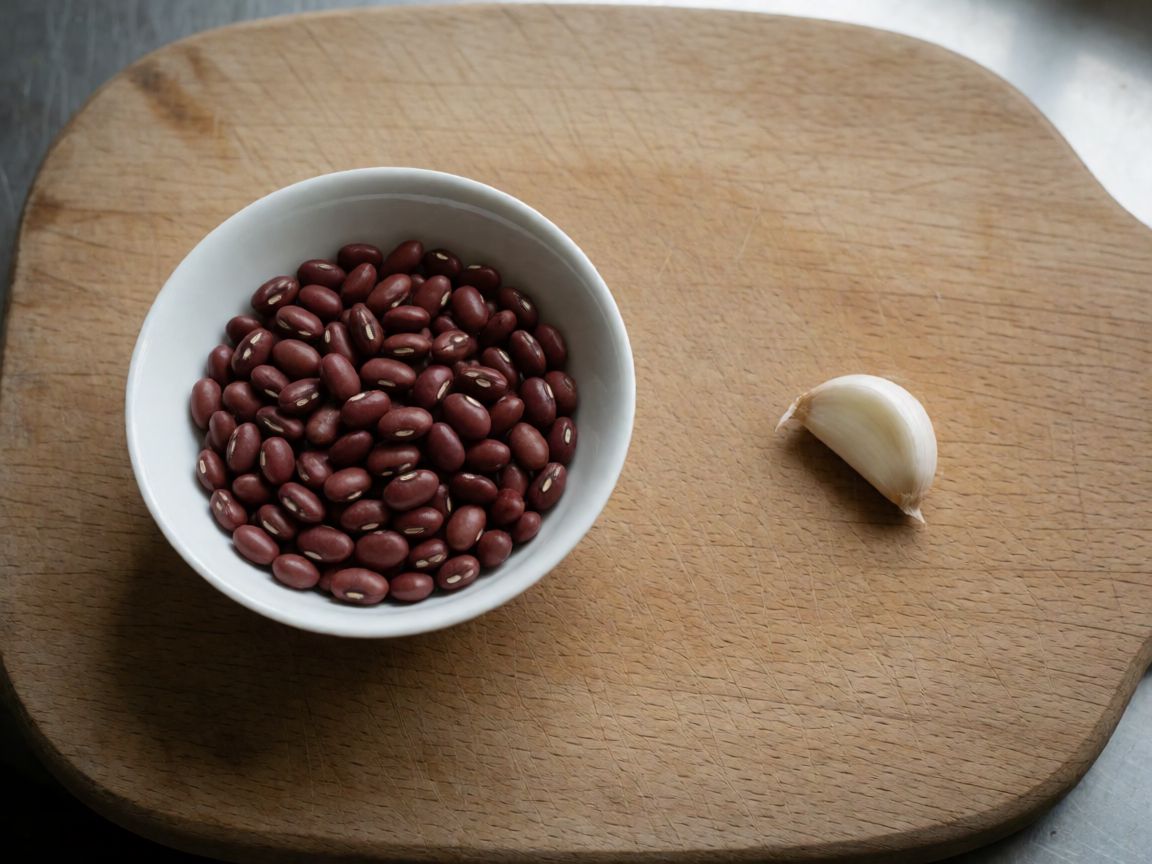
- 300 g dried beans dried
- 1 clove Garlic
- Olive oil to taste
- Salt to taste
- Water as needed





Steps
Soak the beans in cold water for about 2 hours.
120 minDrain, rinse the beans under running water and transfer to a saucepan.
Add water until the beans are completely covered, then add the garlic.
Cover the saucepan and simmer gently for about 2 hours, topping up water as needed.
120 minAdd salt and olive oil to taste once the beans are nearly cooked through.
Blend with an immersion blender until smooth and creamy.
This is not a soup and not a dip — it's a bean mash, the kind you'd put where potato mash usually sits next to your Sunday roast. Pulses have fed people through lean winters for centuries precisely because dried beans keep for years in a cupboard and turn, with nothing but water and patience, into something that fills you. That's the whole economics of it: cheap, stable, slow to make, which is why it fell out of daily habit once potatoes and tinned food took over British kitchens.
What decides whether it works is not flavour — garlic and oil are easy — it's whether every bean cooked through at the same rate, skin and centre together. Soak them properly and you're not just softening them for speed. You're letting water into the dried cell walls evenly, so the outside doesn't collapse into mush while the middle stays chalky. The soaking water also carries off some of the sugars that beans are famous for turning into gas later — tip it away, don't cook in it.
Once they're in the pan, keep the water at a gentle shiver, not a rolling boil. A hard boil throws beans against each other and the pan wall; skins split and peel off before the inside is done, and you end up with ragged shreds floating in a soup that refuses to become smooth. Gentle and slow is what gives you beans that are soft right through, holding together until the blender hits them.
Beans: any dried bean with a mild, starchy character works — haricot, cannellini, butter beans, even the small white ones tinned as 'baked beans' here, just without the sauce. 300 g dry is a side for four, because dried pulses roughly triple in weight once soaked and cooked; don't be alarmed when a small bag fills your saucepan. If you're out of time, tinned beans can stand in — rinse them well, since the canning liquid is already salted and firmed with calcium salts that make the texture slightly grainier when blended. You'll skip the soak and most of the simmer, but you also lose some of that slow, even creaminess dried beans give you — it's a fair trade on a weeknight, not a replacement on a day you've got the time.
Garlic: one clove, put in whole at the start of the simmer, not crushed. Crushed raw garlic at this stage would turn bitter and sharp over two hours of cooking; whole and slow, it just softens and sweetens, handing its flavour to the cooking water without shouting over the bean. Choose a clove that's still firm with tight papery skin — a clove gone soft or green-sprouted inside turns bitter, and no amount of simmering fixes that.
Olive oil: added to taste once the beans are nearly done, then blended in while everything is still hot. That heat matters — oil beaten into a hot purée emulsifies into it, giving you a silky, uniform mash; stirred into a cold one, it just sits on top as a slick. Olive oil gives a fruity background that suits this dish, but the only real requirement is an oil with a character you actually want in the final taste — a neutral oil with no smell of its own if you want the bean flavour alone up front, something grassier if you want the oil to be part of the conversation.
Water: topped up through the two hours of simmering, because the real danger isn't undercooking, it's the water level dropping below the beans while you're not looking, and the bottom layer catching and scorching against the pan. A plate set over the saucepan, if your lid doesn't fit snugly, slows that evaporation down and buys you time between checks — not a seal like a kazan lid, but enough.
Some cooks reach for a pinch of bicarbonate of soda to soften beans faster — no, don't. It does speed things up, but it also breaks the bean down past tender into slimy, leaves a faint soapy taste behind, and strips out thiamine along the way. There's no chemical trick that replaces two hours of gentle heat; that's exactly the two hours you were given.
Doneness before blending isn't a clock reading, it's a bean pinched between your fingers giving way without resistance, no chalky core left. Once you're there, hit it with the immersion blender until it's properly smooth — if it looks grainy rather than creamy, it usually means not quite enough cooking liquid left in the pan, so add a splash of the hot water back before you blend, not after.