
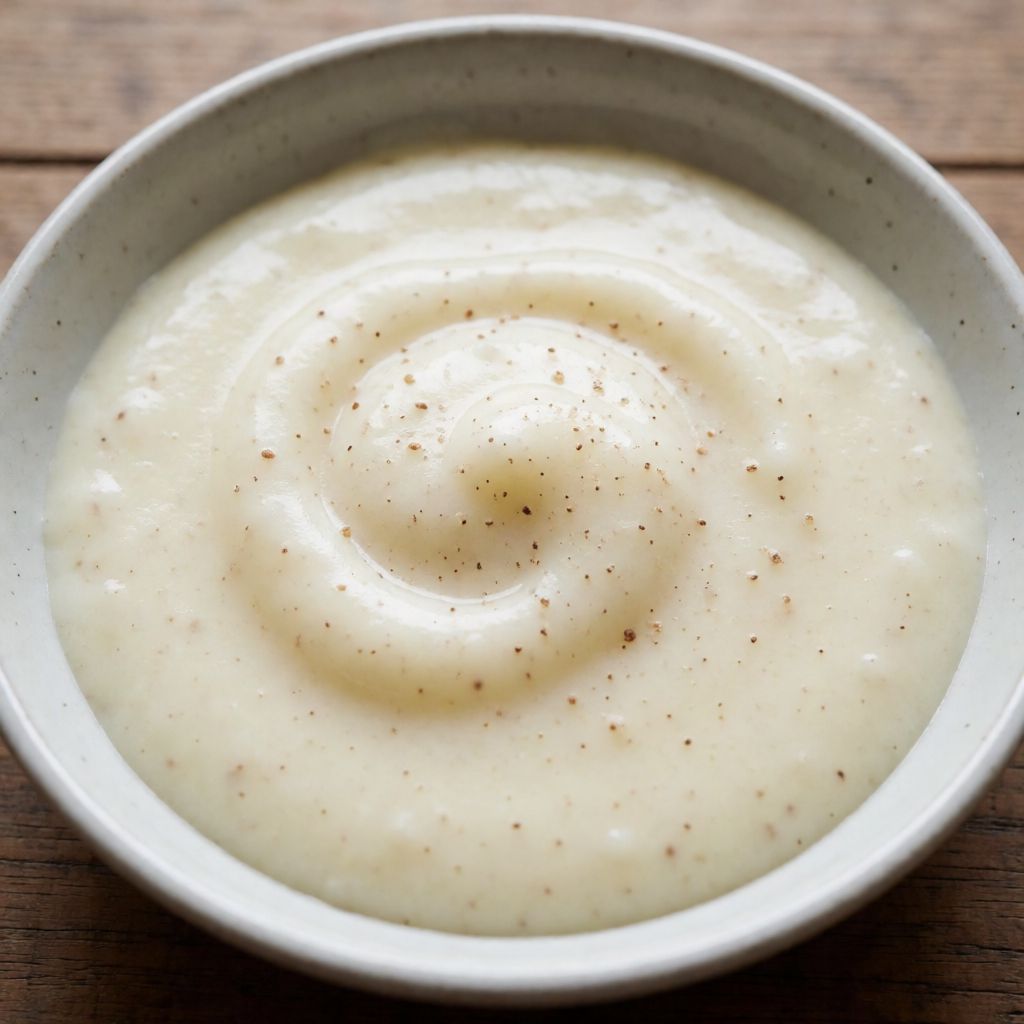
 AI photo
Gluten-Free Béchamel
A dairy-free, gluten-free white sauce made with soy milk and rice flour.
Labels are worked out automatically from the ingredients and can be wrong. Check the packaging if it matters to you.
Ingredients
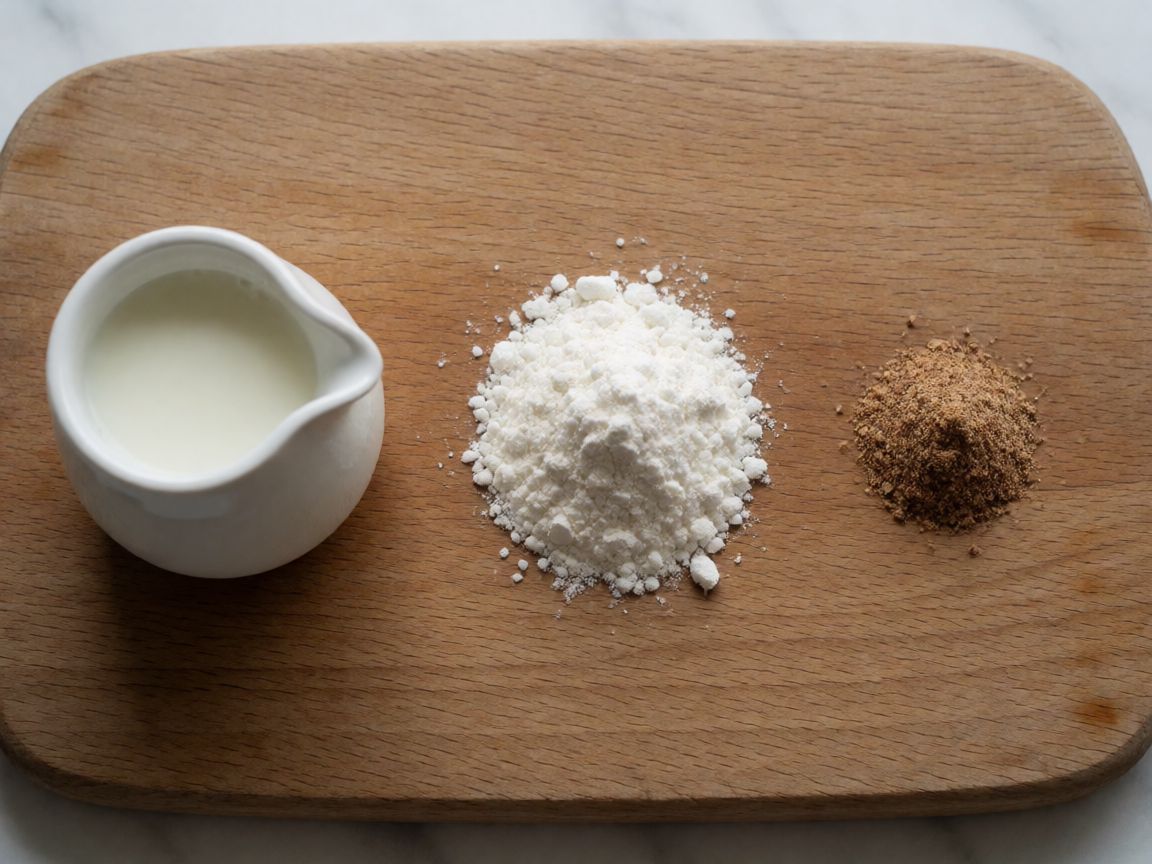
- 300 g Soy milk
- 100 g Rice flour
- 100 g Sunflower oil
- 1 pinch Nutmeg
- 1 pinch Salt




Steps
Pour the soy milk into a saucepan and set it over low heat. Add the salt and sprinkle in the nutmeg.
Put the rice flour in a bowl, add the sunflower oil and mix until smooth.
Pour the hot soy milk in a thin stream into the bowl with the flour and oil, stirring constantly.
Transfer the sauce back into the saucepan and bring to the boil over low heat.
Boil for one minute, then remove from the heat.
1 min
Béchamel is just flour and fat thickening milk into something you can spread. This one swaps out wheat and butter so no gluten touches the plate at any point. The thing that actually decides whether it works isn't the nutmeg or even the soy milk — it's the order you combine things in. Rice flour has no gluten net to catch and smooth out lumps the way wheat does, so instead you make your own net: you coat every grain of rice flour in oil before any heat or liquid reaches it. That's why step two happens in a cold bowl, with a spoon, before the saucepan is even warm. Each starch granule gets its own film of oil around it, so when the hot soy milk arrives, the granules swell on their own rather than clumping into those grey nuggets that put people off béchamel for life.
Some say you need a proper roux — flour browned in butter on the stove — before milk goes anywhere near it, or it isn't real béchamel. No, because a roux was never ceremony, it was a way to coat starch in fat and cook off the raw taste of wheat protein. Rice flour doesn't carry that raw bitterness, so there's nothing here to cook out by browning, and no gluten to relax by heating it dry. You still coat the starch in fat, you just do it cold, in a bowl, because cold keeps the oil liquid and even — heat would have you juggling a hot pan and a smooth paste at once, and that's a fight the hob doesn't need to have.
Soy milk is doing the job dairy milk usually does — carrying a little protein and fat that gives the sauce body, not just liquid for the starch to swell in. It's the right plant milk for this because it has enough protein to hold some structure the way casein does in dairy. Oat milk will thin it out, almond milk is mostly water with a memory of almonds and gives you no backbone at all. Keep the heat low when it goes into the pan — soy protein coagulates more readily than dairy's, and a hard simmer curdles it into small grainy flecks before the starch has even had time to thicken. That's not caution for its own sake; it's what stops the sauce looking split when it hasn't — it's just scalded.
Rice flour is the starch doing all the thickening, and it's a fair swap because what thickens a béchamel was never the gluten — gluten is for bread, for structure you can stretch. Here it's plain starch gelatinisation: granules absorbing liquid and swelling until thin milk turns into something that holds a shape on a spoon. Any starch that gelatinises in liquid can do this — cornflour, potato starch — but they thicken harder gram for gram, so swap in cornflour and use less, or you'll get wallpaper paste rather than sauce.
The sunflower oil replaces butter, and the substitution rule here is simple: use any oil with no smell of its own, because butter's job in a béchamel was never flavour so much as fat — the thing that coats starch and carries richness without arguing with it. Sunflower, light rapeseed, grapeseed, all fine. Olive oil isn't, because it has an opinion, and it'll fight the nutmeg.
Nutmeg and salt are small but doing real work, not decoration. Soy milk is blander and slightly beanier than dairy, with none of the faint sweetness lactose gives a classic béchamel, so the pinch of nutmeg gives the sauce a backbone of flavour soy milk won't supply on its own. Don't treat it as garnish; it's closer to seasoning a stock.
In a British kitchen this has a very familiar cousin: it's what white sauce is for cauliflower cheese, for a fish pie, for the inside of a lasagne, minus the gluten and the butter. No kazan, nothing exotic — a saucepan and a bowl are the whole kit, which is honestly all this recipe ever asked for on a normal hob. 300g of soy milk against 100g each of rice flour and oil gives a thick sauce — enough to dress a gratin or a pie filling for four, not something you'd serve by the ladle on its own.