
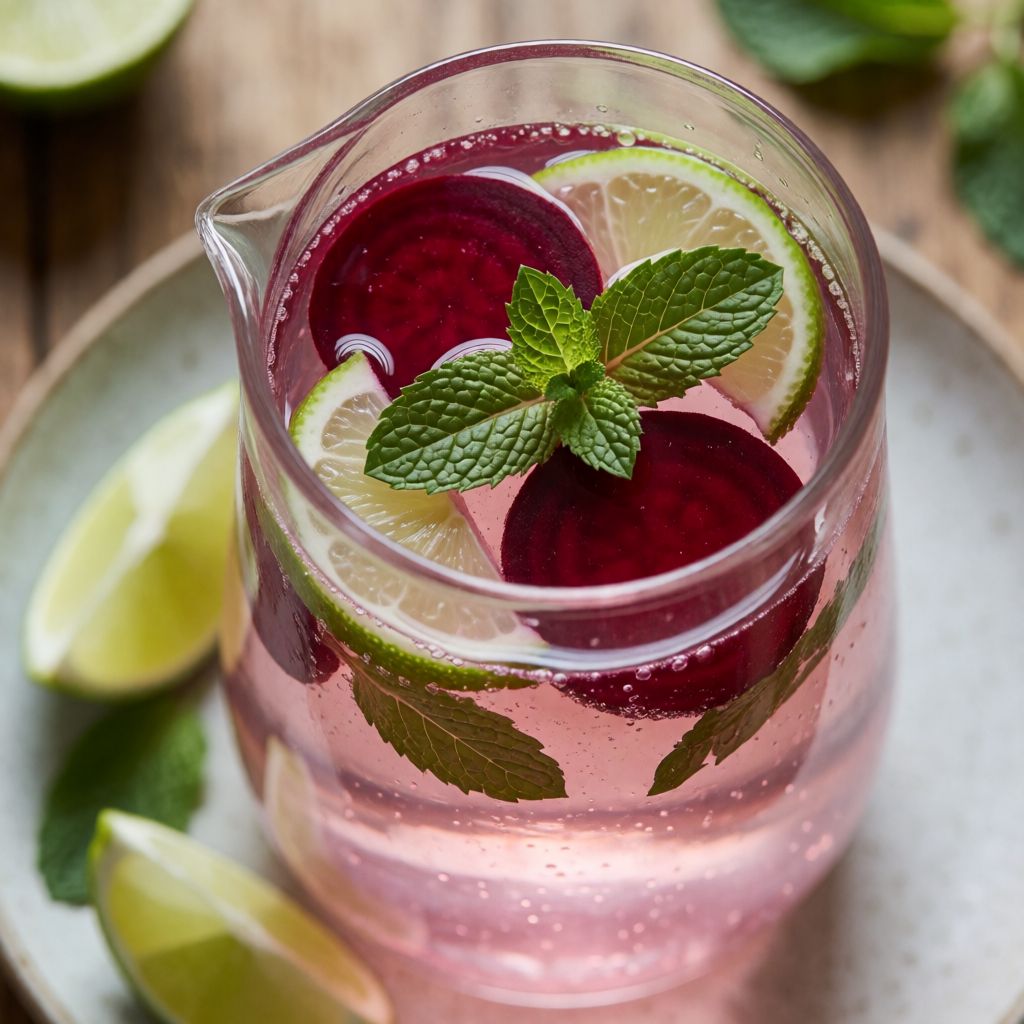
 AI photo
Flavoured Water with Beetroot and Elderflower
A refreshing infused water made with beetroot, mint, citrus and elderflower.
Labels are worked out automatically from the ingredients and can be wrong. Check the packaging if it matters to you.
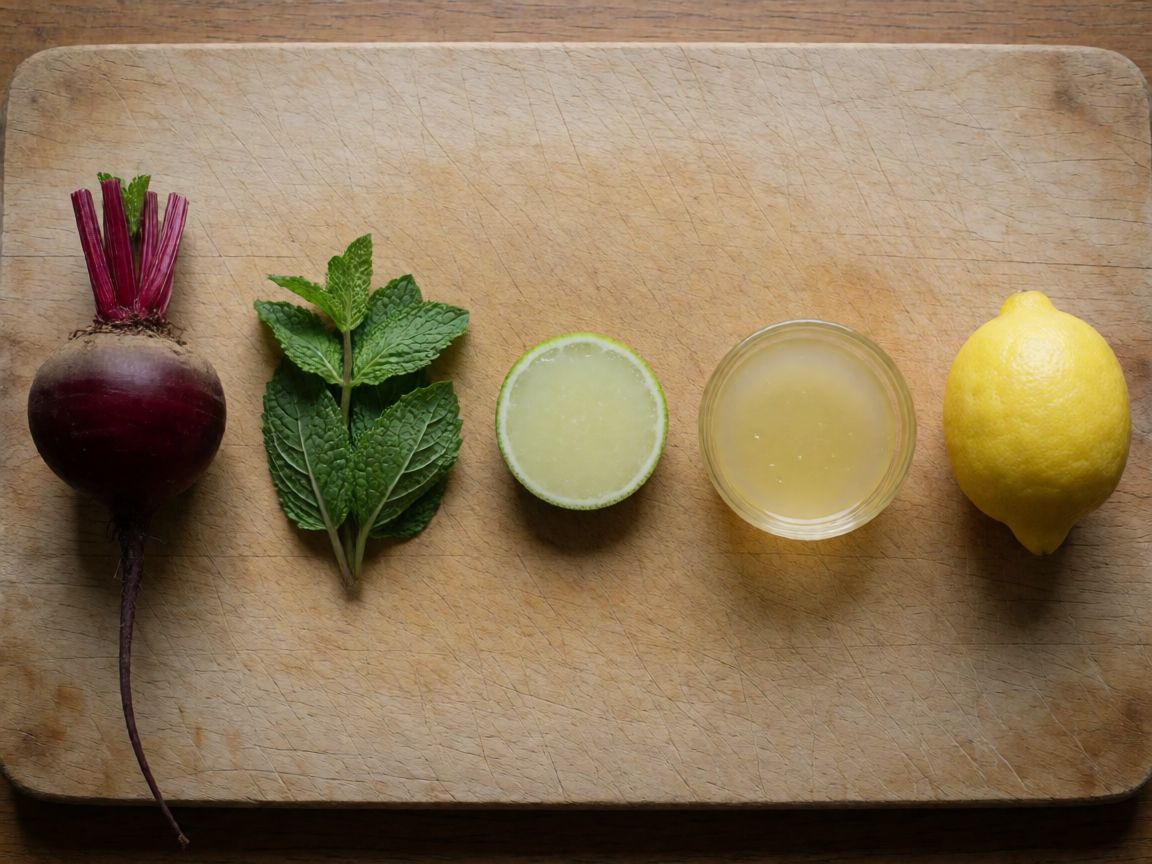
Ingredients





Steps
Wash the beetroot, slice it and place in a glass jar.
Add 1 litre of water, the mint leaves and the juice of half a lime (or lemon).
Put the jar in the fridge for 12-24 hours.
Strain the water before serving; if the taste seems too strong, dilute with more water.
In another glass jar, pour 250 ml of water, add the elderflower syrup and a few slices of lemon.
Close the jar and refrigerate for 12 hours, then serve chilled.
This is not a drink you cook — it's one you wait for. Two separate jars, cold water, patience. The beetroot bleeds its colour and sweetness slowly into plain water over half a day or more, no heat involved anywhere. The elderflower jar is a lighter, quicker cousin — syrup and lemon stirred into water, left to marry for twelve hours in the same fridge.
What decides whether it works is restraint at both ends. People reach for a pan on instinct, because beetroot usually enters a British kitchen already cooked — boiled for salad, simmered into borscht. Some say you need heat to get any flavour out of it at all — no, because heat drags beetroot's flavour toward something savoury and stock-like, while cold water pulls out only the sweet, earthy top note and the colour, and leaves the heavier vegetal weight behind in the flesh where it belongs. Twelve hours is the floor, twenty-four the ceiling, and the fridge matters because it's the only safe place to leave raw veg sitting in water that long without anything turning.
The second thing that decides it is dilution, and the recipe is honest about not giving you a fixed number for it. Beetroot varies — size, age, how long it's sat in the shop — so you strain, you taste, and if it reads too strong you let more water in until it doesn't. That's not vagueness, it's the recipe admitting the raw material won't behave the same way twice.
A litre of water plus one beetroot reads like a lot for one person, and it is — think of it less as a single glass and more as a jug that covers a few glasses across a day, for one person, or splits two ways if someone else wants a taste. The elderflower jar, at 250ml, is a single-serving top-up rather than its own drink.
Beetroot: pick one that's firm, with no give when you press it, because what's doing the work here is turgor — a tight, well-hydrated root releases colour and sugar steadily over hours. A soft, old one has already begun breaking down and will dump its flavour fast and taste tired by hour six, with nothing left for hour twelve. Slicing rather than grating gives it more cut surface than a whole root without flooding the water all at once.
Mint: fresh leaves, not dried. Drying drives off the volatile oils that cold water needs to carry any smell at all — which is exactly why dried mint works fine simmered into a hot stew and does almost nothing dropped into a cold jar. No mint, no disaster — the beetroot and the acid still carry the drink, just quieter.
Lime or lemon juice: any citrus with a clean sour edge does the job, lemon or lime, whichever's actually in the fruit bowl. The acid isn't there for sourness as such — it's balance. Beetroot's natural sweetness with nothing sharp against it reads flat, almost like sugar water with a vague smell of earth.
Elderflower syrup is the properly British half of this. Elderflowers come for a few short weeks in early summer, hedgerows full of them, and then nothing for the rest of the year — so people learned to trap the flavour in sugar syrup, which keeps for months in a cupboard. That's the entire economics of a cordial: a short season bought a long shelf life. No syrup in the house — a spoon of honey with a strip of lemon zest gets you partway there, not the same floral note, but the same idea of sweet against citrus. The lemon slices in that jar aren't decoration either; the oil in the peel needs the full twelve hours in the cold to move into the water, same mechanism as the beetroot jar, just gentler.
And a word on the kitchen: you need two lidded jars and a fridge shelf, nothing else. No kazan, no pan, no hob setting to get wrong — which makes this one of the rare things in a flat kitchen that can't be ruined by a bad burner, only by rushing it. Give it the twelve hours it asks for before you decide it's not working.