
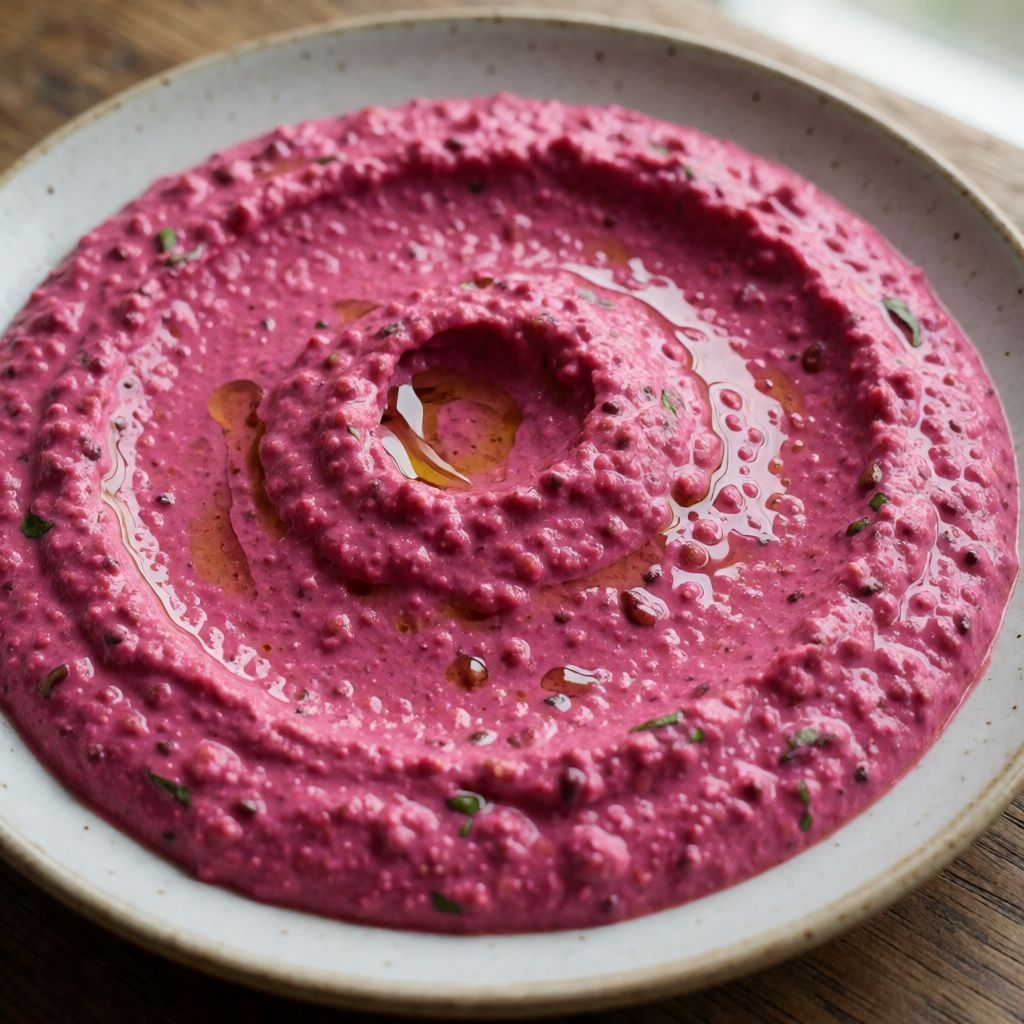
 AI photo
Beetroot Pesto
A pesto made by blending cooked beetroot with parmesan, pine nuts, basil and lemon juice.
Labels are worked out automatically from the ingredients and can be wrong. Check the packaging if it matters to you.
Ingredients
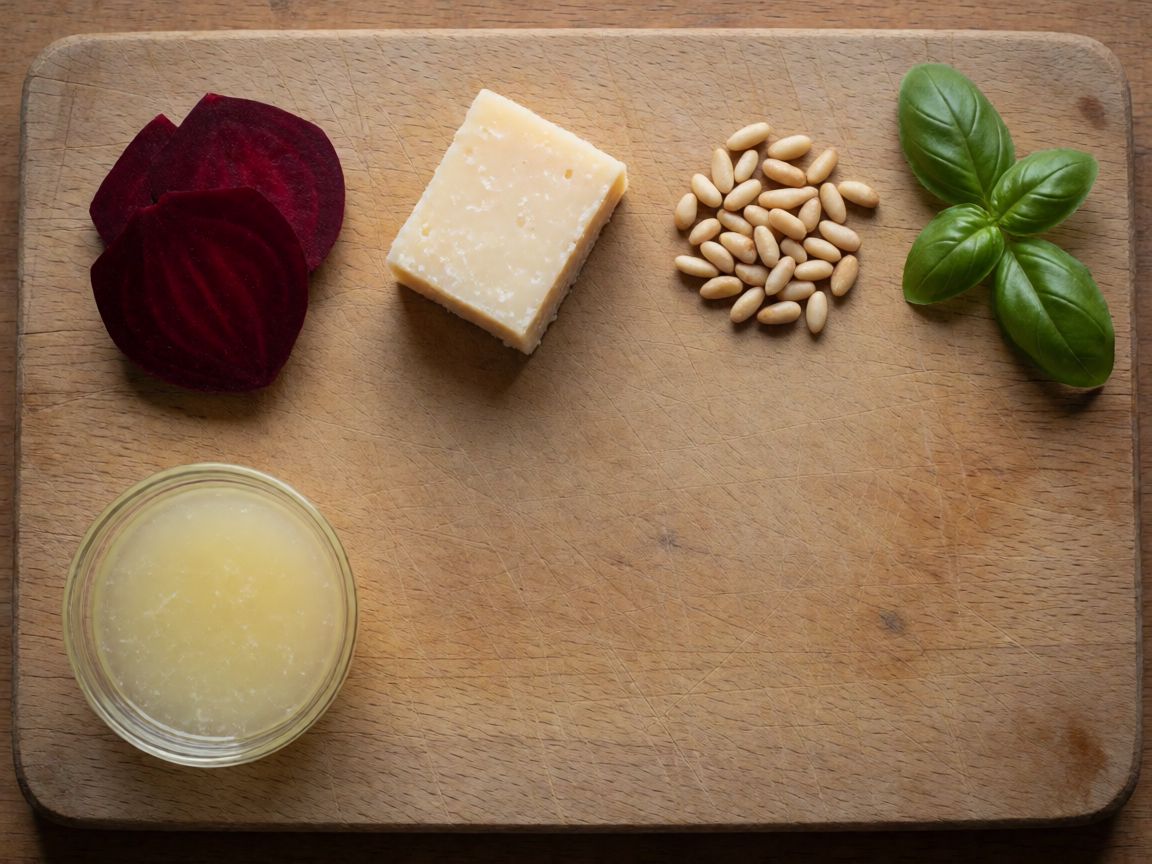
- 200 g Beetroot cooked
- 40 g Parmesan
- 20 g Pine nuts
- Olive oil to taste
- Salt to taste
- 4-5 pcs Basil leaves
- 0.5 pcs Lemon juice juice of half a lemon







Steps
Cut the cooked beetroot into cubes and put them in the food processor jug.
Start blending, then add the pine nuts, parmesan and basil leaves, washed and roughly torn by hand.
Pour in the lemon juice and pulse the processor in short bursts.
Add the olive oil and blend until the mixture becomes smooth and creamy.
Season with salt to taste and mix well.
This is not basil pesto with a splash of colour — it's pesto's logic turned inside out. The word pesto comes from pestare, to crush, and the whole method is: crush something fatty, something sharp, something cheesy, bind with oil. Classic Genovese pesto crushes basil almost on its own, with pine nuts and parmesan for backup. Here beetroot takes the main seat and basil becomes seasoning — four or five leaves doing the job that normally takes a whole bunch, because the beetroot already brings sweetness and body, and basil now only needs to leave a trace of its smell, not carry the dish.
What decides whether this works is colour, and colour is chemistry, not luck. Beetroot's red comes from betalain pigments, and betalain is touchy: it fades under heat, it dulls in open air, it goes muddy brown if you let the mix sit half-blended too long. That's why the lemon juice goes in before the oil, not after — acid stabilises the pigment, keeps the red bright instead of letting it slide toward liver-brown. Pour the oil first and you've lost your window.
The beetroot has to already be cooked — boiled or steamed until a knife goes through with no resistance, which in most UK kitchens means reaching for the vac-packed cooked beetroot in the chiller aisle rather than boiling your own and staining the hob magenta for a week. Just make sure it's plain cooked, not the vinegar-pickled kind sold next to it on the shelf — pickled beetroot carries its own sharp acidity, and stacking that on top of the lemon juice later tips the whole thing too sour, fighting the sweetness that's the point of using beetroot in the first place.
Parmesan does two jobs: salt, and fat that helps everything bind into a paste rather than a puree. Buy a block and grate or chop it yourself if you can — pre-grated parmesan is often drier and doesn't melt into the mix the same way. Any firm, aged, salty hard cheese works on the same principle — Grana Padano is the obvious cousin, and in a British kitchen a very mature Cheddar will do the job of salt-and-fat even if it changes the character, since it hasn't got parmesan's nutty funk. What you're choosing for is firmness and age, not a brand.
Pine nuts bring oiliness without a loud flavour of their own, which is exactly why they're traditional and exactly what lets you swap them. The rule for substitution is: something oily and mild, not something oily and assertive. Walnuts work but carry a faint bitterness that can edge toward tannic against sweet beetroot. Cashews are the gentler stand-in — rich, quiet, close to pine nut's job. Skip almonds; they're drier, not oily enough, and you'll feel it as grit rather than cream.
Basil here is perfume, not substance, so don't try to replace it with dried basil — drying loses exactly the volatile oils that make fresh basil smell like basil, leaving you with a dusty green nothing. If you have no fresh basil, leave it out rather than fake it; the dish survives without it, it just loses a top note.
Olive oil is doing the binding, pulled in while the blade's still turning so it emulsifies into the paste rather than sitting on top as a slick — that's the difference between creamy and oily-looking. Because beetroot and parmesan already carry plenty of flavour, you can use a lighter, less peppery olive oil here than you would for a basil-forward pesto; just don't reach for a flavourless vegetable oil as a full substitute, because here the oil is also seasoning, and a neutral oil dilutes rather than rounds the dish out.
As for serving four — read that as four modest helpings for a dip with bread or raw vegetables, or a spread under cold roast meat the next day, Monday's answer to Sunday's leftover lamb or beef. Thin it with a touch more oil or a spoon of the cooking water from pasta if you want to coat spaghetti instead, and expect that version to serve two rather than four, because pasta eats a sauce fast.