
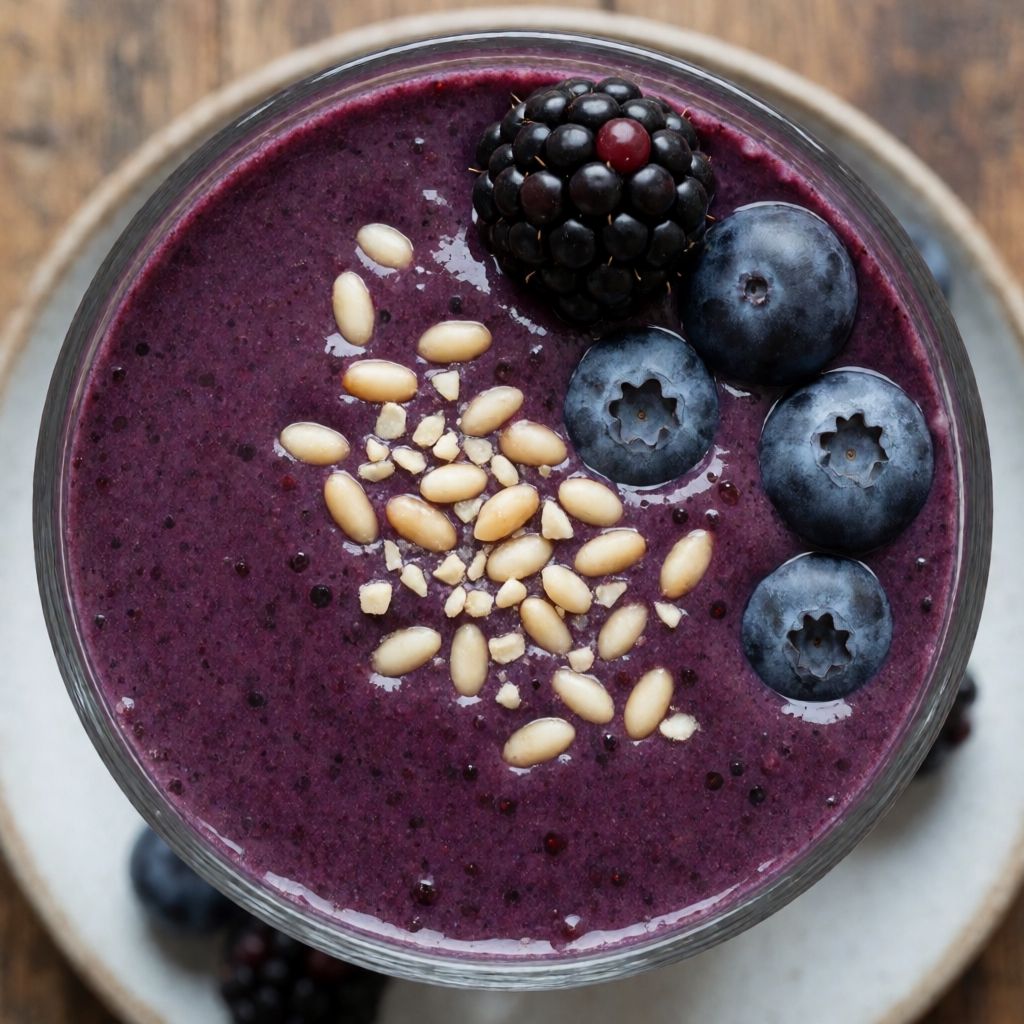
 AI photo
Blackberry and Blueberry Smoothie
A refreshing blend of blackberries, blueberries, apricot, honey and pine nuts, ready in minutes.
Labels are worked out automatically from the ingredients and can be wrong. Check the packaging if it matters to you.
Ingredients
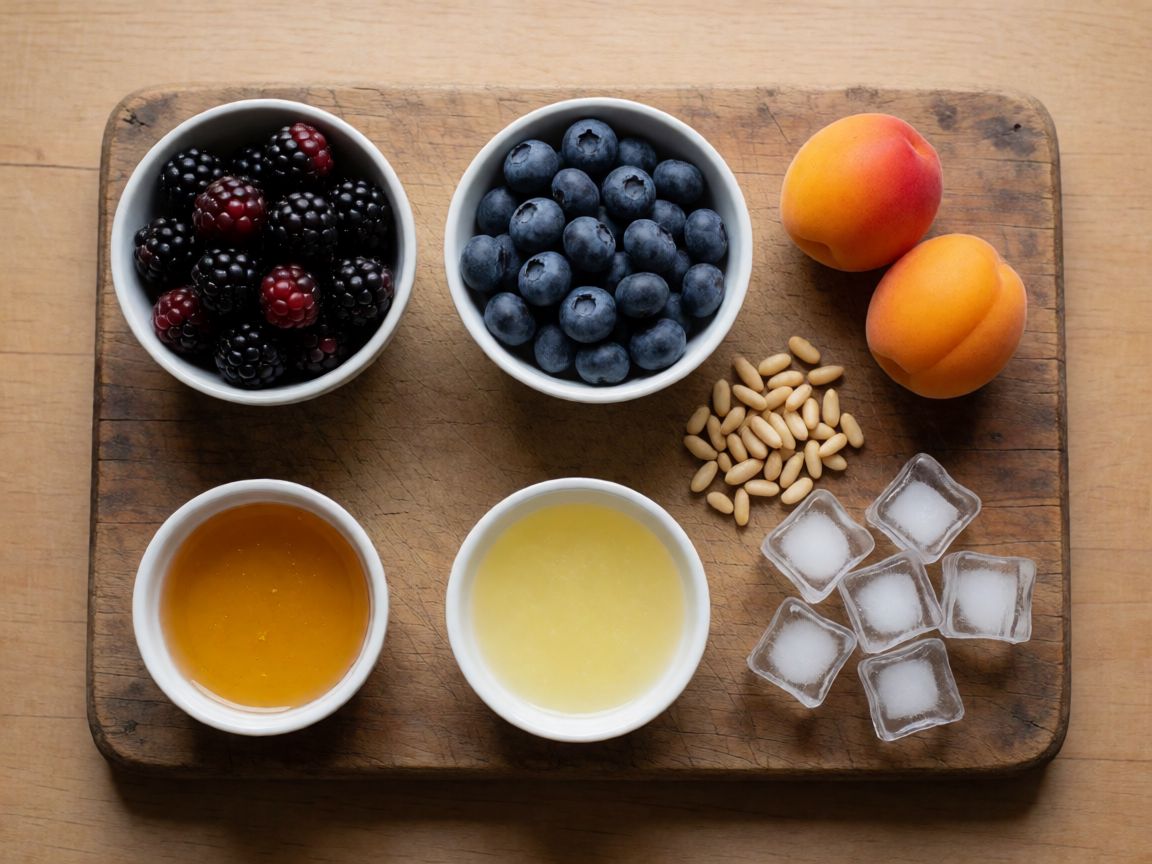
- 300 g Blackberries
- 200 g Blueberries
- 2 pcs Apricots
- 2 tsp Honey
- 40 g Pine nuts
- 2 tbsp Lemon juice
- 6 pcs Ice cubes
- Water to taste





Steps
Peel the apricots, remove the stones and cut into fairly small cubes.
Drizzle the apricots with lemon juice so they don't discolour.
Place the blackberries and blueberries in a colander and rinse thoroughly.
Make a creamy paste from the pine nuts by crushing them in a mortar, then stir in the honey.
Crush the ice fairly finely.
Put all the prepared ingredients into the blender jug.
Turn the blender to maximum power for about two minutes.
2 minAdd a little cold water if needed.
Pour the smoothie into glasses and serve chilled.
This is not a dessert in disguise — it's berries turned liquid and held together by a paste of ground nuts and honey, so the glass doesn't split into juice on top and pulp at the bottom the way a lazy smoothie does. What decides whether it works isn't the blender's horsepower, it's the order of operations: the pine nut and honey paste has to be smooth on its own before the berries ever meet it. Throw whole nuts in with everything else and you get sweet gritty flecks floating in berry water instead of one body.
Crushing the ice separately before it goes anywhere near the fruit does two jobs. It chills the batch fast, so the fat in the pine nuts doesn't warm, loosen and bead up on the surface the way cream does if you leave it out too long. And it spares a domestic blender motor — most British kitchen blenders are built for smoothies, not for chewing whole cubes, and feeding it pre-crushed ice is kinder to the blade bearings than hoping the machine will do the crushing for you on the way to smooth.
Forget the clock here. Judge it by colour and texture: stop when the whole jug is one even purple-black with no pale fleck of nut and no grainy pull of skin left visible, and when it coats the inside of the jug on a tilt rather than running off it like water. Two minutes is where most machines get there — it's a floor, not a deadline.
Blackberries and blueberries: buy by smell, not size. A punnet with no scent through the plastic will give you no flavour no matter how much honey you pour in after — supermarket berries out of season are often picked hard for the lorry, not for the glass. Rinse them properly in a colander, because grit and the odd leaf stem are the real reason some smoothies taste faintly of mud.
Apricots: their job is body and a soft, sun-warmed sweetness that's rounder than the berries' tartness — not flavour you'd notice on its own, more a cushion under the other two. British apricots sold out of season are frequently mealy and underripe; if that's what's in front of you, swap in a ripe peach or nectarine instead, anything soft enough to fall apart against the back of a spoon without a fight.
Lemon juice on the cut apricot isn't there for taste. It's there because cut fruit flesh meeting air starts an enzyme reaction that browns it within minutes — acid drops the pH enough to slow that enzyme down. Any sharp citric juice does the same job; lime works, so does a splash of vinegar in a real pinch, though you'll taste it more.
Pine nuts: their only real function is fat and creaminess, the same role butter plays in a sauce — they're not there to be noticed as 'pine nut flavour'. That's why you crush them to a paste first: a smooth base gives the blender something stable to spin the rest of the fruit into, rather than fighting whole nuts into gritty shards at the last second. Pine nuts are expensive and, historically, they show up in old recipes because they grew locally and were free for the gathering, not because anyone thought them a luxury. Cashews or blanched almonds, crushed the same way, do the same fat-and-body job for a fraction of the price.
Honey does double duty — sweetener, yes, but its own moisture also helps hold the fat and water together a little longer once blended, so the drink separates more slowly sitting in the glass. A thick sugar syrup will sweeten it just as well if you're out of honey or keeping it vegan, but expect it to split a touch sooner; that clinginess is honey's doing, not sugar's.
Water has a floor of zero. Add it only once the ice and fruit have done the loosening and the jug still won't move freely under the blade — patience at this stage matters more than people expect, because a splash too early turns a smoothie into berry squash, and there's no way back from that once it's in.