
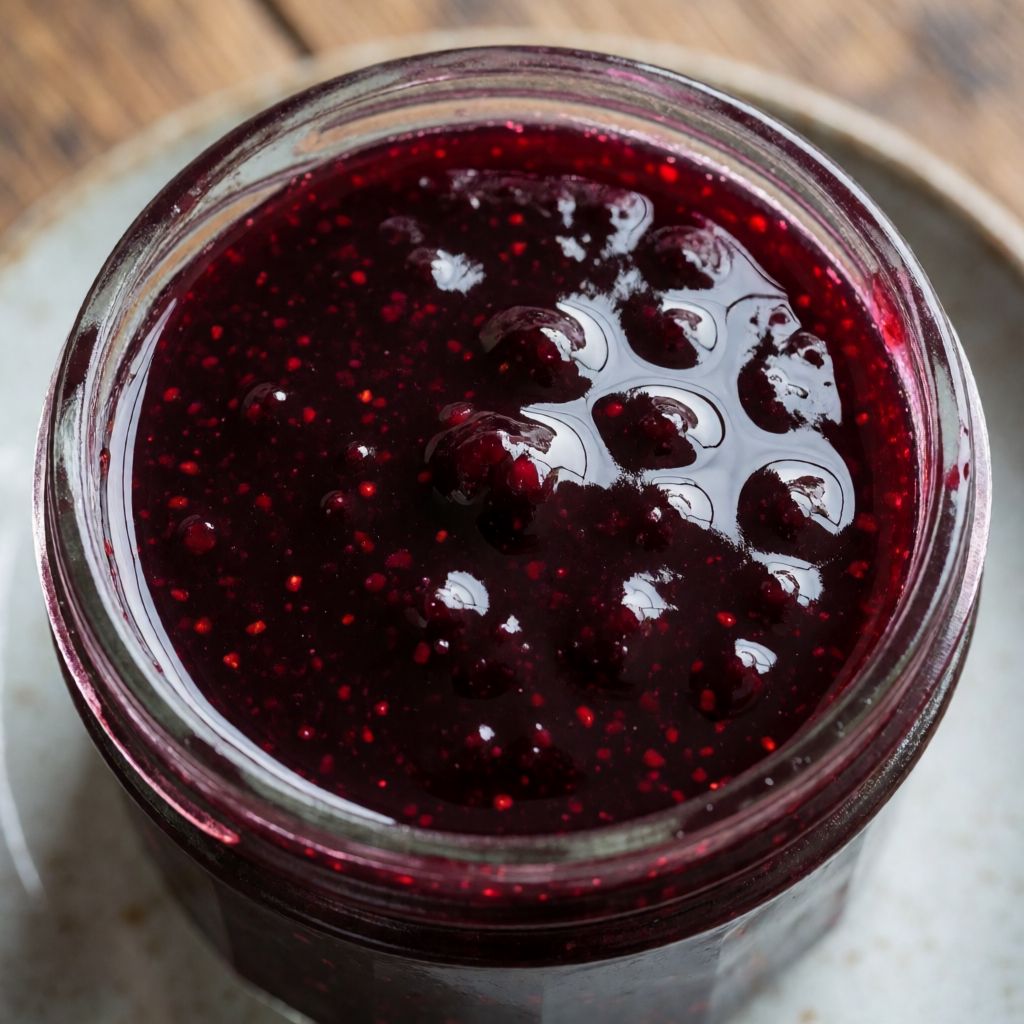
 AI photo
Blackberry Jam
A simple homemade blackberry jam, flavoured with real vanilla seeds for a fragrant preserve.
Labels are worked out automatically from the ingredients and can be wrong. Check the packaging if it matters to you.
Ingredients
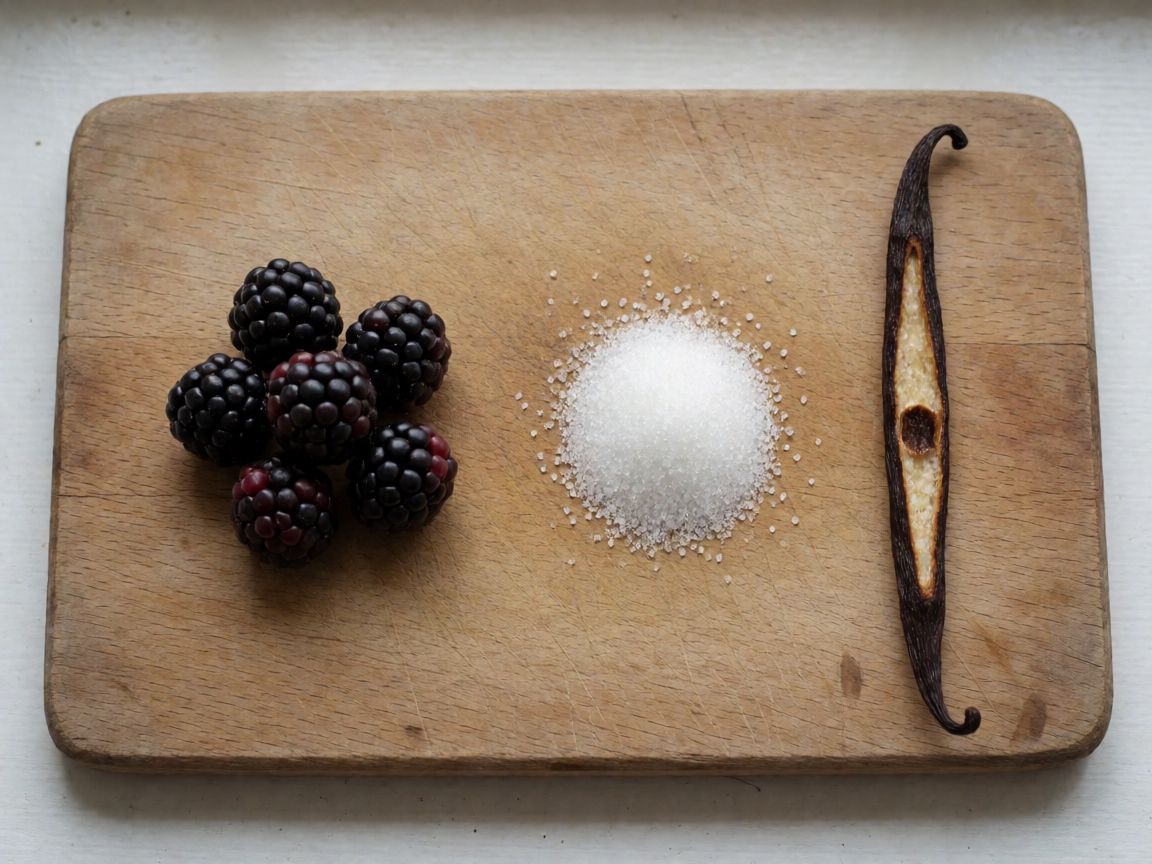
- 200 g Blackberries
- 150 ml Sugar
- 0.5 pcs Vanilla pod seeds scraped out, pod kept for flavour



Steps
Scrape the vanilla seeds from the pod and mix them with the sugar so the seeds separate.
3 minPut the blackberries, sugar, vanilla seeds and pod into a saucepan, and mix well. Leave to macerate for 1 hour.
2 minBring to the boil and cook uncovered for at least 10 minutes, until it thickens slightly.
10 minTransfer the finished jam into a clean jar that has been scalded with boiling water.
5 min
This isn't preserve-cupboard jam, the kind that sits for a year and feeds a street of neighbours — this is Sunday-morning jam, fast and loose. You make a jar of it after breakfast, and it's gone before Wednesday. What decides whether it works: how long you let the fruit sit with the sugar before you touch the heat, and whether you trust your eyes and a spoon more than the clock.
Maceration is the quiet part nobody respects. Sugar sitting on crushed fruit for an hour pulls water out by osmosis — the berries go soft and start swimming in their own dark juice, and some of that sugar dissolves straight in. Skip it, and you put dry sugar onto a hot pan with stiff whole berries: it catches at the bottom before the fruit's given up anything, and you get scorched sugar flecks in your jam, not caramel.
Some say jam needs added pectin or a squeeze of lemon to set — no, not this kind. Blackberries carry their own, more if they're picked a touch under-ripe, less if they're the soft, falling-apart kind you buy reduced on a Friday. That's why "at least 10 minutes" is a floor, not a target: riper fruit, cook a bit longer; firmer fruit, it tightens sooner than you'd expect.
Forget counting minutes for doneness. Put a spoonful on a cold saucer and push it with your finger. If it wrinkles and holds the line you drew, it's set. If it floods straight back together, give it more heat.
Blackberries: look for matte skin, not shiny-wet, that gives just slightly under the thumb — ripe but not collapsing. Picked off a hedge yourself, you'll get a mix of under- and over-ripe in the same punnet, and that's no bad thing — the firmer ones hold pectin, the soft ones give colour and juice. Supermarket punnets tend to be uniformly soft and sweet, so don't be shy about cooking past the recipe's floor. Any soft dark berry behaves the same way — blackcurrant, bramble, a mix with raspberry — so if blackberries aren't in season, that's your substitution, not a different recipe.
Sugar does three jobs, not one. It sweetens, yes, but it's also what pulls water out during maceration, and it's what lets the jam set — not by magic, but because sugar at high concentration binds water so tightly mould and yeast can't use it. Cut the sugar by a third thinking you're being virtuous, and you've made something that needs the fridge and a deadline, not a jam that sits in a cupboard. This ratio already runs loose — closer to a fridge jam than the old 1:1 fruit-to-sugar preserve your grandmother might have bottled for winter — and that's honest, because nobody's feeding a street with 200g of blackberries.
The vanilla seeds go into the sugar first, rubbed in with your fingers, for a reason that has nothing to do with ceremony: seeds dropped straight into wet fruit clump into black specks in one corner of the jar. Mixed through dry sugar first, they spread evenly through every spoonful. The scraped pod goes in whole and comes out before the jar — it's given everything it has by the time the jam thickens, and nobody wants pod fibre in their toast. No pod to hand — a teaspoon of vanilla paste, or good extract stirred in near the end, does the job; it just won't perfume the sugar in advance the same way.
On your hob, use the widest pan you own, not a tall narrow saucepan. Thickening is mostly water leaving as steam, and a wide pan gives more surface for that — a narrow one under the same heat takes noticeably longer to lose the same water, and you'll be tempted to crank the heat to compensate, which just burns the bottom before the top's reduced.
Scalding the jar isn't superstition, it's arithmetic: mould spores and bacteria sit on glass everywhere in a kitchen, and boiling water kills what's there. Pour hot jam into a jar that's gone cold again in the meantime and you risk a crack from the heat shock, so scald it close to when the jam's actually ready, and let it stand a moment on a clean tea towel rather than straight onto a cold worktop.
Patience is the one ingredient not weighed in grams here. The hour of maceration, the unhurried boil, the wait for the cold-saucer test to actually tell you something — none of it photographs well, and all of it is why the jam tastes of blackberry and vanilla, not of a rush.