
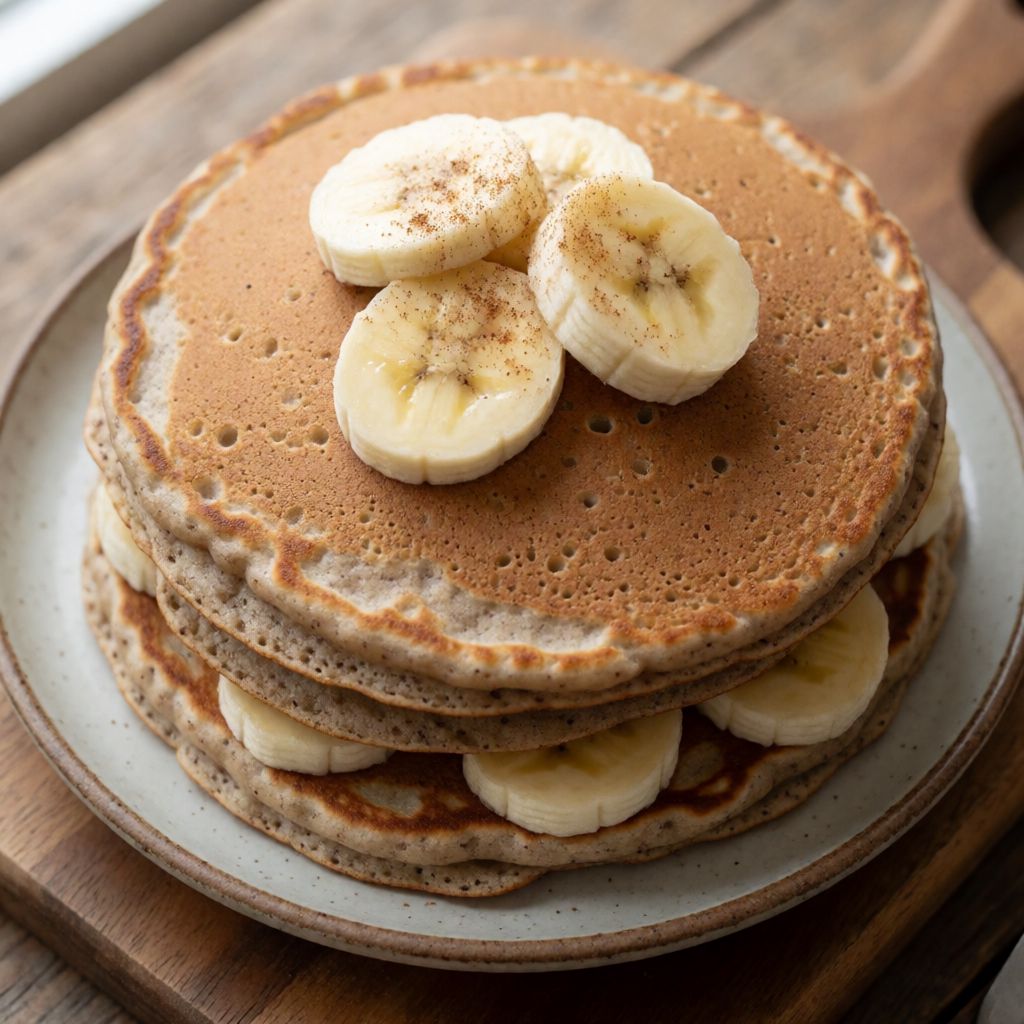
 AI photo
Buckwheat Pancakes with Banana
A simple recipe for soft buckwheat pancakes made with ripe banana, eggs, honey and a touch of cinnamon.
Labels are worked out automatically from the ingredients and can be wrong. Check the packaging if it matters to you.
Ingredients






Steps
Mash the banana, then beat in the eggs with a fork, and add the buckwheat flour, salt and honey, mixing everything together.
Fry in a hot pan with a little olive oil and a bit of butter.
Serve with fresh berries, fruit, maple or agave syrup, and if you like, dust with liquorice powder.
This is not a pancake in the diner sense — thick, puffed, held up by baking powder. Here the banana does that job. Two ripe bananas, mashed to a near-liquid pulp, carry the egg and the handful of buckwheat flour; the flour is there to thicken, not to build structure. Buckwheat has no gluten at all, so there's nothing to knead, nothing to overwork, nothing to rest. What holds the pancake together when it hits the pan is egg protein setting as it heats — the same thing that sets a fried egg white from clear to opaque.
Some say pancakes need a raising agent to be any good — no, because this one isn't trying to be fluffy. It's trying to be a soft, banana-dense blini, closer to a thick crêpe than to a stack from a box mix. If you add more flour hoping for more lift, you'll get the opposite: buckwheat flour with no gluten doesn't stretch or trap air, it just turns the batter pasty and heavy. Keep the flour as the small supporting part it's meant to be.
The real risk here isn't structure, it's sugar. Ripe banana and a spoon of honey both carry a lot of fructose, and fructose scorches faster than ordinary sugar. So the heat under the pan matters more than any clock: you want it hot enough that the batter sets at the edges within a short wait, not so hot that the sugar blackens before the middle of the pancake has had a chance to firm up. Watch the surface — when the wet sheen disappears and the edges turn matte and start lifting cleanly off the pan, that's your cue to flip, not a number of minutes.
Go through what each thing is doing and the choices get easier.
Banana: this is both your sweetener and your binder, so ripeness is not a style choice, it's the mechanism. As a banana ripens, its starch converts to sugar — that's why a spotty, slightly soft banana mashes to a smooth, sweet pulp, while a firm yellow one mashes lumpy and starchy and leaves you adding extra honey to compensate. Use the one you were about to throw away, not the one you'd eat as a snack. If you've no banana, a thick fruit purée — stewed apple or ripe pear, reduced down — can take its place, but you'll likely need to nudge up the flour slightly, since banana's own starch is quietly doing some thickening you'd otherwise lose.
Eggs: this is the setting agent, the thing that turns a wet batter into something you can flip. Beat them in properly with the mashed banana rather than dropping them in whole — you want the yolk and white distributed through the pulp, not sitting in streaks, so the whole pancake sets evenly instead of staying raw in patches.
Buckwheat flour: despite the name, no wheat in it at all, so no gluten — useful if that matters to you, and it's why the batter can never be kneaded into elasticity, only stirred until smooth. The flavour is nutty, a little earthy, which is why it suits banana and cinnamon rather than fighting them. Any gluten-free flour with a mild, non-bitter taste can stand in — rice flour, oat flour — but avoid anything self-raising, since you don't want a second source of lift fighting the egg.
Salt, just a pinch: not there to be tasted on its own, it's there so the sweetness doesn't sit flat. Leave it out and the pancake tastes one-note sweet rather than rounded.
Cinnamon: ground is fine, but if the jar's been open a year, it'll smell of very little — ground spice loses its oil to the air faster than you'd think, so give it a sniff before you commit a whole teaspoon. Historically this was an expensive, traded spice, carried a long way; now it's cheap enough to use generously, which is exactly why recipes like this can afford a full teaspoon instead of rationing it.
Honey: sweetness and a bit of moisture, but remember it's part of why the pan can scorch — honey's fructose browns aggressively. If you're using maple or agave instead, same caution applies, maybe slightly less, since they tend to be a touch less aggressive than honey on heat.
Butter and olive oil together: this isn't decoration, it's a practical fix. Butter alone gives you the flavour and the browning you want, but its milk solids can catch and blacken on a bare domestic hob before you've even got the second side done. Olive oil, having no milk solids, raises the point at which things start to burn and buys you some margin. Any neutral, scentless oil does the same job if you've no olive oil to hand — the point is an oil with no smell of its own, so it doesn't compete with the banana and cinnamon.
A wide non-stick pan does the work a griddle would in a bigger kitchen — you've no need for anything else, just enough room to lay a few rounds without them touching, and a spatula thin enough to get under a soft pancake without tearing it. Make the first one smaller than you think you should; it tells you whether your heat is right before you commit the rest of the batter.
For serving — berries bring acid, which cuts the sweetness you've already built in with banana and honey, so they're not just pretty, they're doing a job. Syrup on top of that is genuinely optional, since the pancake itself is already sweet; add it only if you want more. The liquorice powder is the odd one here — not essential, just a sharper, slightly bitter note if you happen to have it and want to see what it does. With tea, this sits well as a weekend breakfast rather than anything that needs to compete with a roast.