
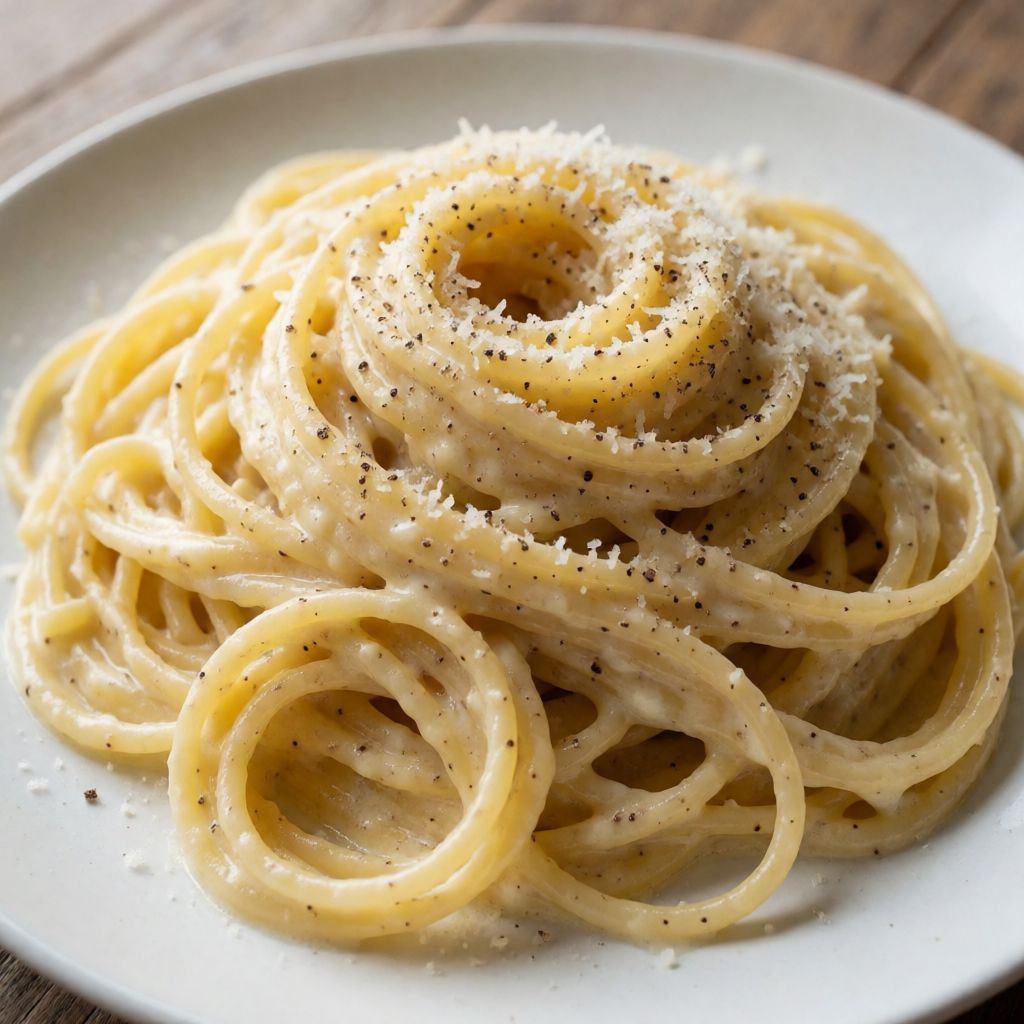
 AI photo
Spaghetti Cacio e Pepe
A classic Roman pasta dish made with just spaghetti, Pecorino Romano and black pepper.
Labels are worked out automatically from the ingredients and can be wrong. Check the packaging if it matters to you.
Ingredients
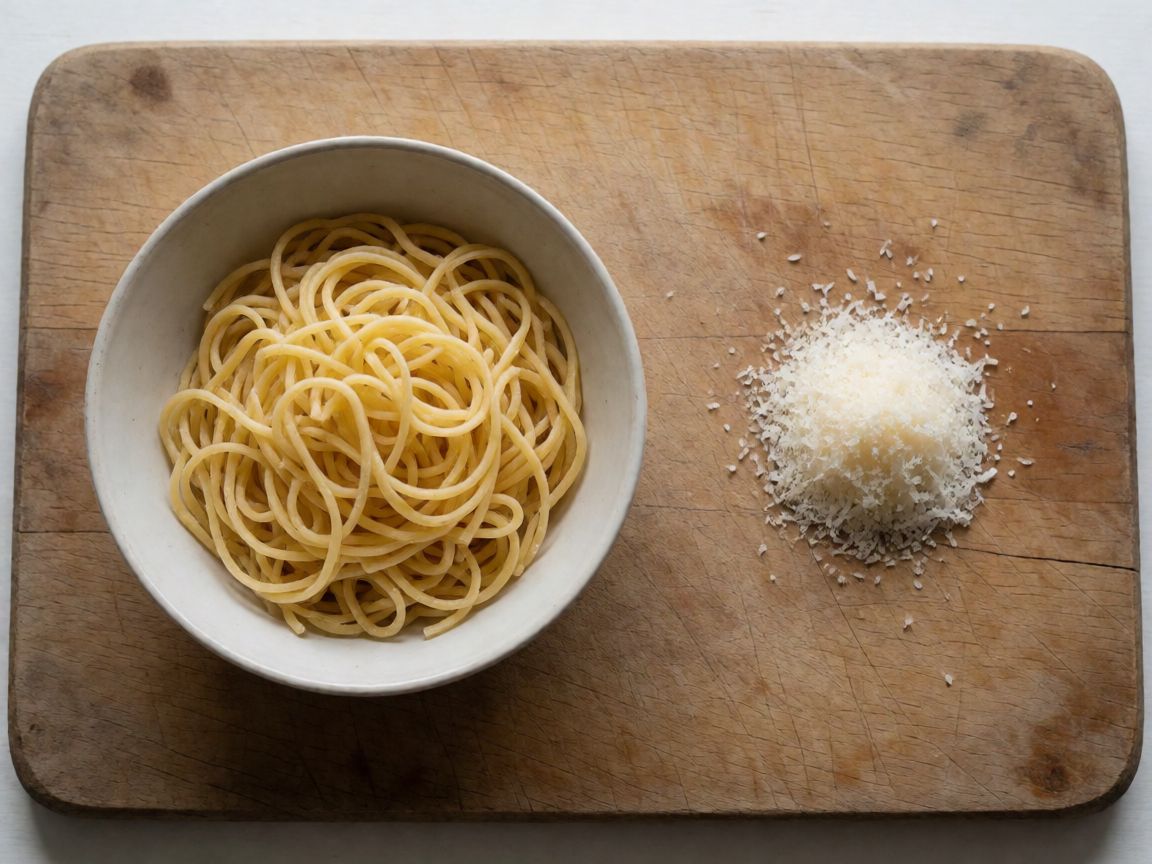
- 320 g Spaghetti or bucatini
- 220 g Pecorino Romano
- 5 g Black pepper
- Salt to taste




Steps
Bring a large pot of lightly salted water to the boil for the spaghetti.
Set a small bowl over a saucepan with a little water and bring to a simmer.
Cook the spaghetti.
Tip the Pecorino Romano into the warm bowl and add the black pepper. Mix gently.
Add a little of the pasta cooking water in small amounts, judging the consistency as you go.
When the cream is smooth and velvety, it is ready.
Drain the spaghetti, transfer to a bowl and toss with the cacio e pepe cream.
Serve immediately.
Cacio e pepe is not a cheese sauce — it is an emulsion. Fat from the Pecorino, starch from the pasta water, and a controlled amount of heat hold together into a cream that coats each strand instead of sitting in a puddle at the bottom of the bowl. That is the whole mechanism. Everything in the method exists to protect that emulsion from breaking.
What decides whether it works is heat control, not skill with a knife or a fancy pan. The cheese is mixed over a bowl set on simmering water, not over a direct flame, because Pecorino's proteins seize the moment they meet real heat — they clump into little rubbery beads and throw off a thin, cheese-flavoured water, the classic disaster people call "it split." The bowl-over-water setup is a thermostat you don't have to watch: water boils at a fixed point, so the bowl above it can never get hotter than that, no matter how distracted you get by the pasta.
Some say cacio e pepe is trivial — four ingredients, how hard can it be? No, because four ingredients means there is nowhere to hide. A sauce with a dozen components forgives a slip; a dish built from cheese, pepper, water and pasta shows every mistake plainly, usually as grit on your tongue or a grey soup where a cream should be.
Pecorino Romano is a sheep's cheese from Lazio and Sardinia, made hard and salty on purpose: before refrigeration, shepherds needed a cheese that would survive weeks on a mountainside without spoiling, and salt plus long ageing did that job. That saltiness is why the recipe adds almost no salt elsewhere — the cheese is doing the seasoning. Buy a block and grate it yourself, finely, just before you use it. Pre-grated cheese from a tub has usually dried out at the edges and been dusted with anti-clump powder, both of which stop it melting smoothly into a cream — it just sits there in sandy little piles no matter how patient you are. If you genuinely can't find Pecorino, a well-aged, low-moisture hard cheese works on the same principle — Parmigiano Reggiano is the obvious stand-in, though it's milder and less salty, so taste before you reach for the salt grinder at all.
Black pepper has to be cracked fresh, not shaken from a pre-ground jar. The aroma sits in oils that start evaporating the moment the peppercorn is broken — pre-ground pepper has usually lost most of its smell by the time it reaches your spice rack and gives you heat without the perfume that makes this dish worth making. A pestle and mortar, or even the flat of a knife and some elbow grease, does more for this dish than any other single thing you can control.
Spaghetti or bucatini both work because what matters is a pasta made from durum wheat semolina, which releases a cloudy, starchy water as it cooks. That starch is the glue in the emulsion — without it, the cheese fat and the water would separate the way oil and vinegar do if you stop whisking. Keep a cup of that water back before you drain; you cannot get it back once it's down the sink, and running the tap over the pasta afterwards just rinses the starch straight off the strands, leaving nothing for the cream to grip onto.
Salt the pasta water lightly, not the way you'd salt water for, say, roast potatoes. The Pecorino is already salty, and anything the pasta absorbs from an oversalted pot stacks directly on top of that. This is the quiet failure nobody notices until the first bite tastes like the sea: not a wrong ingredient, just too much of a right one, arriving twice.
On a British hob — especially electric, which holds its heat in the ring long after you've turned the dial down — the pan stays hotter than the number on the dial suggests, and that residual heat is exactly what seizes the cheese even if you remember to lower it in time. The bowl-over-simmering-water trick isn't fussiness for its own sake; it sidesteps that problem entirely, because the water underneath has a hard ceiling it cannot cross. Think of it the same way you'd think of a bain-marie for a custard — gentle, indirect, forgiving.
Add the pasta water a spoonful at a time and watch, don't pour. This is the one place patience is doing real work: rushing the water in is the single most common way to end up with a thin, split mess instead of a cream, because the cheese needs a moment to absorb each addition before it can take the next. Four people, one bowl, and about twenty unhurried minutes — there's no shortcut that doesn't end up in the bin.