
 AI photo
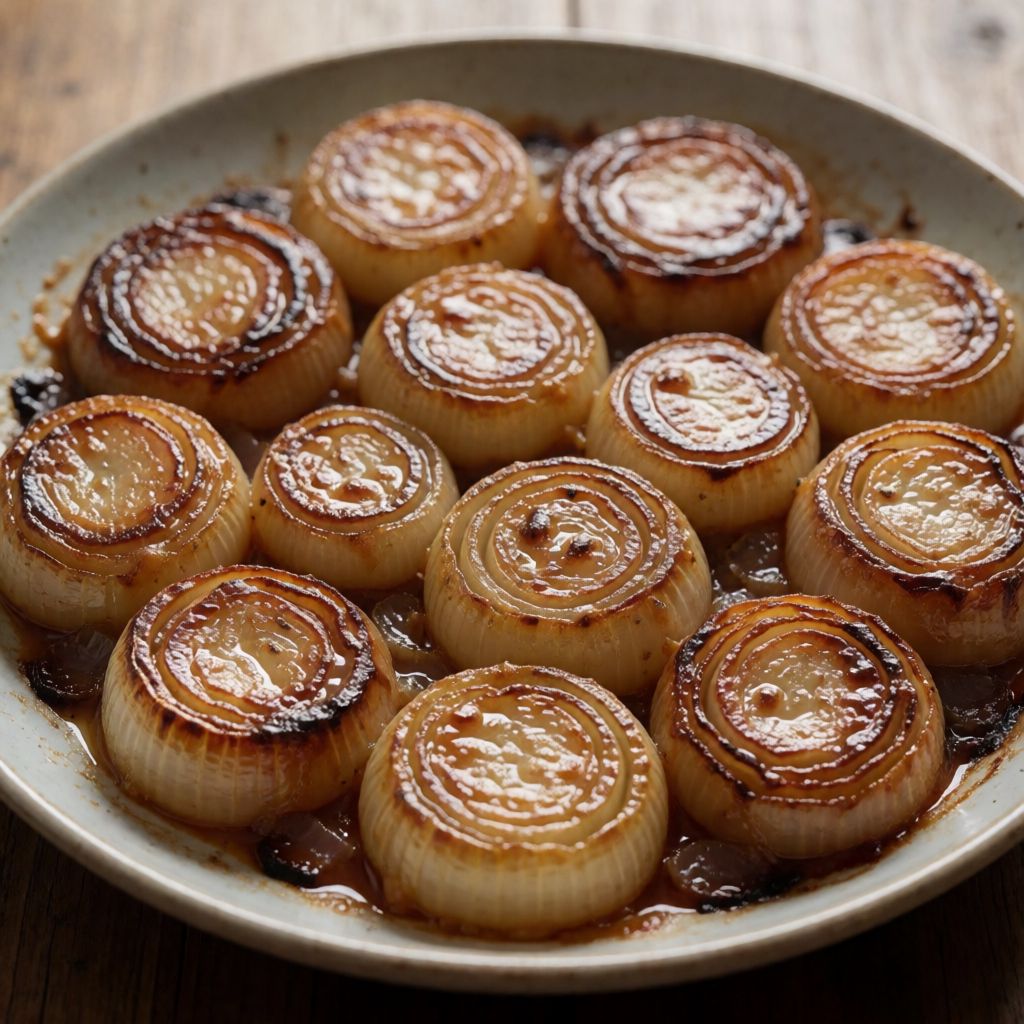
Caramelised Borettana Onions Baked in the Oven
A simple side dish of sweet onions caramelised with sugar and vinegar, then baked until golden and crisp.
Labels are worked out automatically from the ingredients and can be wrong. Check the packaging if it matters to you.
Ingredients
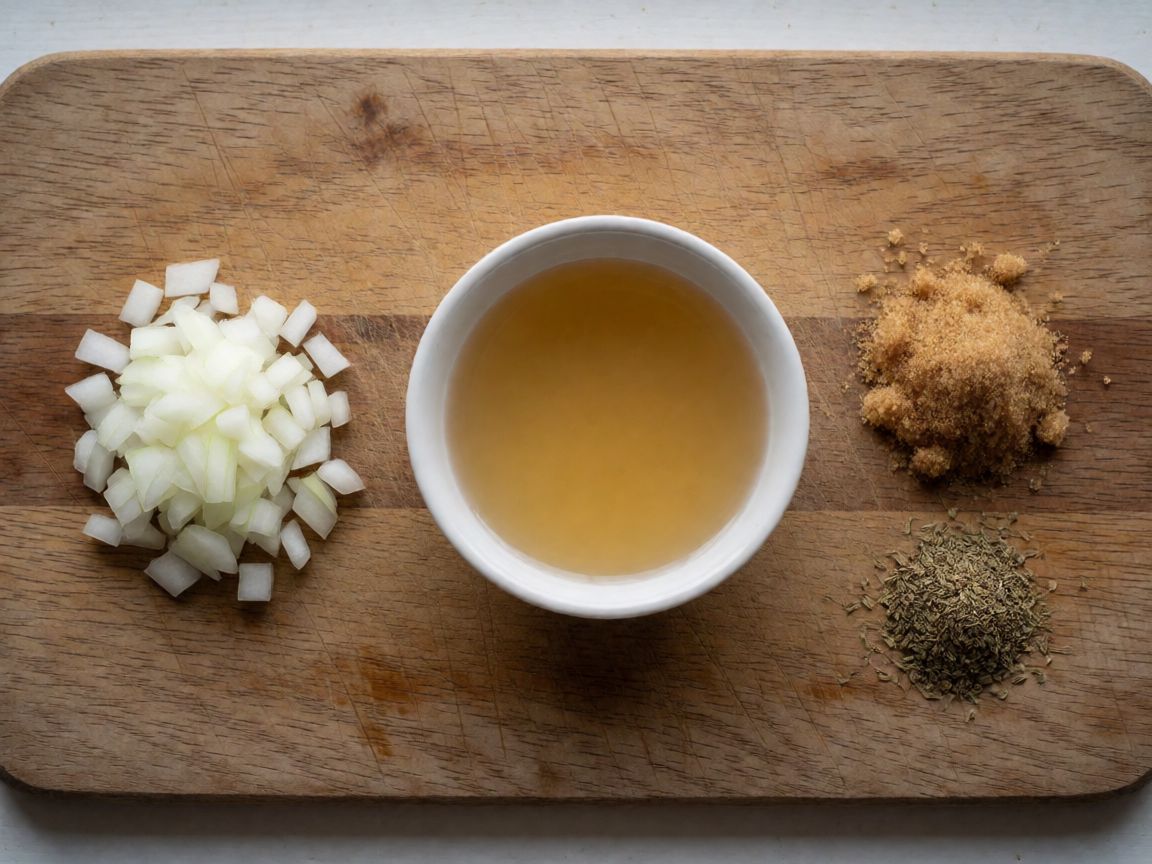
- 250 g Borettana onions
- 70 g apple cider vinegar
- 1 tsp brown sugar
- olive oil to taste
- oregano to taste
- salt to taste





Steps
Peel the Borettana onions and rinse them thoroughly under running water to remove any traces of soil.
Drop the onions into a pan of boiling salted water and cook for 5 minutes until softened.
5 minDrain and immediately arrange in a rectangular baking dish, spacing the onions out evenly without overlapping.
Sprinkle with the brown sugar so the onions can caramelise, then drizzle over the apple cider vinegar, spreading it evenly.
Flavour the onions with a sprinkle of dried oregano, season with salt to taste and finish with a thin drizzle of olive oil.
Bake for about 40 minutes at 180°C.
40 minTurn on the oven's grill function for a couple of minutes so the onions become even more golden and crisp on top.
Once the onions are ready, transfer them to a small serving plate and serve while still hot or just warm.
This is the Italian trick of agrodolce — sweet and sour cooked together until they fuse into a syrup — done in the oven instead of a pan on the hob, because small flat onions hold their shape better in a dish than being tossed and stirred. Borettana onions are the flat, disc-shaped kind bred near Boretto, in Emilia, specifically because that shape stacks neatly in a jar — this is a vegetable bred for pickling economics, not for looks. Here they get the same sweet-sour treatment but baked, which is the home cook's shortcut: you don't stand over a pan reducing vinegar for half an hour, the oven does the reducing for you while you do something else.
What decides whether this works is timing of moisture loss against sugar burning. The onions go into boiling water first — not to cook them through, five minutes won't do that — but to soften the outer layers and knock back the sharp sulphur bite raw onion carries, the same compound that makes your eyes water. Skip that step and the sugar-vinegar glaze in the oven has to fight a half-raw, still-pungent onion underneath; you'd get caramel on the outside and bitterness in the middle.
Borettana onions themselves are chosen for shape as much as taste: flat and squat, so they lie steady in a dish without rolling, with more flat surface in contact with the syrup than a round onion gives you. If you can't find them — and most UK greengrocers won't stock the name, though you'll sometimes see them labelled "flat onions" or "cipollini" — look for any small, sweet onion that's roughly as wide as it is tall: button onions, pickling onions, even banana shallots cut to size. The criterion is small and sweet, not the brand name on the net bag.
The apple cider vinegar is doing a specific job: acid, with a background fruitiness that doesn't fight the onion. This isn't about sourness for its own sake — vinegar here is balancing the sugar, stopping the dish tipping into something closer to a dessert. Any vinegar with a mild, rounded acidity will do — white wine vinegar works, sherry vinegar gives more depth if you want it — but reach for something sharp and flavourless like plain white distilled vinegar and you lose the gentle fruit note that cider vinegar brings, and the dish reads thinner.
Brown sugar earns its place over white because it still carries molasses, and molasses browns differently — it gives you deeper, slightly bitter caramel notes rather than a flat sweetness. White sugar will still caramelise, but the result tastes one-dimensional next to it. Honey is sometimes suggested as a swap — be careful, it's wetter and burns at a lower point than sugar syrup, so your timing under the grill changes.
Olive oil here is a thin drizzle, not a cooking medium — its job is to stop the sugar-vinegar mix catching directly on the dish and scorching, and to carry a little savoury weight under all that sweetness. Any oil without a smell of its own will do the same mechanical job — sunflower, rapeseed — but olive oil is traditional in this dish because the whole method comes from Mediterranean pickling kitchens, and it adds a flavour of its own, not just function.
Oregano goes in dried, not fresh, and that's not habit — fresh leaves exposed to forty minutes at 180°C and then a grill will scorch and turn bitter before the onions are even glazed. Dried herb has already lost the water that would flash off and burn; it just slowly gives up its oil into the syrup instead.
Salt is added after the boil, not relied on from the boiling water, because a five-minute blanch barely lets salt penetrate an onion anyway — it's mostly there to soften, not season. Seasoning happens properly only once the onion is in the dish, where you can control exactly how much lands on the surface that becomes the glaze. And once it's out of the oven, eat it warm rather than cold from the fridge later — the sugar sets as it cools, and what was sticky and yielding at the table turns chewy and stiff on a cold plate, which rather defeats the point of having caramelised it in the first place.