
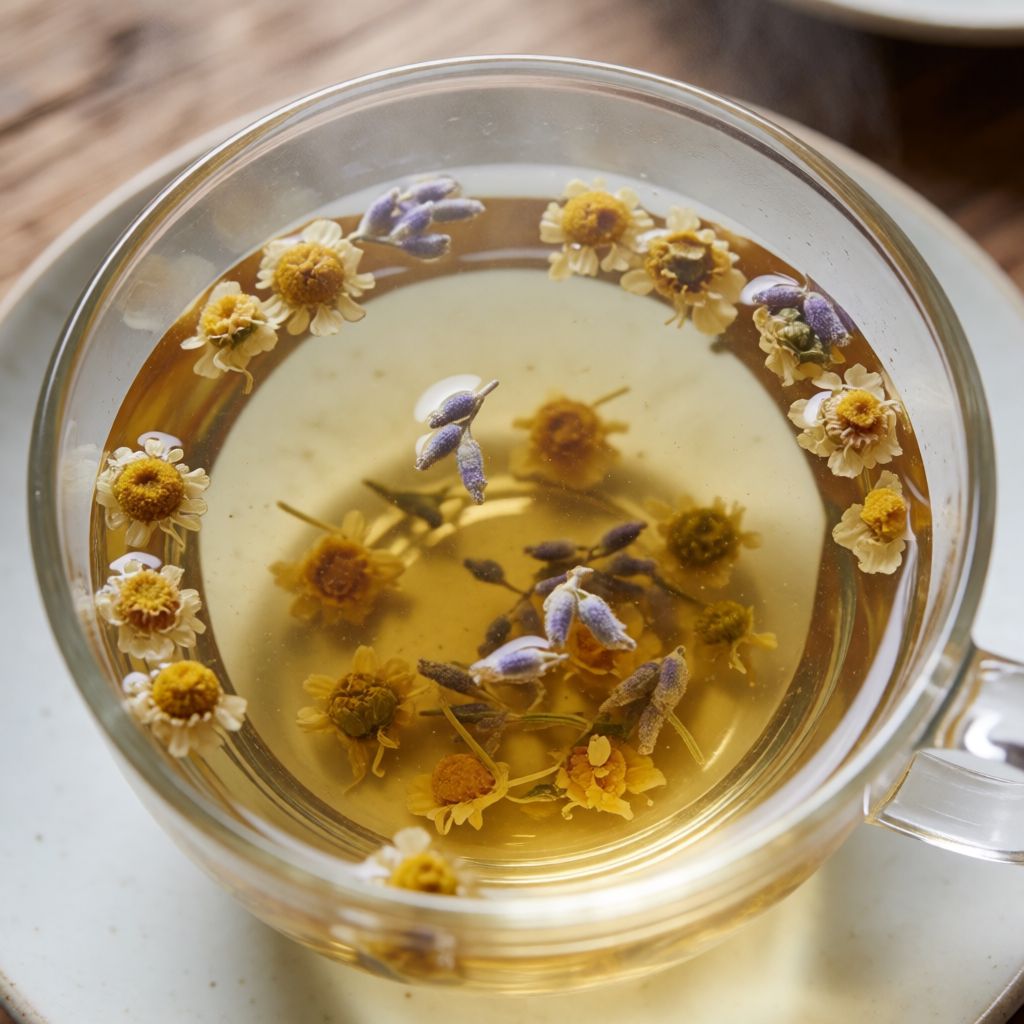
 AI photo
Chamomile and Lavender Tea
A soothing herbal tea made by steeping chamomile and lavender flowers in hot water.
Labels are worked out automatically from the ingredients and can be wrong. Check the packaging if it matters to you.
Ingredients
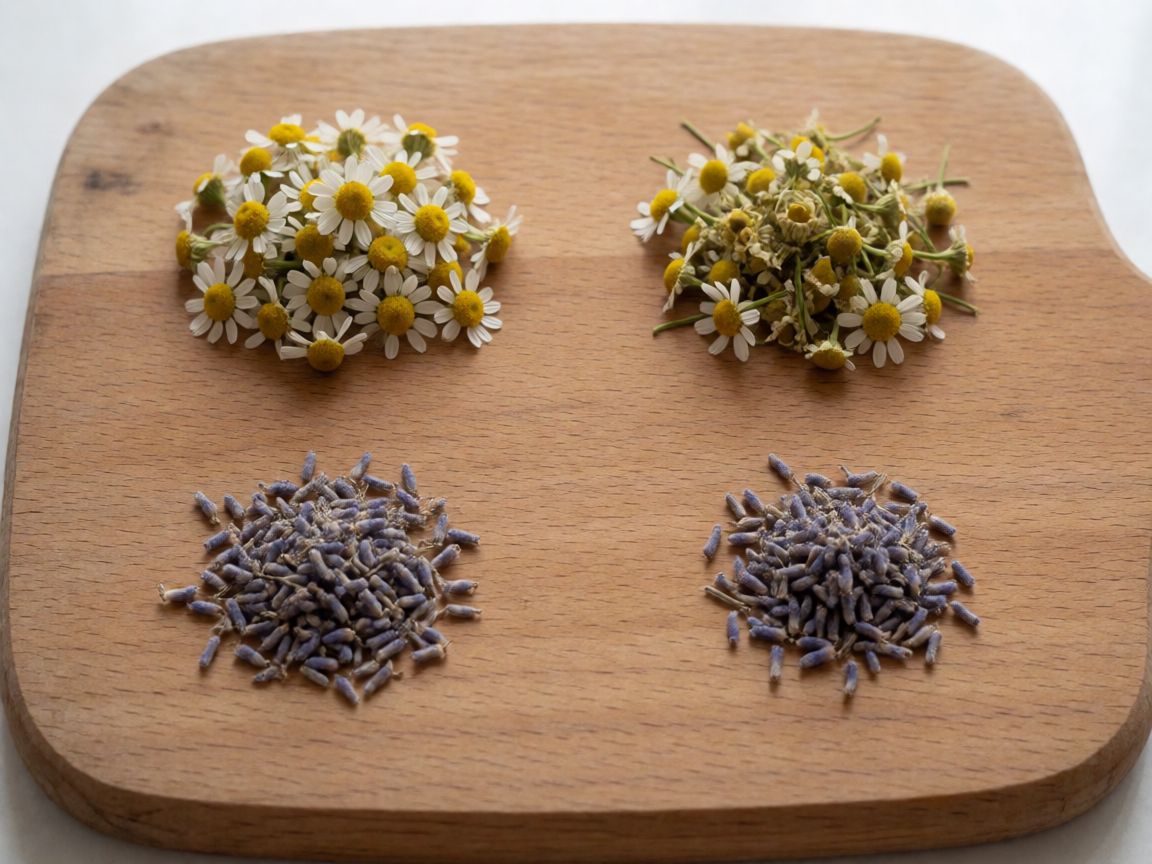
- 2 tsp Chamomile flowers
- 2 tsp Lavender flowers
- 250 ml Water

Steps
Bring the water to the boil in a small saucepan.
Once the water boils, remove the saucepan from the heat and add the chamomile and lavender flowers.
Leave to infuse for about 1 hour, then strain the tea through a sieve.
60 minPour into a glass and serve warm, or chill and serve as a cold drink.
This isn't tea, not really — no Camellia sinensis leaf in it, just flowers and hot water, which makes it a tisane, closer kin to a broth than to your builder's brew. The whole method rests on one decision: take the water off the heat before the flowers go in. That's the entire trick, and it's also the first myth worth breaking.
Some say — boil it longer, make it stronger. No, because what you're after in chamomile and lavender is their essential oil: the linalool in the lavender, the apple-sweet compounds in the chamomile. Both are volatile. They ride off with the steam the moment the water keeps rolling. Boil the flowers and you cook away the thing you were trying to get at, and you're left with hay and a flat bitterness instead.
So what's the hour actually doing? It's letting the water fall from just-off-the-boil down to warm, slowly, and that falling curve is the process — not a clock ticking down but a handover. Early on, the hotter water pulls the heavier compounds into solution, chamomile's calming apigenin among them. As the water cools, the fragile aromatics come through without being scorched off. Watch colour more than minutes: clear water turning soft straw-gold, faintly cloudy from the released oils. And trust your nose over any timer — sniff, and if it says apple and lavender rather than grass, you're there, whether that took fifty minutes or seventy.
Chamomile flowers, dried — the little daisy heads. Buy them smelling of green apple, not of dust; if the jar smells of nothing, it's been sitting on a shelf a long while and will give you colour without character. German chamomile is what you'll mostly find in UK shops under "chamomile tea"; Roman chamomile is the other species, a touch more bitter, and works just as well here.
Lavender needs more care, because not all of it is meant for drinking. The decorative kind sold for wardrobe sachets leans hard on camphor, and camphor in a cup tastes exactly like it smells — medicinal, not floral. Look for "culinary lavender," usually Lavandula angustifolia, the gentler and sweeter variety. If sachet lavender is all you've got, halve the amount and taste before adding more; you can always strain early if it's running towards soap.
Water — 250ml, and worth a word if your tap runs hard, as it does across much of the UK. Hard water mutes aromatics the same way it dulls a proper cup of tea; if your kettle's got a crust of scale, that's your tap telling you. Filtered water isn't fuss here, it's doing the flowers a favour they can't do without.
On covering it: you've no teapot built for this, and that's fine — any small saucepan with a plate set over the top does the job. The plate isn't there for warmth, it's trapping the steam carrying the very aroma you've spent an hour coaxing out. Leave the pan open and you're infusing straight into the room.
One habit worth setting aside if it's yours: no milk. Builder's tea takes milk because black tea's tannins need the fat to round them off. Chamomile and lavender don't carry that kind of tannin — milk just sits on top of something delicate and smothers it. Drink it plain, warm or over ice, and let the hour you gave it be the only extra thing in the cup.
That's one cup for one person. Scale it by simple multiplication for a pot for two or three — same ratio of flowers to water, same hour, same plate on top.