
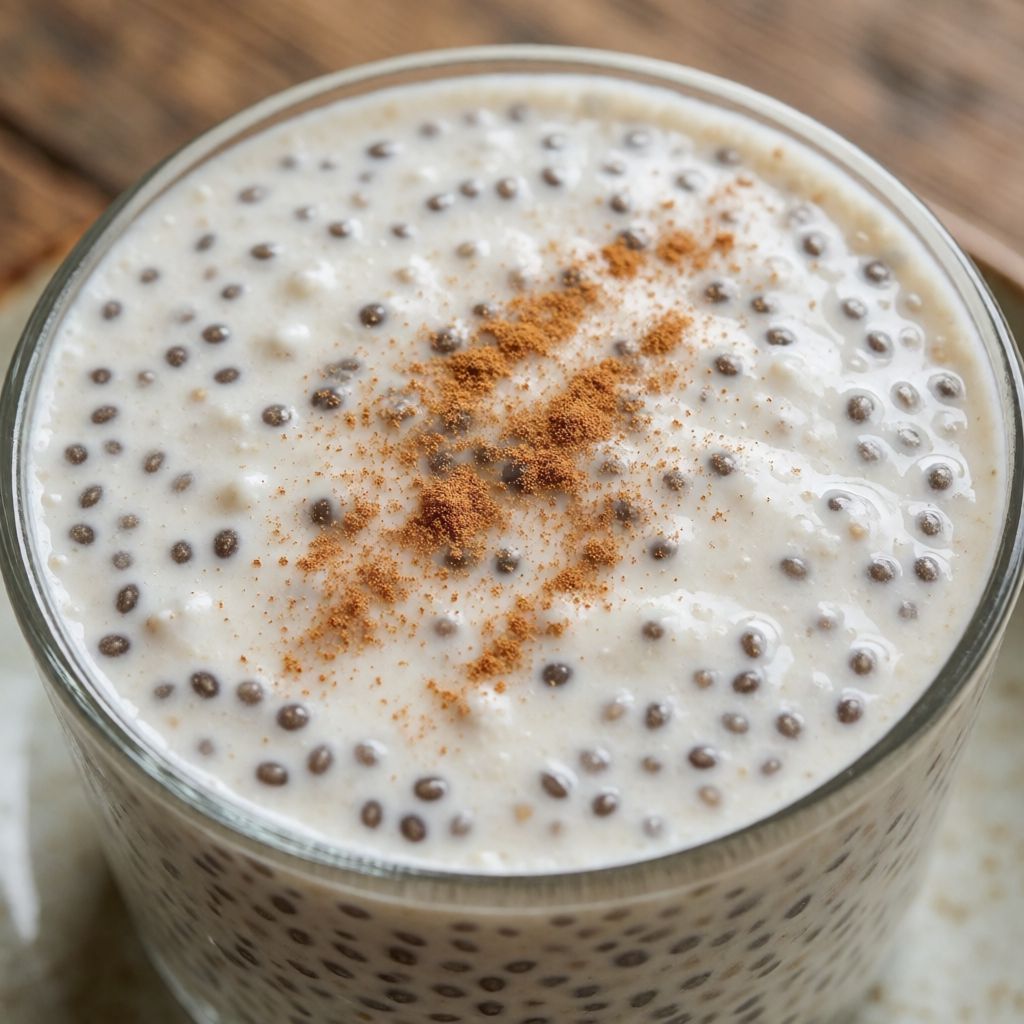
 AI photo
Coconut Chia Pudding
A creamy coconut chia pudding flavoured with cardamom and cinnamon, finished with skyr or Greek yogurt.
Labels are worked out automatically from the ingredients and can be wrong. Check the packaging if it matters to you.
Ingredients
- 100 ml Coconut Milk
- 1 tbsp Chia Seeds
- 1 pinch Vanilla Powder
- 0.5 tsp Cardamom
- 1 pinch Salt
- 0.5 tsp Cinnamon
- 100 ml Skyr


Steps
Mix the coconut milk with the spices and chia seeds until well combined.
3 minAny leftover coconut cream can be stored in a jar with a lid in the fridge — you can use it, for example, in smoothies or stirred into chia pudding in the morning.
Leave the coconut chia pudding on the kitchen counter for 10 minutes, then stir again and refrigerate overnight.
10 minIn the morning, stir the pudding well with skyr or Greek yogurt until it reaches the desired consistency.
2 minTaste, then sprinkle with granola, berries and your favourite toppings before serving.
2 min
Chia pudding isn't cooked — it's hydrated. Each tiny seed is wrapped in a coat of mucilage, a starch that swells the moment it touches liquid, and keeps swelling until the whole bowl turns from milky soup into something you can stand a spoon in. No heat does that work. Time does.
What decides whether it works is whether you stir twice, not once. The first stir, right after mixing, spreads the seeds evenly through the coconut milk so each one swells on its own. Skip the second stir — the one after ten minutes on the counter — and you get a skin: the top layer of seeds swells first, knits together, and traps a pool of thin liquid underneath with unswollen seeds sitting in it, dry in the middle of a wet dish. The second stir breaks that skin before it sets.
Some say you can shortcut the overnight wait with an hour in the freezer — no, because swelling chia fully is a matter of hours of contact, not of cold. Cold slows the process rather than finishing it faster; what you'd get is a half-set pudding with a raw, slightly slippery bite in the centre. Patience here isn't tradition for its own sake, it's literally the only ingredient doing the thickening — everything else is flavour.
The skyr goes in the next morning, not the night before, because you want two different textures layered, not blended into one average mush: the slightly grainy, gelled chia underneath, and the smooth, tangy yogurt stirred through on top of it. Mix them the night before and you lose that contrast — it just becomes a uniformly thick bowl of nothing in particular.
Coconut milk: buy the kind in a can, not the thin stuff sold as a drink — it needs real fat to carry flavour and to give the pudding body once the chia has done its work. Canned coconut milk separates in the fridge into a thick cream on top and watery milk below; that's what step two is about — you skim and use what you need, keep the rest in a jar, and it won't go to waste because it has plenty of other jobs, in a smoothie or in tomorrow's batch. If you only have the drinking carton, it'll still work, but thinner, closer to a drink with specks in it than a pudding.
Chia seeds: any whole chia seed works the same way, black or white is only colour. What matters is that they're fresh — the oil inside the seed goes rancid over months on a shelf, and a rancid seed swells just as well as a fresh one but tastes faintly bitter under the spices. Ground chia (chia meal) will thicken liquid too, but you lose the little pop of texture that makes this a pudding and not a paste — use whole.
Vanilla powder, cardamom, cinnamon: these aren't there to be tasted individually, they're there so the coconut doesn't taste like the inside of a suncream bottle. Any warm spice with a bit of sweetness in its smell does the same job — a scraped vanilla pod, a drop of vanilla extract instead of the powder, pre-ground cardamom if you don't have pods to crack. Buy whole pods and grind what you need if you can; ground spice loses its smell within weeks, sitting in a jar, and a dull spice is worse than none, because you can't taste what's gone missing, you just notice the dish is flatter than it should be.
Salt: a pinch, not a seasoning — it's there to stop the sweetness from the cinnamon and coconut tasting one-note. This is the same reason a pinch of salt goes into most sweet things worth eating; it's not a British habit or a foreign one, it's just how taste buds work.
Skyr or Greek yoghurt: the criterion is a yoghurt thick enough to hold its shape on a spoon without running. Skyr is strained harder than most Greek yoghurt and carries more protein for the same volume, so it gives a denser, almost cheesecake-like top layer; plain thick Greek yoghurt does nearly the same job, just slightly looser. Don't reach for a thin, pourable yoghurt — it'll turn the set pudding runny again, undoing the one night's patience you just put in.
For one bowl you're working with roughly equal measures of coconut milk and chia-thickened base to skyr by volume — about a hundred millilitres each — so if you're feeding two, just double straight across; the ratios don't need rebalancing the way a cooked dish's would, because nothing here is reducing or caramelising, it's only swelling. Granola or berries on top aren't decoration — they're the one crunchy, cold-hard contrast the whole bowl needs, because left alone, pudding and yoghurt together are entirely soft, and a spoonful of nothing but softness gets boring by the third bite.