
 AI photo
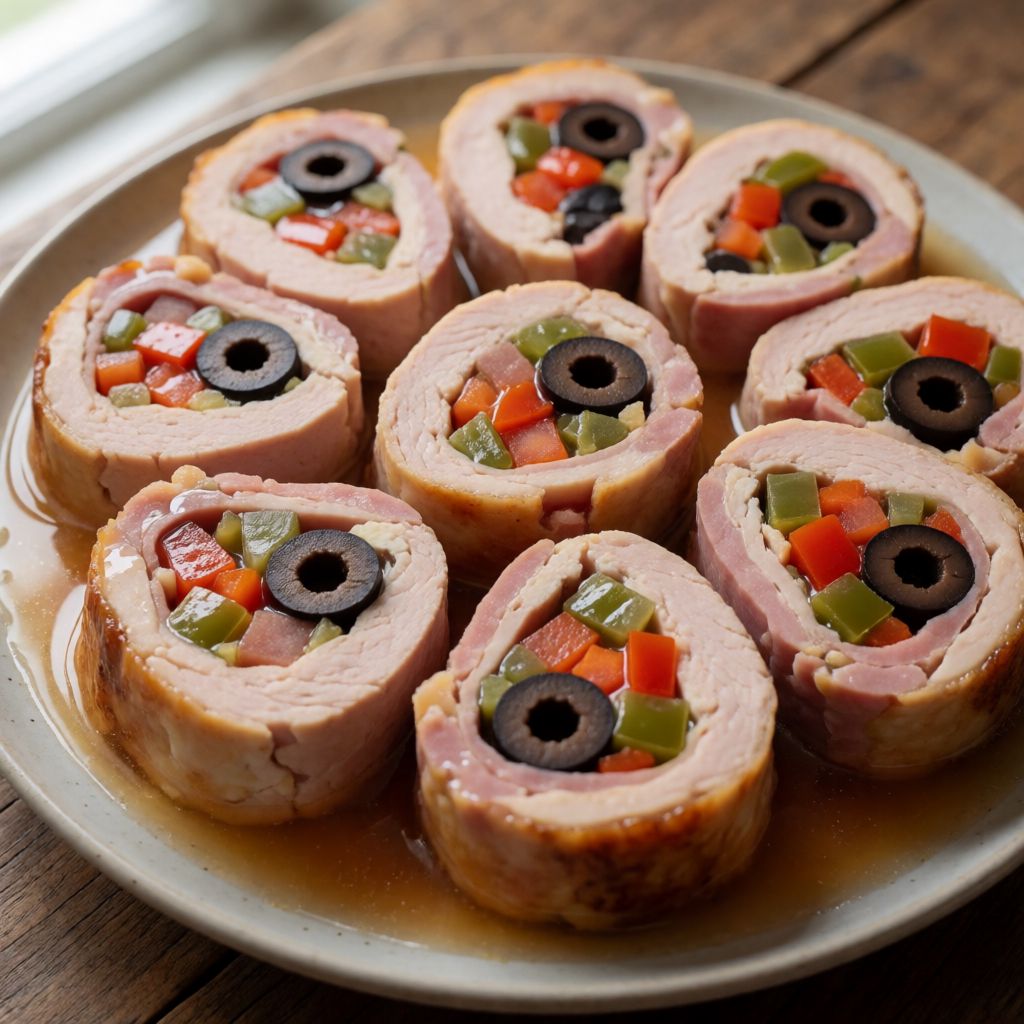
Chicken and Ham Roulades in Jelly
A classic appetiser of chicken and ham roulades set in a light savoury jelly.
Labels are worked out automatically from the ingredients and can be wrong. Check the packaging if it matters to you.
Ingredients
- 1 pcs Chicken legs large
- 7 pcs Ham slices
- 2 pcs Eggs hard-boiled
- 50 g Giardiniera (pickled vegetables)
- 100 g Green olives
- 1 package Gelatine sachet, for the jelly
- 1 pcs Onion
- 1 pcs Celery stick
- 1 pcs Carrot
- 1 bunch Parsley
- Mayonnaise to taste
- Salt to taste









Steps
Boil the chicken legs with the onion, celery, carrot and parsley until cooked through (chicken reaches 74°C).
30 minRemove the meat from the stock, take it off the bone and cut it into pieces.
Make roulades from the ham, cooked chicken and mayonnaise.
Arrange the roulades on a platter and garnish with the boiled eggs, olives and giardiniera.
Pour the warm jelly over everything and refrigerate until set.
What was changed
Corrected Chicken legs to the right cut of chicken and swapped Gelatine for the gelatine needed to set the jelly.
This is a terrine wearing a salad's clothes: ham-and-chicken roulades set inside a clear jelly, meant to be sliced at the table like a pâté, not spooned. What decides whether it works is two things — is the jelly actually clear and firm enough to hold its shape off the plate, and does the roulade stay a roulade when you cut it, instead of falling apart into shreds of chicken and a flap of ham.
There are two jobs running at once in this recipe, and people often miss the second one. The legs are poached not just to cook the meat but to make the stock that becomes your jelly — one pot, two products, nothing wasted. But thirty minutes of simmering two chicken legs will never give you enough collagen to set a tray of liquid on its own. Some say a good homemade broth sets by itself if you just chill it long enough — no, because that only happens after hours of simmering bones, the way you'd make a proper stock for soup. Here the sachet of gelatine is doing the real work, honestly and quickly, and there's no shame in it.
The roulade itself is held together by mayonnaise acting as glue between loose pieces of chicken, wrapped in a ham slice that's really just a flexible skin. It won't look like a roulade until it's been cold for a while — the mayonnaise needs the fridge to firm up, and the ham needs the chill to stop being floppy. Rush this part, slice it warm, and it collapses on the knife; that's not a fault of the recipe, that's you cutting before the glue has set.
On the legs: use legs, not breast, and don't feel you're settling for less. Dark meat has more fat and connective tissue, so it survives thirty minutes of poaching without drying into string, and it gives the stock more body and flavour than a breast ever would. If all you have is thighs, thighs work the same way — anything with skin and a joint. Breast alone will give you a drier filling and a thinner stock, so if that's all there is, add a splash more mayonnaise to the filling to compensate.
The onion, celery, carrot and parsley aren't there to be eaten — they're there to stop the stock tasting like plain boiled chicken water. This is the same mirepoix logic behind every stockpot in every cuisine; cheap aromatic vegetables, simmered and discarded, doing more flavour work than their price suggests. Strain them out before you build the jelly — not for politeness, but because any fleck of carrot or scum floating in a clear jelly ruins the one thing aspic is supposed to deliver, which is clarity. A cloudy jelly looks like a mistake even when it tastes fine.
The gelatine sachet needs to match the amount of stock you're setting — follow what's on your packet, because sachets vary, and too little gelatine gives you a jelly that never fully holds, while too much gives you something closer to rubber than to a terrine. Dissolve it into stock that's warm, not boiling, and let the mixture cool back down until it's just warm to the touch before you pour it over the roulades. Pour it too hot and it will melt the mayonnaise inside your roulade and the fat will split out into the jelly, leaving greasy patches instead of a clean set. Pour it too cold and it starts gelling in the jug before you've covered the platter evenly.
Mayonnaise in the filling is doing a structural job, not just a flavour one — it binds loose pieces of chicken into something that holds together when sliced. If you want to avoid it, thick yoghurt or a soft cream cheese will bind in a similar way, though the texture when cold will be a touch firmer and less rich. Don't swap in anything thin and runny; it won't hold the filling together once the ham is rolled around it.
Ham slices should be thin enough to bend without cracking — the wafer-thin deli kind, not a thick-cut gammon steak, which will tear the moment you try to roll it. The hard-boiled eggs, olives and giardiniera aren't just garnish scattered for colour; they're what you actually see through the jelly once it sets, so cut and arrange them with that in mind — this dish is eaten with the eyes a few seconds before the fork. If you can't find giardiniera, any pickled vegetable mix or even cornichons will do the same job: cutting through the richness of the mayonnaise and ham fat with something sharp. And green olives can be swapped for capers in a pinch, though you lose some of that visual punch suspended in the jelly.
Salt carefully, and late. A stock reduces slightly as it simmers, concentrating whatever salt you added at the start, so it's easier and safer to season once the stock is made rather than while the legs are still cooking. And give the whole thing patience at the end — this isn't a dish you can rush out of the fridge. The jelly needs real cold and real time to set properly, and a roulade sliced too early will betray every shortcut you took.