
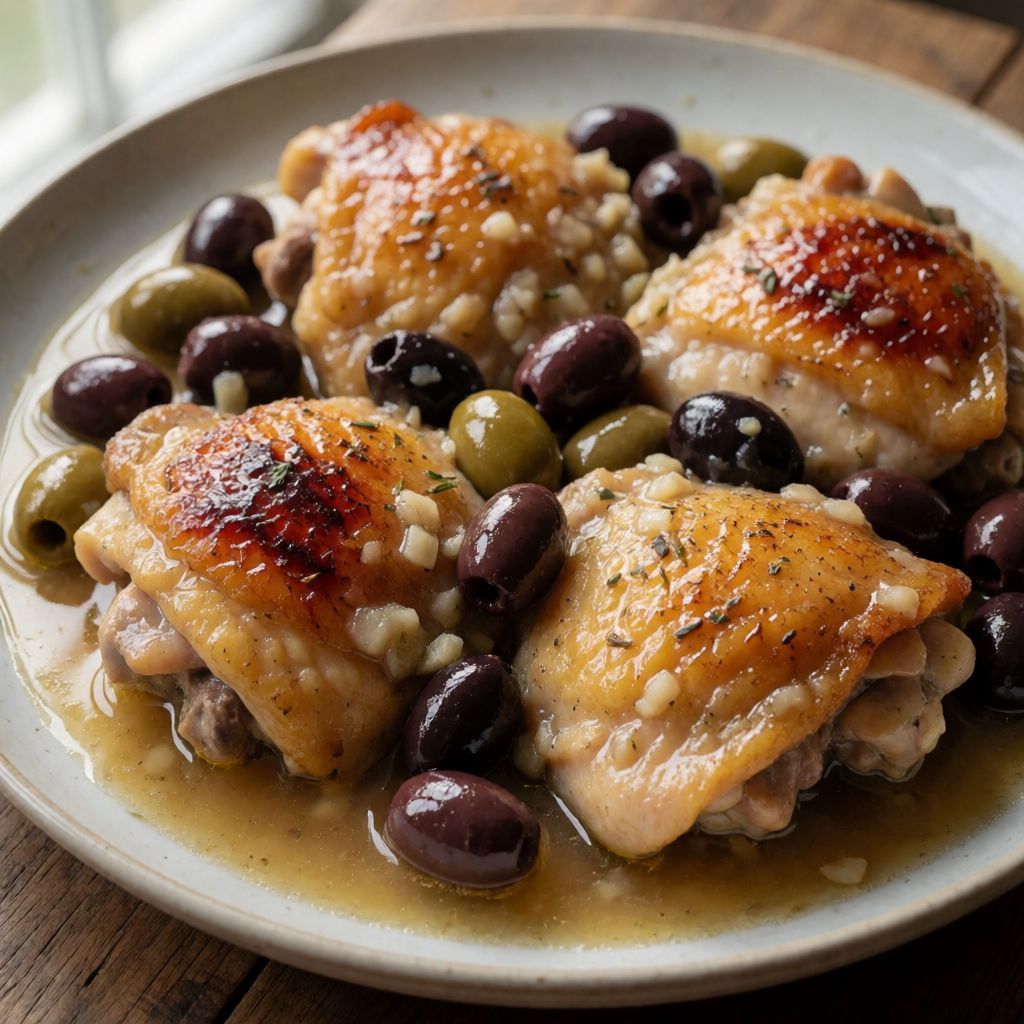
 AI photo
Hunter-Style Chicken in White Wine
A comforting dish of chicken thighs braised with garlic, olives, sage and rosemary in white wine.
Ingredients
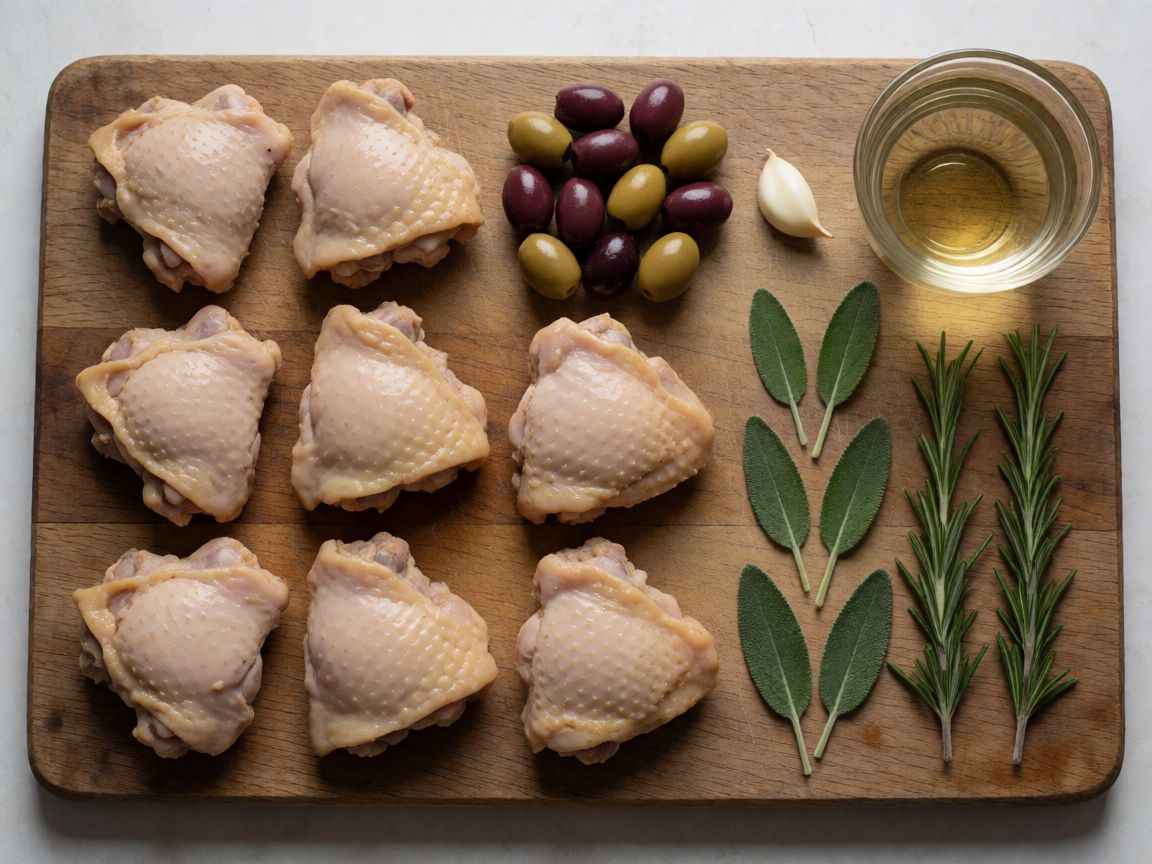
- 8 pcs Chicken thighs
- 20 pcs Green olives
- 20 pcs Taggiasca olives
- 1 clove Garlic
- 100 ml White wine
- 4 tbsp Olive oil
- Salt to taste
- 6 pcs Sage leaves
- 4 pcs Rosemary sprigs
- 250 ml Water approximately








Steps
Heat 4 tbsp of olive oil in a frying pan and fry the garlic clove in it.
2 minAdd the chicken thighs and fry evenly on all sides, turning so the skin doesn't burn.
10 minAdd the sage and rosemary.
1 minPour in the white wine and let it evaporate.
5 minAdd the green and Taggiasca olives, then pour in about 250 ml of water to make a tasty sauce.
2 minCover with a lid and simmer over low heat. Ready when the internal temperature reaches 74°C.
35 minServe hot, straight from the heat.
This is alla cacciatora — hunter's chicken, built entirely in one wide pan on the hob, no oven needed. Thighs, bone and skin left on, browned first, then braised in white wine and olive brine until the meat gives without resistance. Hunters cooked food like this because it used what was already in the larder — a bird, some wine, tough herbs, olives from a jar — not what was fresh that morning. Nothing here needs special kit; it needs you watching the pan.
What decides this in the first ten minutes is the skin. Thigh skin carries enough fat to crisp on its own; that fat renders out and becomes the base of your sauce later. Push the heat too hard too soon and the skin scorches before the fat has melted out — bitter, not golden. Too timid, and it stays pale and rubbery. You're after a steady, confident sizzle, not a spit and not a hush.
Some say searing seals in the juices — no. Meat isn't a sealed bag; browning only builds flavour on the surface through the Maillard reaction, it does nothing to trap moisture. What keeps this chicken from drying out is the cut itself — thighs carry enough fat and connective tissue to survive a long braise, which breast meat on the same clock cannot.
The garlic goes in whole, one clove, fried first to flavour the oil before the chicken ever touches the pan. Left whole it releases slowly without turning bitter — chopped garlic in hot oil burns in seconds. The cue is colour: golden, not brown. Brown garlic is sharp and acrid and will sit under everything you cook afterwards.
Four tablespoons of olive oil here isn't just a cooking medium, it's a flavour in its own right, so don't swap it for something neutral unless you also accept losing that note. If all you've got is sunflower or another plain oil, cook with that and finish the dish with a spoon of raw, good olive oil stirred in at the end — the mechanics work either way, but the oil's own character has to come from somewhere.
Sage and rosemary are added after the chicken is already browned, never into the first hot oil, because they're tough, resinous leaves that can survive forty-five minutes of heat without turning to ash — soft herbs like basil or parsley would blacken and go bitter long before the braise is done. Thyme works on the same principle, woody stem and resinous leaf, if you've no rosemary. Dill, coriander, anything soft-leaved — leave them out, they weren't built for this.
The wine deglazes what's stuck to the pan, lifting the browned bits into the sauce, and its acid cuts through the fat that's rendered out. "Let it evaporate" doesn't mean every trace of alcohol must vanish — five minutes cooks off the raw, sharp edge of it, not all the alcohol, which would take far longer than this recipe gives it. Any dry white with real acidity does the job; dry vermouth is even sharper and works well. No wine in the house — water with a spoon of wine vinegar gets you the acid, if not the depth. The 250 ml of water after the olives go in isn't filler, it's there to carry the salt from the olive brine and the fond from the pan into a sauce you can actually spoon — the exact amount depends on your pan's surface area and how hard it's bubbling, so judge by a sauce that coats a spoon, not one that drowns the chicken.
Most UK kitchens have a frying pan this size but no lid that actually fits it. A dinner plate set over the top, or a sheet of foil pressed down, does the same job — holding steam in so the braise doesn't boil dry before the chicken's ready. "Low heat" here means barely a bubble breaking the surface, not a rolling boil; a hard boil toughens the muscle fibres faster than the connective tissue can melt, and you end up with meat that's both overcooked and chewy, which feels like a contradiction until you've seen it happen.
Thighs are the cheaper cut precisely because they don't carve as neatly as breast for a Sunday roast platter — but that's the opposite virtue this dish needs. It wants forgiveness, not elegance on the plate. The thirty-five-minute simmer is a floor, not a ceiling: if the sauce hasn't thickened or the meat hasn't let go of the bone, give it more time rather than pulling it off because the clock said so. That patience is the actual ingredient doing the work here, more than any single thing in the pan.