
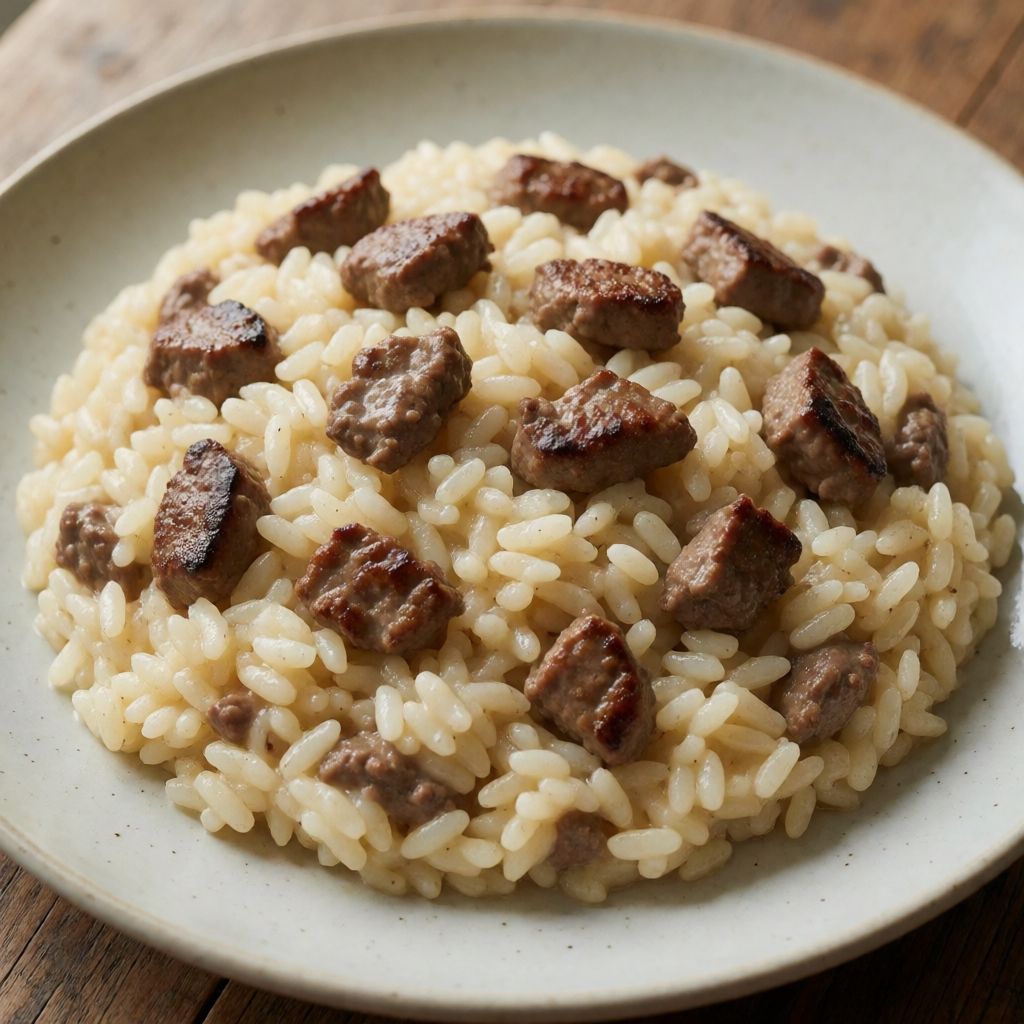
 AI photo
Risotto with Chicken Liver
A creamy risotto with chicken liver, carrot, celery and onion, finished with butter and parsley.
Labels are worked out automatically from the ingredients and can be wrong. Check the packaging if it matters to you.
Ingredients
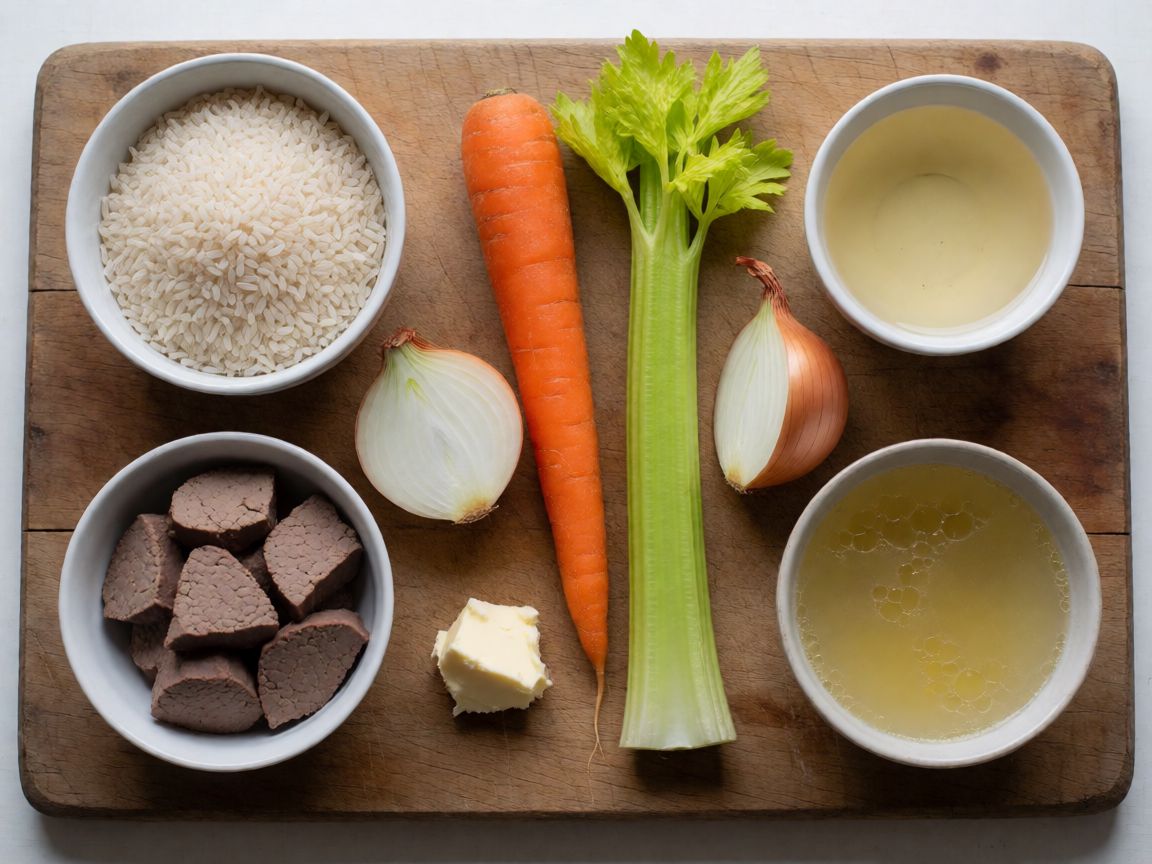
- 400 g Rice
- 200 g Chicken liver
- 75 ml White wine
- 1 pcs Carrot
- 1 pcs Celery stick
- 1/2 pcs Onion
- 30 g Butter
- Vegetable stock
- Parsley
- 1 pcs Lemon










Steps
Cover the chicken liver with cold water and lemon juice and let it sit for a few hours to remove any strong smell, then rinse under running water.
Finely chop the carrot, celery and onion.
In a non-stick pan, melt the butter and sauté the chopped vegetables.
Dice the chicken liver, add it to the vegetables and cook through, checking the temperature reaches 74°C.
Add the rice and toast it for a few minutes, stirring constantly so the grains are coated in butter.
Pour in the white wine and let it evaporate completely.
Begin adding the vegetable stock gradually, first enough to cover the rice, then a ladleful at a time as it dries out.
Cook the rice until done, continuing to add stock as needed.
23 minStir in a little more butter and let the risotto rest for a few minutes for creaminess.
Sprinkle with chopped parsley and serve hot.
Risotto is not "rice cooked in stock" — it's starch managed in stages so the grain ends up suspended in its own glue rather than sitting in a puddle or clumped into porridge. What decides whether this works is two things: whether you keep the rice just below a boil the whole time, and whether you have the nerve to add stock a ladle at a time instead of drowning the pan once and walking off.
Chicken liver risotto is the butcher's-offcut version of the dish — liver was cheap, quick to cook, and gave the broth-and-fat base its backbone long before anyone called this fine dining. The soffritto of carrot, celery and onion isn't decoration; it's the flavour engine, built slowly in butter so the vegetables soften into the fat rather than fry and brown. If they catch colour and go dry at the edges, that's not seasoning, that's a mistake — it means the heat was too fierce for what is essentially a slow sweat, not a sauté in the pub-kitchen sense.
The lemon-water soak on the liver isn't fussiness. Liver carries blood and a mineral tang that reads as "off" even when the liver is perfectly fresh; acid and cold water pull that out before it ever meets the pan. Skip it and you don't get a ruined dish, you get a risotto that tastes faintly of iron and nobody can say why.
Start with the rice. Arborio is the common one in UK shops and it works fine — a fat, short grain with a chalky core that stays slightly firm (al dente, if you want the word) while the outside dissolves into the stock and makes the sauce. Carnaroli is the pastry chef's choice because it holds structure a touch longer and is more forgiving if you're slow with the ladle, but it's not a different dish, just a wider margin for error. Don't reach for long-grain or basmati — low surface starch, and you'll get rice swimming in flavoured water, not risotto.
The liver: 74°C isn't a number to be precious about, it's the point at which chicken liver is safely cooked through without turning to chalk — a thermometer tells you this in two seconds, but if you don't own one, cut a piece open: no pink thread running through the centre, just even brown-grey. Push past that point out of caution and the liver dries and grates against your teeth; that's the real cost of "well done" here, not a food-safety win, since 74°C already covers you.
Carrot, celery, onion — the classic soffritto — exist because in a poor kitchen you cook what's cheap and always in the larder, and that trio happens to build a rounded savoury base without needing meat stock itself to carry flavour. If you're missing celery, don't panic and don't substitute something with a strong flavour of its own (fennel, for instance, will hijack the dish) — leave it out before you replace it badly. Carrot and onion alone still give you sweetness and body.
White wine does one job: it deglazes the butter and fond stuck to the pan, and its acid cuts through the richness of butter and liver before that richness becomes cloying. It must evaporate fully — smell for it, the sharp alcohol note disappears and what's left is a clean, slightly tangy backdrop. Any dry white with no noticeable sweetness will do; if you don't cook with wine at all, a spoon of lemon juice in the stock gets you the acid, if not quite the depth.
Stock: vegetable stock here isn't a compromise, it's the point — it stays light enough that the liver remains the dominant flavour rather than fighting a beefy or chicken-y stock for the same territory. Keep it hot on a back burner the whole time you're adding it; cold stock shocks the rice, stalls the cooking, and that's exactly how people end up with rice that's gluey outside and raw-cored within, because they panic and crank the heat back up to compensate.
On a domestic hob, understand your limits: you haven't got the wide, shallow spread of a paella-style pan or a kazan holding heat evenly across its base, so your risotto will cook a little unevenly round the edges versus the centre — stir more often than you think you need to, and don't trust one spot of the pan to tell you the whole story. The final butter stirred in off the heat, and the few minutes' rest after — that's not an optional flourish, that's what pulls the starch and fat into something creamy rather than just wet. Patience there is the last ingredient, and it's free.