
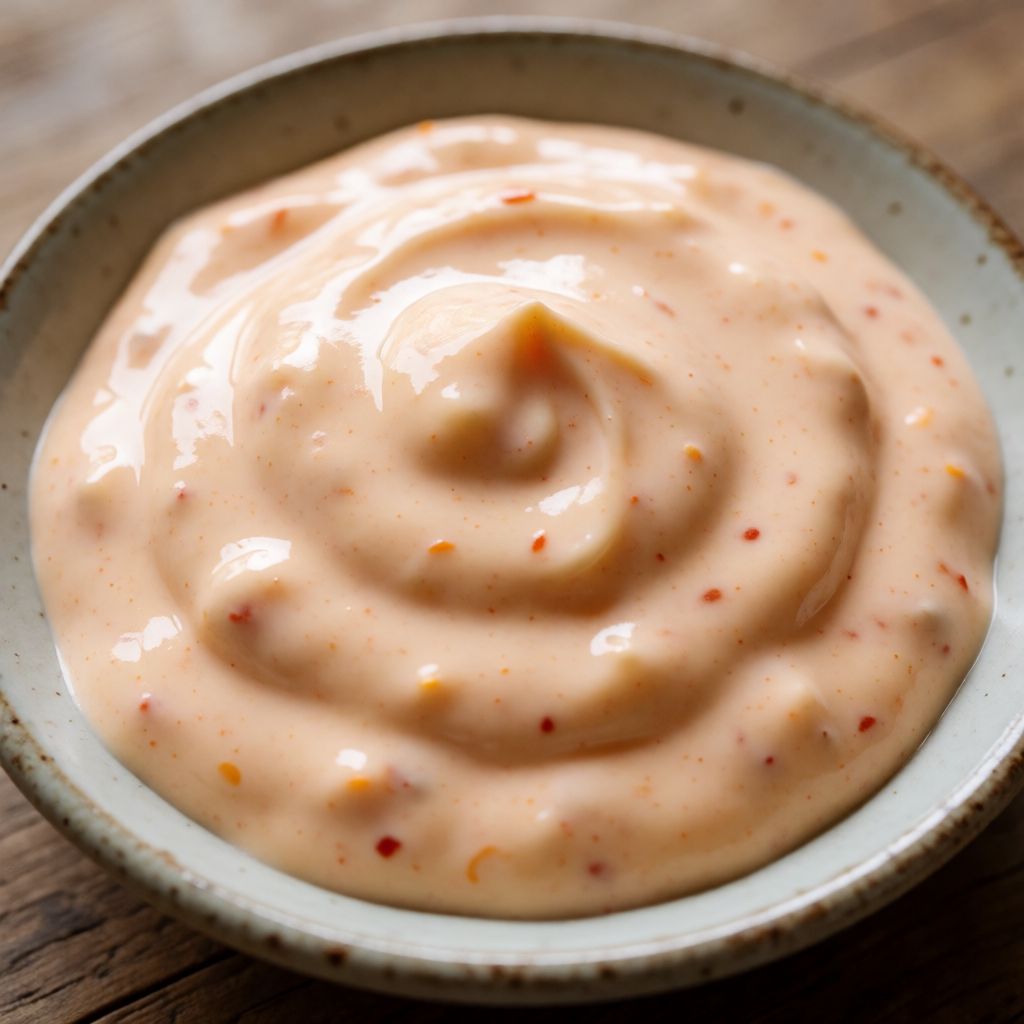
 AI photo
Chilli Mayonnaise
A quick, fiery homemade mayonnaise made with sriracha, ketchup and Dijon mustard.
Labels are worked out automatically from the ingredients and can be wrong. Check the packaging if it matters to you.
Ingredients
- 2 pcs Egg yolks
- 1 tsp Lemon juice
- 2 tsp Sriracha
- 1 tsp Ketchup
- 0.5 tsp Chilli flakes
- 1 tsp Dijon mustard
- 0.5 tsp Salt
- 180 g Sunflower oil







Steps
Take all the ingredients out of the fridge and let them sit on the counter for 30 minutes.
30 minPut the egg yolks, lemon juice, sriracha, ketchup, chilli flakes, Dijon mustard and salt into a blender jug, and insert a stick blender right to the bottom of the jug.
Pour in half the oil and blitz, keeping the blender still at first.
Slowly raise and lower the blender until the aioli becomes smooth, adding the rest of the oil in a thin stream.
Season with salt to taste.
Chill in the fridge until ready to serve.
This isn't "mayonnaise with chilli stirred in" — it's an emulsion first, flavour second. Egg yolk and water are forced to hold oil in suspension as droplets too small to find each other again. Whether that holds or splits into a thin, greasy puddle has nothing to do with how strong your arm is. It's about temperature and about how you move the blender in the first ten seconds.
Start with everything at room temperature, and don't treat that half hour on the counter as dead time — it's an ingredient here, same as the oil. Cold yolk is stiffer, cold oil is thicker, and a stick blender only has seconds to bind them before they drift apart again. Warm, they flow into each other willingly. Some say eggs must stay cold until the last moment for safety — no, because you're not storing raw egg for a week, you're using it in the next ten minutes, and a few degrees of warmth here decide the sauce, not the fridge.
The real decider, though, is the stillness. Keep the blender planted at the bottom of the jug at first, don't swirl it about. The blade is shredding and whipping a small, concentrated pocket of yolk and oil into true emulsion right there — a kind of local vortex. Once that pocket exists, it has the strength to pull in and hold whatever oil you stream in afterwards. Move the blender too early, before that pocket forms, and you just get ribbons of raw oil swimming around unincorporated — a split sauce, thin, slick, and not a sauce at all. Only once it's gone smooth do you lift and lower the blender, inviting the rest of the oil in gradually.
Egg yolk is doing the actual chemistry here — it contains lecithin, which has one end that likes oil and one end that likes water, so it can stand between the two and keep them from separating. Two yolks for this size of batch gives you enough of that binding material relative to 180 g of oil; go much leaner on yolk and you're asking a smaller workforce to hold back more oil than it can manage, and the sauce will feel thin even if it technically holds.
Lemon juice and Dijon mustard are doing two different jobs that look similar. The acid in the lemon juice thins the yolk slightly and helps the proteins unfold so lecithin can do its work faster — and it cuts the richness of all that oil on the tongue later. Mustard brings its own small emulsifying compounds, mucilage from the seed, so it's not just flavour, it's backup insurance for the emulsion, plus the sharpness that a chilli mayonnaise actually needs to taste awake rather than just hot.
Sriracha, ketchup and chilli flakes split the heat and the character three ways. Sriracha gives a sour-garlicky front-of-mouth heat, ketchup rounds it out with sweetness and body so the sauce doesn't taste raw, and the flakes sit there giving you texture and a slower, dull burn that builds the longer you eat — not everything needs to dissolve into the sauce. If you want it hotter, add more flakes rather than more sriracha, or the sauce turns sour instead of hot.
Oil is the bulk of this, and the rule is simple: use something with no smell or taste of its own, so sunflower, rapeseed, a light vegetable oil. Don't reach for olive oil here — not out of snobbery, but because a stick blender spinning at speed can turn its polyphenols bitter, and its own strong flavour will fight the chilli instead of carrying it. Save the good olive oil for where you can taste it properly.
Salt goes in at the start for the base flavour, but taste again at the end and adjust — once the oil is in, the salt reads differently against all that fat, so the first measure is a guess and the final one is the decision.
Once it's made, it keeps in the fridge for a few days, which is really the whole economic point of mayonnaise as a category: a cheap way to turn plain things — roast leftovers, cold potatoes, a sandwich — into something that tastes deliberate, made once and spent slowly.