
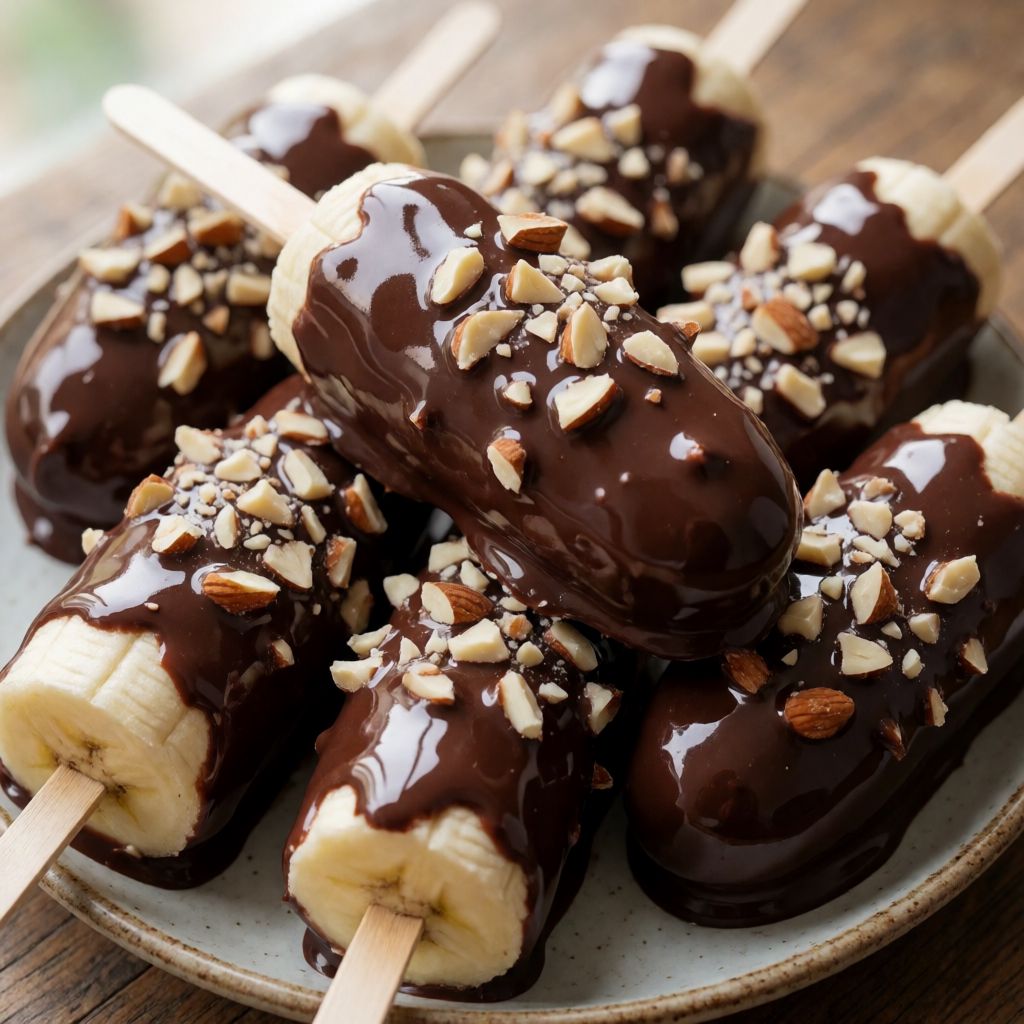
 AI photo
Chocolate-Dipped Banana Pops
A quick frozen treat of banana pieces dipped in melted dark chocolate and chopped almonds.
Labels are worked out automatically from the ingredients and can be wrong. Check the packaging if it matters to you.
Ingredients
- 1 pcs Banana ripe
- 30 g Dark Chocolate finely chopped
- 10 pcs Almonds finely chopped
- 3 pcs Liquorice Root for sticks

Steps
Peel the banana and cut it into 3 equal pieces, then push a stick into each piece.
Place the banana pieces in the freezer for 1-2 hours.
90 minMelt half the chocolate in a heatproof bowl set over a pan of simmering water, then stir in the remaining chocolate once melted.
Dip the lightly frozen banana pieces into the chocolate, sprinkle with the chopped almonds and serve immediately.
Let's be honest about what this is: there's no cooking here, just assembly with one small technical trick in the middle. A frozen banana wears a chocolate coat and a handful of crushed almonds. The whole dish succeeds or fails on contrast — icy fruit meeting liquid chocolate, which is what makes the shell set in seconds instead of sliding off into a puddle on your plate.
The freezer step isn't about turning the banana into an ice lolly. An hour or two firms the flesh enough that it won't buckle under the stick and won't turn to mush the moment warm chocolate touches it. Freeze it solid for six hours and you've made something else — a banana ice pop with a chocolate problem, hard to bite, no give.
The only real craft is in the chocolate. Some say you need a thermometer and a proper tempering routine to get chocolate that snaps instead of smears. No — not for this. Melting half the chocolate and stirring in the rest unmelted does the same job by a simpler mechanism: the solid pieces still carry their original crystal structure, and when they melt into the warm chocolate they pull the whole lot back into that same stable structure. That's why it sets glossy and crisp at room temperature instead of staying soft and dull. It's called seeding, and it works because chocolate, like a recipe, remembers its own history.
Serve immediately isn't nerves talking. The coating is thin on purpose, and a thin shell has no reserves — ten minutes on a warm plate and the contrast that made the whole thing work has gone.
Banana: pick one that's ripe for sweetness but still firm enough to hold its shape under a stick — press it, it should give a little, not collapse. Overripe fruit tastes better here but turns to pulp the moment you push wood through it, and it won't survive even a short freeze without weeping. Peel and skewer it quickly too: cut banana browns fast from contact with air, and nobody wants grey-brown fruit under a see-through gap in the chocolate.
Dark chocolate: chop it fine, not for the melting (any size melts eventually) but so it melts evenly, without a few big lumps sitting stubborn in the middle while the rest scorches around them. Higher cocoa content gives you a harder, cleaner snap when it sets — milk chocolate will coat the banana too, but it stays softer and sweeter, more a blanket than a shell. If your chocolate seizes into a grainy paste instead of staying smooth, the cause is almost always water: a drop of condensation falling in, or the bowl sitting so low it touches the simmering water underneath. Keep the water at a gentle shiver, not a hard boil — steam finds its way into things a boil can't.
Almonds: chop them fine enough that they actually stick to a thin wet coating instead of rolling off onto the plate. They're there for crunch against two soft textures — banana and chocolate — and for a plain, slightly bitter counterweight to all that sweetness. Any dry, raw-tasting nut works on the same logic: hazelnuts, pistachios, even toasted coconut if you want a different kind of crunch. Toasting the almonds first isn't required, but it deepens the flavour if you've got five spare minutes and a dry pan.
Liquorice root as the stick is an unusual choice outside anywhere it grows — it's doing a job, not adding flavour you're meant to taste through the chocolate, though it will lend a faint aniseed note if you bite close to it. In most ordinary kitchens, any plain wooden lolly stick, a trimmed skewer, even a sturdy cocktail stick for a smaller piece, does exactly the same work: holding the banana steady while it goes from freezer to chocolate to mouth.
This whole format — fruit, stick, chocolate shell — comes from the same economic logic as a fairground stall: no oven, no skill beyond stirring, minutes of actual work, and a brilliant way to use a banana that's one day past its best for eating plain but not yet ready for the bin. That's not a small thing. A dessert that asks nothing of your cooker and rescues food that was about to be wasted has earned its place regardless of how simple it looks on the page.
Patience shows up twice, briefly: once waiting for the banana to firm in the freezer, and once not rushing the chocolate over heat that's too fierce. Neither takes skill. Both take just enough restraint not to skip them.