
Baking
Dark Chocolate
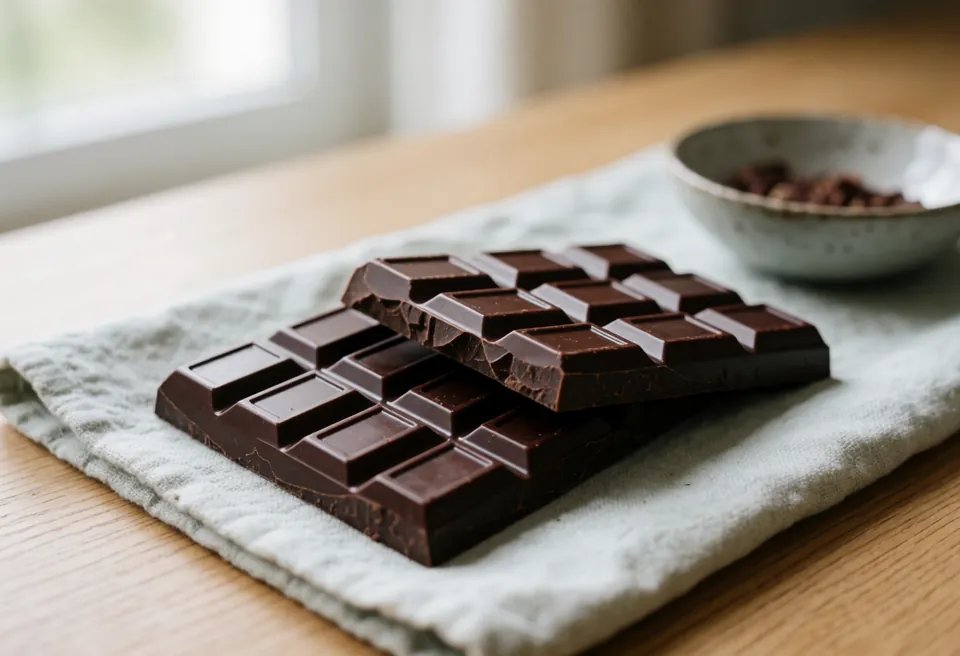
Dark chocolate contains 60–69% cocoa solids and has a rich, less sweet flavor than milk chocolate. It's melted for glazes or used in baking and desserts.
579 kcal per 100 g
Nutrition per 100 g
579 kcal
| Protein | 6.1 g |
|---|---|
| Fat | 38.3 g |
| Carbs | 52.4 g |
| Fiber | 8 g |
Source: USDA FoodData Central, 2026-09-21. Per 100 g of product.
Good to know: Dark Chocolate
Let's talk about dark chocolate, and let's be honest about what it is. Chocolate is not a liquid that magically turns solid in the fridge. It is fat — cocoa butter — holding sugar and cocoa particles in suspension. That fat can set in several different crystal forms, and only one of them gives you that dry snap and the glossy surface you want. The others give you a soft, greasy bar that bends before it breaks, or bloom — that pale, dusty coating that scares people who think it is mould. It is not. It is a sign the chocolate was mishandled, warmed or damp when it shouldn't have been.
Choose it with your ears as much as your eyes. Good dark chocolate snaps clean, sharp, no bend first. The cut edge should stay smooth, not grainy. Smell it before it melts in your mouth — it should smell like cocoa, not like wax, and feel smooth under your thumb, not chalky.
Some people say bloomed chocolate is spoiled and throw it out. No — it has lost its shine and snap, not its flavour. Melt it into a sauce or a batch of brownies, where looks don't matter, and it will behave exactly as it should. Throwing it away is the real mistake, born from not knowing this simple fact.