
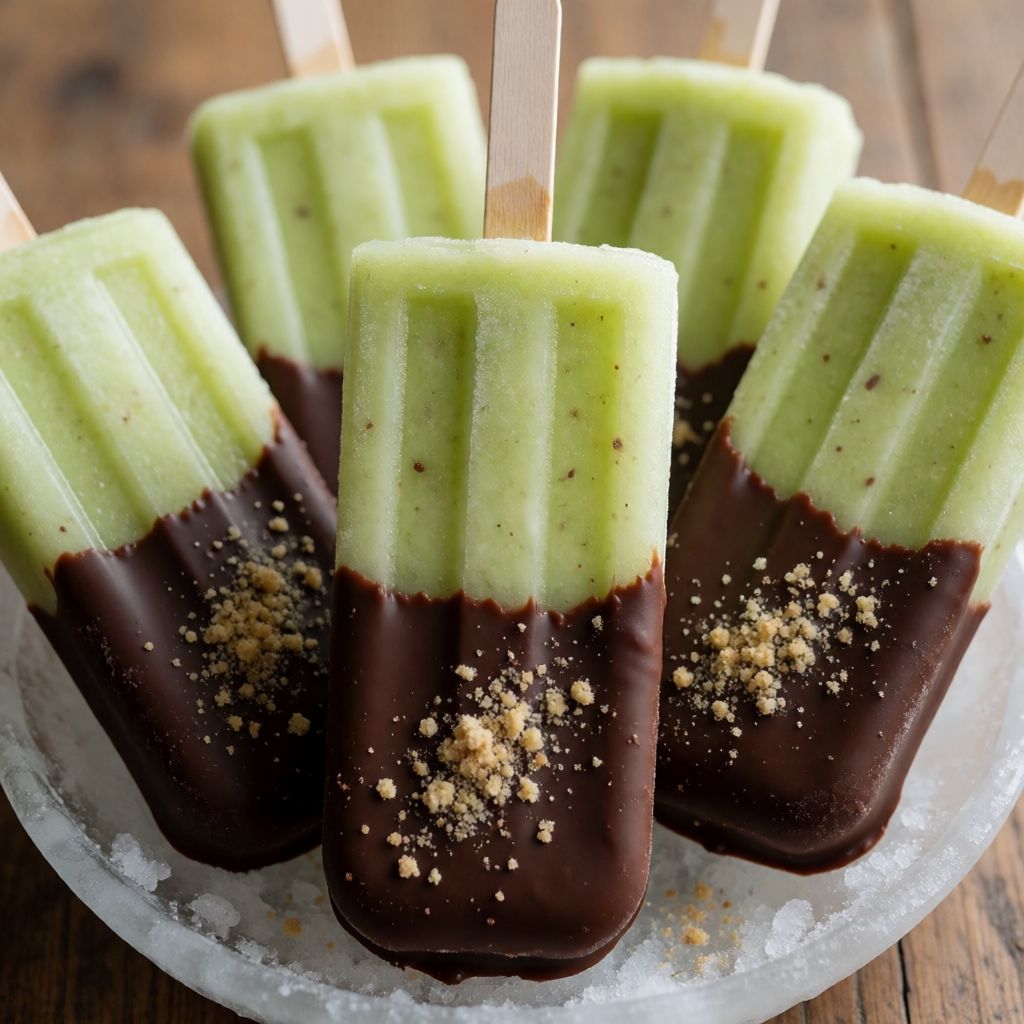
 AI photo
Healthy Green Melon Ice Lollies
Chocolate-dipped melon chunks on sticks, a refreshing healthy frozen treat.
Labels are worked out automatically from the ingredients and can be wrong. Check the packaging if it matters to you.
Ingredients
- 0.5 pcs Melon
- 50 g Dark chocolate finely chopped
- 4 pcs Liquorice root or wooden ice-lolly sticks, straws, etc.


Steps
Cut the melon into small cubes, insert a stick into each piece, then freeze the cubes.
240 minFreeze for at least a few hours.
180 minTemper the chocolate and dip the frozen melon cubes into it.
5 min
This is not cooking, it's preservation with a bit of theatre: ripe melon cut into bite-sized blocks, frozen until hard as ice, then given a thin armour of chocolate. No syrup, no mould, no custard base — the fruit's own water does the work of becoming a lolly. Whether it succeeds or just becomes flavourless ice on a stick comes down to two things: how ripe the melon was before it went into the freezer, and whether the chocolate is in temper when it meets that cold surface.
Freezing dulls sweetness — your tongue reads sugar less sharply when it's cold, that's just how taste receptors work. So a melon that's only just ripe, picked for looking nice rather than smelling sweet at the stalk end, will come out of the freezer tasting of practically nothing. You need it properly ripe, almost too ripe to serve as a fruit bowl centrepiece, because the freezer is going to take some of that sweetness away from you, not add to it.
The chocolate shell is where people usually go wrong, and it's not about skill, it's about physics. Chocolate that isn't tempered — meaning the cocoa butter crystals aren't settled into the one stable form — sets dull, soft, and streaky, and it won't crack when you bite it, it'll just smear off onto your fingers. Tempered chocolate does the opposite: dipped onto something frozen solid, it sets almost the instant it touches the surface, locking in a thin, glossy, snapping shell. The cold fruit isn't incidental here — it's doing half the setting work for you.
Melon: buy by nose, not by eye. A ripe cantaloupe or galia will smell sweet at the stalk scar before you even cut it; an unripe one smells of nothing, and nothing is exactly what you'll taste once it's frozen. Half a melon for four servings is a fair, modest portion — this is a treat, not a fruit course. Cube it generously enough that each piece holds together on its stick; too small and it shatters when you try to dip it.
The stick goes in before the freezer, not after, and this isn't fussiness — it's mechanics. Frozen melon is essentially ice with flavouring; try pushing a stick into a block that hard and you'll split it. Push it into the soft, just-cut flesh and the fruit freezes around it, holding it properly. If you're out of liquorice root, any plain wooden lolly stick works — a cocktail stick will do for smaller cubes, though you lose the bit of history liquorice root carries: it used to be chewed on its own as a penny sweet before refined sugar sweets were affordable to most people, so using it here as a handle is partly a nod to a habit, not a requirement.
Freeze properly, meaning hard all the way through, not just frosted on the outside with a soft, slushy middle. A domestic freezer running its normal cold will get there — a few hours is the honest lower bound, not a target to beat. Rushing this is where lollies disappoint: a half-frozen centre melts the moment it meets room air, and the chocolate shell slides off a wet surface instead of gripping a dry, frozen one. Patience here isn't optional, it's the ingredient doing the actual work.
Chocolate: dark, and with a decent cocoa content — somewhere around 50–60% and up — because it needs enough cocoa butter to set hard and snap, not sag. Milk chocolate, with its extra sugar and milk fat, will set too soft for this job. You don't need professional tempering kit — a bowl over a pan of barely-steaming water, melting most of the chocolate gently, then stirring in a few reserved unmelted pieces to "seed" it back into a stable set, is the domestic version of what a chocolatier does on a marble slab. You'll know it's right when a dipped spoon sets matte and firm within a minute or two at room temperature, not greasy and slow.
The dip itself has a short window, and that's the real defect to watch for: take the melon straight from the freezer, dip immediately. Leave it sitting out even briefly and the frozen surface starts sweating — that film of condensation is what makes chocolate slide off unevenly or clump, not any fault in the chocolate itself. Cold, dry fruit meeting tempered chocolate is the whole mechanism here; everything else is just getting the fruit and the chocolate ready to meet each other at the right moment.