
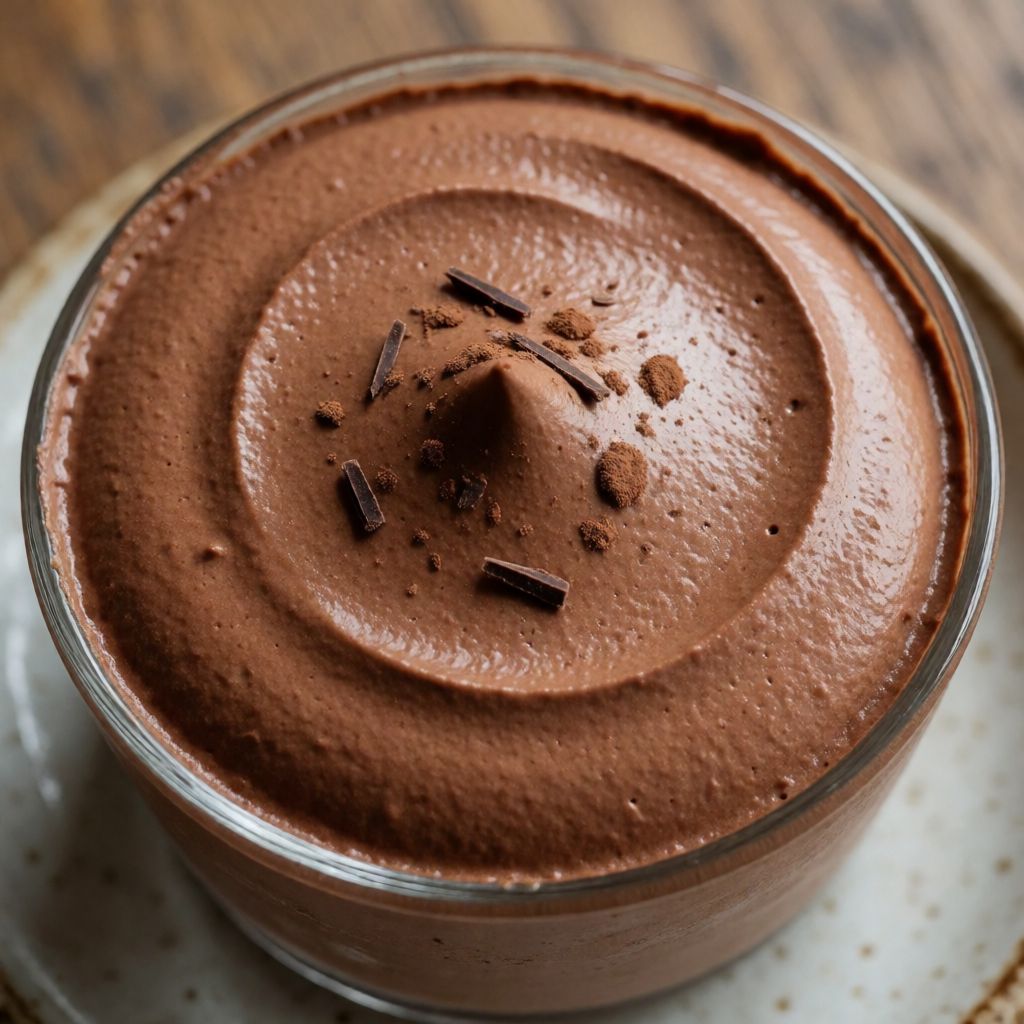
 AI photo
Chocolate Mousse
A rich and silky chocolate mousse made with dark chocolate, mascarpone and double cream.
Labels are worked out automatically from the ingredients and can be wrong. Check the packaging if it matters to you.
Ingredients
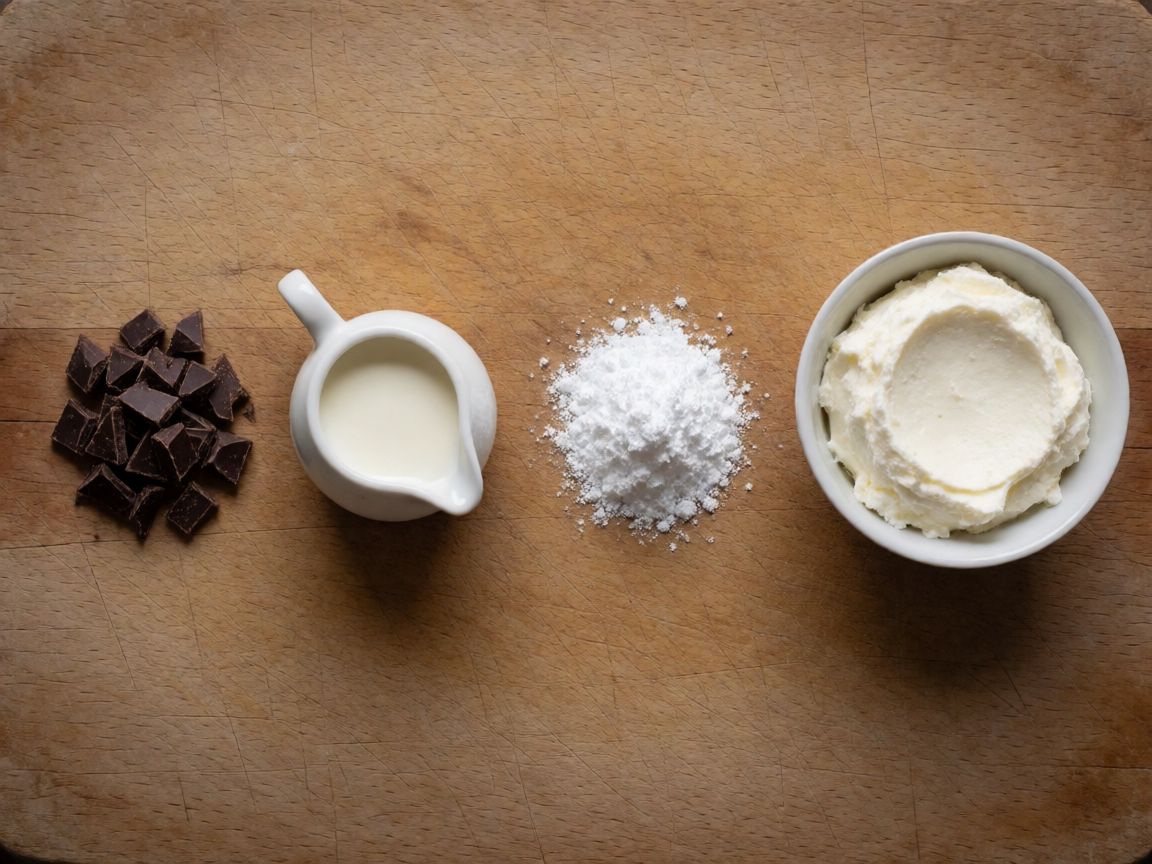
- 250 g Dark chocolate
- 200 ml Double cream
- 100 g Icing sugar
- 250 g Mascarpone



Steps
Break the chocolate into pieces and melt it in a bain-marie or in the microwave on low power until completely melted, then leave to cool.
In a separate bowl, beat the mascarpone with the icing sugar using a mixer.
Add the melted chocolate and mix thoroughly.
In another bowl, whip the double cream until it holds soft peaks, having chilled the bowl and whisk beforehand.
Gently fold the whipped cream into the chocolate mixture, folding from the bottom up so it doesn't lose volume.
Chill the mousse in the refrigerator until ready to serve.
Spoon the mousse into glasses, or pipe it in with a piping bag for a more elegant presentation.
This isn't the mousse the French invented with egg yolks and whipped egg whites — it's a British shortcut that gets to the same place by a different road: trapped air held inside fat instead of egg protein. Some say a mousse without raw egg isn't a real mousse — no, because what makes a mousse is air bubbles locked in place, and here the locking agents are the cocoa butter in the chocolate and the fat in the mascarpone. That's also why this version is fine to eat the same day you make it and doesn't carry the raw-egg worry a classic mousse does.
What decides whether it works is temperature at one single moment: when the melted chocolate meets the mascarpone. Too hot, and it loosens the fat structure you've just beaten into the cheese — you'll never get it stiff again. Too cool, and it's gone half-solid in streaks, seizing instead of blending, leaving you with flecks of hard chocolate in a soft base. You want it properly melted but no longer warm to the touch — pourable, cool, patient.
The second thing that decides it is the word "fold", and it is doing real work in that recipe, not decoration. Stirring knocks air out of whipped cream the way kneading knocks air out of a soufflé mix. Folding from the bottom up turns the mixture over on itself without crushing the bubbles, so the mousse stays light instead of turning into flavoured cream cheese with a chocolate tint.
Dark chocolate is doing two jobs: flavour, and the fat (cocoa butter) that sets the mousse once chilled. The number that matters is the cocoa solids percentage, not the brand — something around 60–70% gives you enough cocoa butter to set properly and enough sugar of its own that the dessert doesn't need masses more added. Go much higher and the mousse turns stiff and bitter; much lower (ordinary milk chocolate) and it stays soft and overly sweet because there's less fat to firm it and more sugar already in the bar. In a British kitchen the easiest reliable choice is a supermarket "cooking" or "baking" dark chocolate labelled around that percentage — no need to hunt down a couturier bar.
Melting it in a bain-marie means a bowl sitting over, not in, simmering water — the steam heats gently and evenly, which matters because chocolate seizes (turns grainy and stiff) the instant a drop of water lands directly in it. If you use the microwave instead, short bursts on low power with a stir between each is the domestic version of the same caution: chocolate scorches from the outside first in a microwave because there's no moisture carrying the heat through evenly, so patience there is not optional either.
Double cream is the UK's own high-fat cream, usually near 48% fat, and that fat content is exactly why it works here — it's what lets the cream hold air when whipped, the same way a wall needs enough bricks to stand up. Single cream, at roughly half the fat, will not whip to peaks at all; it'll just get frothy and collapse. Chilling the bowl and whisk beforehand isn't fussiness, it's physics for a warm kitchen: fat that's even slightly soft won't trap air cleanly, so the cream takes longer to whip and holds its shape for less time once folded in.
Mascarpone is a fresh, very high-fat Italian cheese with almost no tang — that blandness is the point, it lets the chocolate speak without a sour edge competing with it, and its fat does the same stabilising job as the cream, just in a denser form. If you've none in, a full-fat cream cheese beaten smooth until it loses its lumpy texture is the nearest domestic stand-in — the criterion is high fat, low acidity, soft enough to beat without a trace of grain.
Icing sugar is chosen for one reason: it dissolves into the mascarpone without any beating-in time, because it's already a fine powder rather than crystals. Caster sugar can replace it if you don't have icing sugar in, but you'll need to beat it in much longer, or blitz it to powder first in a food processor, otherwise you get a faint grittiness under the tongue in the finished mousse that no amount of folding will fix later.
None of this needs a kazan, a stand mixer with three attachments, or any special kit — a heatproof bowl set over a pan of water, a hand mixer, a cold bowl from the fridge and a spatula will get you there. The one ingredient none of the above can replace is time: the thirty minutes of patience while things cool and chill properly is as much a part of this recipe as the chocolate is.