
 AI photo
Cinnamon Star Cookies
Soft almond-cinnamon star biscuits with a sweet glaze, chilled before baking and cut into stars.
Labels are worked out automatically from the ingredients and can be wrong. Check the packaging if it matters to you.
Ingredients
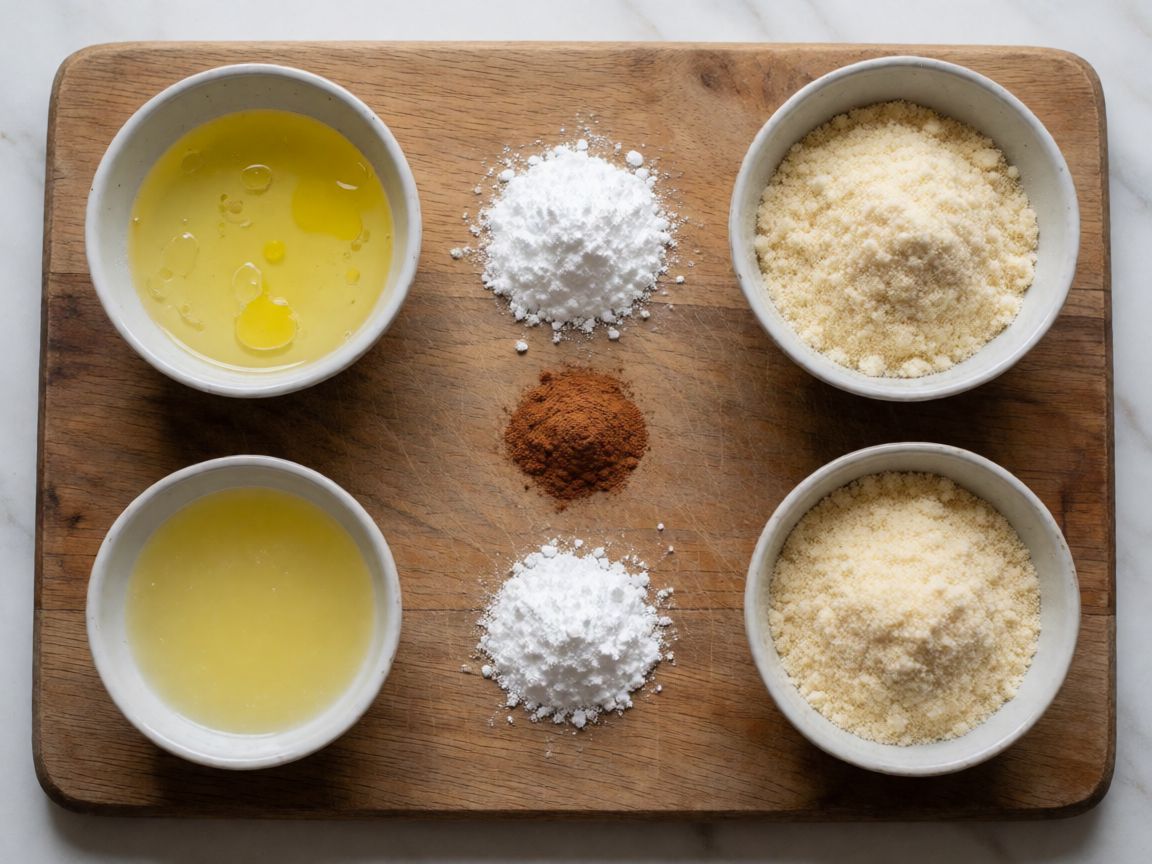
- 95 g Egg white
- 200 g Icing sugar
- 370 g Ground almonds
- 3-4 g Cinnamon
- pinch Salt a pinch
- 30 g Egg white
- 125 g Icing sugar
- 10-15 ml Lemon juice






Steps
Separate the egg whites (95 g) and whisk with an electric mixer until stiff peaks form.
Gradually add the icing sugar (200 g), whisking all the while.
Add the ground almonds and gently fold in with a spatula until smooth.
Add a pinch of salt and the cinnamon for aroma, and mix well.
Cover the dough and chill in the fridge for 45 minutes.
45 minLine a worktop or baking sheet with baking paper and dust with icing sugar.
Take the dough out of the fridge, knead briefly by hand, and dust with icing sugar.
Roll out the dough to about half a centimetre thick and cut out stars.
Whisk the egg white (30 g) until foamy, add the icing sugar (125 g), then pour in the lemon juice.
Brush the glaze over the surface of each biscuit.
Bake in a preheated oven at 100°C fan or 120°C conventional.
18 minThe cinnamon stars are ready — serve once the glaze has set.
Zimtsterne are not a biscuit, they're a meringue with ambitions. Underneath the glaze there's no flour at all — the structure is almond flour bound by whipped egg white and sugar, the same logic as a macaron, just rolled flat and cut into stars instead of piped into discs. That's why the oven setting looks wrong if you're used to biscuits: 100–120°C is a drying temperature, not a baking one. You're not cooking the dough, you're dehydrating it slowly enough that the glaze on top stays white and matte instead of going brown and glassy.
What decides whether these work is restraint in two places: how stiff you whip the first egg white, and how hot you run the oven. Whip to stiff peaks — the mixture holds its shape on the beater and doesn't slump — because that trapped air is the only lift this dough gets; there's no raising agent, no gluten, nothing else to carry it. Fold in the almonds gently, don't beat, or you knock that air straight back out and end up with a dense almond paste instead of something that holds together as a biscuit.
The chill isn't optional sulking in the fridge — it's the dough firming up enough to roll and cut cleanly. Almond-and-sugar paste at room temperature is sticky and slack; cold, the fat in the almonds sets slightly and the sugar syrup thickens, so the stars keep crisp points instead of blurring into blobs the moment you lift them off the paper.
Ground almonds are the whole architecture, not a flavour. You want them fine and dry — proper ground almonds or almond flour, not the oily paste you get from blitzing whole almonds yourself in a food processor, which runs warm and releases oil, turning your dough greasy and hard to roll. If you only have blanched whole almonds, grind them cold, in short bursts, and expect a slightly coarser crumb — the stars will be a bit more rustic, not a disaster.
Icing sugar does two jobs and that's why it appears three times. In the dough it sweetens and, dissolving slightly in the egg white, helps bind the almond flour into a paste you can roll. Dusted on the worktop and rolling pin it's not decoration, it's the only thing stopping this very sticky, flour-free dough from welding itself to every surface it touches — plain flour would work mechanically but it brings taste and toughens the surface, which you don't want here. In the glaze it's the bulk of a thin royal icing. Buy it properly ground — the version with a touch of cornflour in it is fine — because granulated sugar simply won't dissolve into the smooth white coat you need; it'll sit gritty.
Egg whites: the first batch, whipped to stiff, gives the dough its lift and lightness without any baking powder, which would taste wrong here and isn't traditional anyway — this recipe predates reliable chemical leaveners, which is part of why almond meringues like this exist at all. The smaller second batch is just a binder for the glaze, whisked only to foamy, not stiff — you're not after volume there, you're after a liquid egg white that will carry sugar and lemon juice into a spreadable paste.
Lemon juice in the glaze isn't there to taste lemony. Acid keeps the royal icing bright white rather than yellowing or going dull as it dries, and it thins the mixture to brushing consistency without adding water, which would make the glaze take longer to set and risk weeping onto the biscuit. If you're out of lemon, a few drops of any light vinegar will do the same acid job, though you'll lose the faint citrus lift.
Cinnamon and the pinch of salt are small by weight but not optional. Salt is there the way it always is in sweet baking — not to taste salty, but to stop the whole thing tasting flat and one-note sweet. Cinnamon is the named spice but feel free to treat the amount as a floor, not a ceiling, if you like it more assertive; just remember these are meant to taste of almond first, spice second.
On a domestic hob and oven: there's no kazan or deck oven here to worry about, just your fan oven running cooler and more evenly than a conventional one, which is why the recipe gives you both settings — if you only have conventional, trust the higher number, and judge by the glaze's matte, set look rather than the clock, since every oven lies a little about its true temperature at the low end. Patience is the real ingredient twice over in this recipe: once in the fridge, once in the oven, and rushing either turns these from a slow, specific thing into either a puddle or a biscuit with a cracked, browned top that isn't a Zimtstern anymore, just a sad almond disc.