
 AI photo
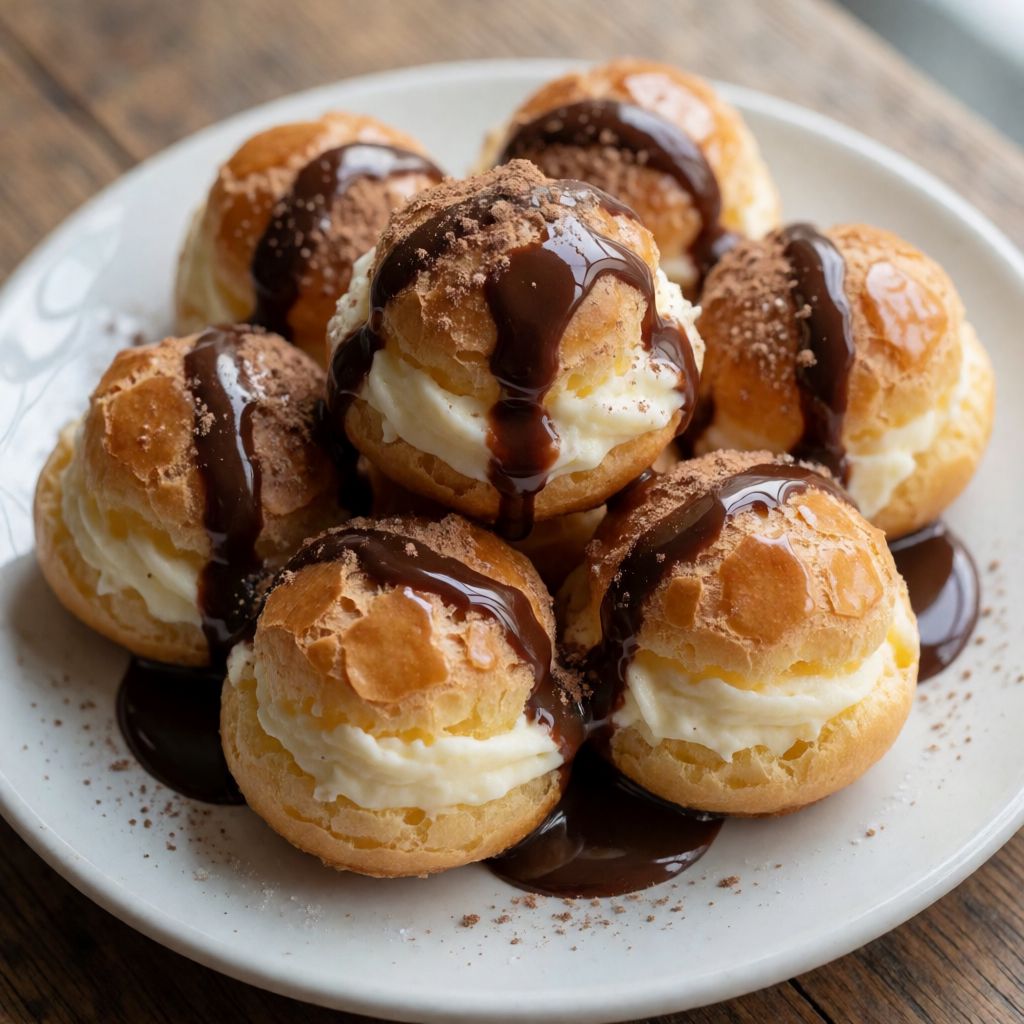
Coffee Profiteroles with Mascarpone Cream
Light choux pastry profiteroles filled with a cold coffee mascarpone cream, dipped in milk chocolate.
Labels are worked out automatically from the ingredients and can be wrong. Check the packaging if it matters to you.
Ingredients
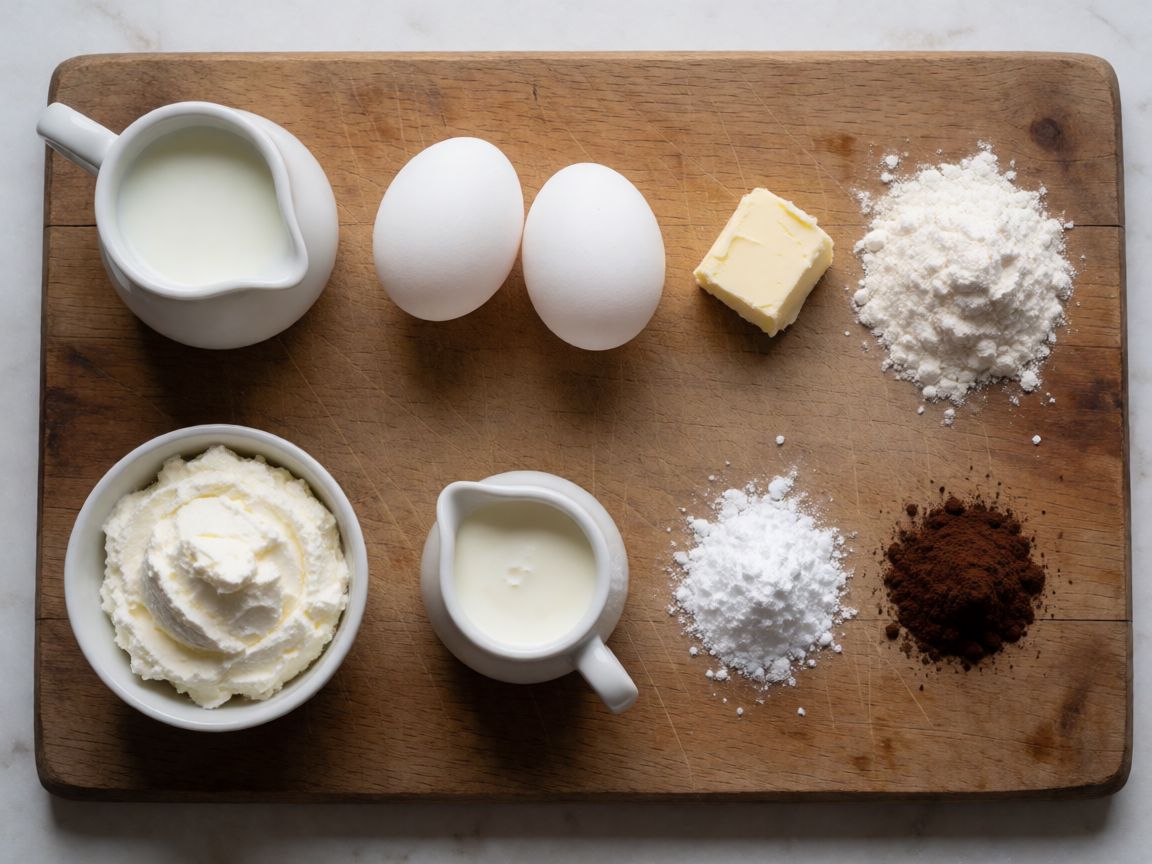
- 50 ml Water
- 50 g Milk
- 2 pcs Eggs
- 50 g Butter
- 75 g Plain flour
- 1 pinch Salt
- 150 g Mascarpone
- 120 g Double cream
- 40 g Icing sugar
- 10 g Coffee
- Milk chocolate to taste
- Chocolate chips or coffee beans, to taste











Steps
In a saucepan, combine the milk with the water, add the salt and butter. Bring to the boil, remove from the heat and stir in the sifted flour. Mix until smooth.
5 minReturn the pan to the heat and stir with a wooden spoon for a few minutes, until a white film forms on the bottom.
3 minRemove from the heat, stir and let cool. Add the eggs one at a time, mixing each in thoroughly.
5 minTransfer the dough to a piping bag and pipe small balls onto a baking tray lined with parchment.
5 minBake the profiteroles in a fan oven for 15 minutes at 200°C, then 10 minutes at 180°C, without opening the oven door. Cool on a wire rack.
25 minMix the mascarpone with the cold coffee until smooth. Add the chilled double cream and icing sugar, and whisk with an electric mixer until thick.
5 minTransfer the cream to a piping bag fitted with a thin nozzle and fill each profiterole by piercing it from underneath.
5 minMelt the chopped milk chocolate in a bain-marie, dip the top of each profiterole in the chocolate and decorate with chocolate chips.
5 minChill the profiteroles in the fridge for a couple of hours before serving.
120 min
Profiteroles are choux pastry, and choux pastry is a trick: you cook a paste on the hob until it's dry enough to drink in eggs without going sloppy, then the oven turns the water inside those eggs into steam that blows the shell up into a hollow ball. Everything that goes wrong with profiteroles — flat discs, dense bullets, shells that collapse on the rack — traces back to not getting that paste dry enough, or not letting the oven do its job undisturbed.
The "white film on the bottom of the pan" in step 2 is not decoration, it's the actual instruction. It means the starch has gelatinised and most of the free water has cooked off into the flour. Skip that and your dough is too wet; it'll never set a wall, and the shells will be small and heavy instead of round and hollow. Some say you can just stir flour into boiled milk and water and move on — no, because that paste still holds too much water, and water you haven't driven off in the pan you're asking the eggs to deal with later, and they can't.
What decides the final texture is restraint in two places: adding the eggs slowly enough that the dough stays glossy and pipeable rather than curdling or going runny, and not opening the oven door for 25 minutes. That door rule isn't superstition — a domestic oven loses a lot of heat fast when opened, and choux is still rising and setting its wall in those middle minutes. Open it, and the shell deflates before it's strong enough to hold its own shape, the same way a soufflé falls.
Water and milk together, rather than all water, is about the shell's colour and bite: water alone gives a drier, crisper shell; milk's sugar and fat soften and brown it. Fifty-fifty here is a compromise, not a rule — you can go all water if you want crunch over colour, you'll just get paler shells.
Butter's job is fat distributed through the paste before the eggs go in, so the shell doesn't need you to add any fat later — it's already emulsified in. Use a butter with no strong flavour of its own if you want the coffee cream to be what people taste, not the pastry.
Eggs are both the leavening and the glue. As the shell bakes, the water in the eggs turns to steam and pushes the walls out; the egg proteins then set around that hollow and hold it there once the steam escapes. This is why you add them gradually off the heat, one at a time, beating each fully in — too fast and the hot paste scrambles the egg before it's distributed, and you get lumps instead of a smooth, pipeable dough. Plain flour, not strong bread flour, because you want structure without excess gluten fighting the steam for space inside the wall.
The two-stage bake — hotter first, then lower — is two different jobs, not one long cook. The high heat is for generating steam fast and setting the outer wall before it can collapse; the lower heat afterwards dries the inside so the shell stays crisp and doesn't go soggy once it cools, which is also why they go on a wire rack rather than lying flat on the tray — trapped steam underneath turns a crisp base soft.
Mascarpone brings fat and almost no water, which is exactly why it can be whisked with cold cream into something that holds its shape rather than weeping into the shell. If you haven't got mascarpone, a full-fat cream cheese with the acidity whisked down with a touch more sugar will behave similarly enough, though it won't be as silky. Coffee should be made properly strong and left to go fully cold — warm coffee folded into cold cream just melts the fat you're relying on to hold the whip.
Piping the cream in from underneath, through a thin nozzle, instead of slicing the profiterole open, is about keeping that crisp shell crisp at the table — cut it open and the chocolate top and the moist cream both end up touching each other and the air, and twenty minutes later you've got a soft bun instead of a profiterole. The chocolate dip on top is sealing a bit of that same shell against the fridge's damp air during the two-hour chill, and giving you somewhere to stick the chocolate chips or coffee beans so people can tell, before biting, what's inside.