
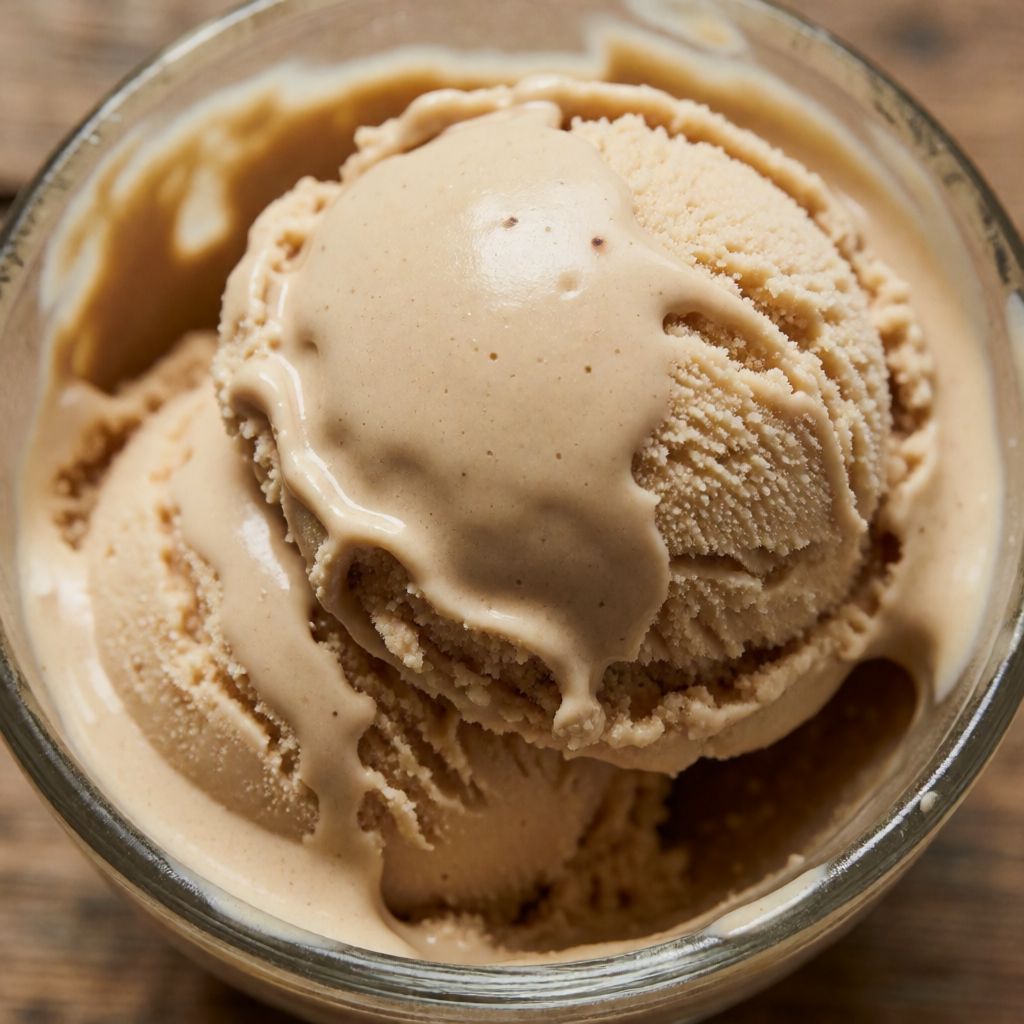
 AI photo
No-Churn Coffee Ice Cream
A creamy coffee ice cream you can make at home without an ice cream machine.
Labels are worked out automatically from the ingredients and can be wrong. Check the packaging if it matters to you.
Ingredients
- 500 ml Double cream
- 60 g Coffee
- 250 g Milk
- 250 g Icing sugar
- 60 g Butter





Steps
Make the condensed milk base: pour the milk into a saucepan, add the butter and melt gently over low heat.
5 minAdd the icing sugar and cook for about 18–20 minutes, stirring constantly with a whisk.
20 minPour the mixture into a container and let it cool completely.
Brew the coffee and let it cool slightly, then gradually stir it into the condensed milk mixture.
5 minUsing an electric mixer, whip the cream until thick and fluffy, then gently fold it into the mixture with a spatula.
5 minPour everything into a container and freeze for at least 6–8 hours.
480 min
What was changed
The cream was replaced with Double cream, the cream British cooks reach for to whip to stiff peaks.
No-churn ice cream is what you make when you don't own a churn. A churn does two jobs at once while the mixture freezes: it beats air in, and it stops water molecules finding each other and growing into big ice crystals. Take the churn away and you have to do both jobs by hand, before the freezer is even switched on. That's the whole mechanism here: a thick, cooked base built the way you'd build condensed milk, folded together with cream that's already been whipped to its limit.
The cooked base — milk, butter, icing sugar, reduced slowly — isn't just a coffee-flavoured syrup. It's doing the churn's second job: loading the liquid with dissolved sugar and fat so that whatever ice crystals do form stay small. Small crystals feel smooth on the tongue. Big ones feel like someone left sand in the dessert, and that grittiness — not "it tastes better cooked" — is the actual failure this slow simmer prevents.
Some say you need a machine to get a creamy result. No — because the machine only automates two mechanical jobs, air and crystal control, that your arm and a whisk can do just as well, only slower and with more patience asked of you.
What decides whether this works: how stiff you whip the cream (it should hold its own shape, not slide off the whisk), how completely cold the base is before you fold the cream in, and whether you actually leave it in the freezer long enough and undisturbed. Skip any of those three and what you get is coffee-flavoured frozen milk, not ice cream.
The milk and butter melted together low and slow are the start of a quick condensed milk. Low heat here isn't caution for its own sake — milk with butter in it scorches and separates if it ever properly boils, and once it's split you're stirring grease through watery milk, not a smooth base. Keep it at a point where it only just stirs and shivers, never bubbles hard. The 18–20 minutes with the whisk constantly moving is cooking off water until the mixture thickens enough to coat the whisk and take on the pale colour of weak caramel — that's your cue, not the clock. Icing sugar dissolves into this almost instantly because it's already fine powder; swap it for caster or granulated and you'll need longer at the stove and more vigilance, or you'll get a gritty base with sugar crystals clinging to the sides of the pan.
Butter is there for fat that stays soft, not solid, at freezer temperature. Fat doesn't freeze hard the way water does, so the more of it worked through the mixture, the less "block of ice" you end up with. Use a proper block butter, not a low-fat spread — spreads carry water that works against you here, the opposite of what you want. There isn't a clean substitute for what butter does in this base; a flavourless oil would just separate from the milk instead of binding into it.
Coffee at 60g means you're brewing it properly strong, stronger than you'd ever drink it hot. Cold dulls the tongue — sweetness and bitterness both read weaker once they're freezing — so what tastes almost too intense warm will taste balanced once frozen. If you're using instant, the rule is the same: concentrated, dissolved in as little hot water as you can manage, not a watered-down cup. Let it cool before stirring it into the base; stirring it in hot would warm the whole mixture back up, and you'd be fighting that heat later when you try to fold in whipped cream without deflating it.
Double cream is doing the real aeration work that a churn would otherwise do, which is why it has to be properly cold before you whip it — cold cream whips faster and holds its structure, warm cream collapses back down as fast as you beat it up. The fat content matters more than the name on the carton: you want cream that holds a peak when you lift the whisk out, not cream that only thickens. Single cream or crème fraîche won't do it, their fat is too low. If double cream isn't to hand, any cream labelled for whipping, with fat around that mark, behaves the same way.
Traditional churned ice cream exists because someone had to keep an egg-custard base moving constantly while it froze, or it set into exactly the gritty mess we're avoiding here — that's labour, and a churn was built to replace that labour. This condensed-milk-and-whipped-cream method is a cheaper workaround, not a lesser one: it swaps a piece of equipment for ten minutes of whisking and some patience in the fridge beforehand.
Freezing for 6–8 hours is a floor, not a target — a domestic freezer isn't a blast chiller, it cools slowly and unevenly, especially near the door where the temperature swings every time it's opened. Use a wide, shallow container rather than a tall one; more surface facing the cold means faster, more even freezing and less time for stray crystals to grow while the middle lags behind the edges. And once it's in there, leave it alone — opening the door, poking at it, moving it around all let warm air in and undo exactly the work you did with the whisk.