
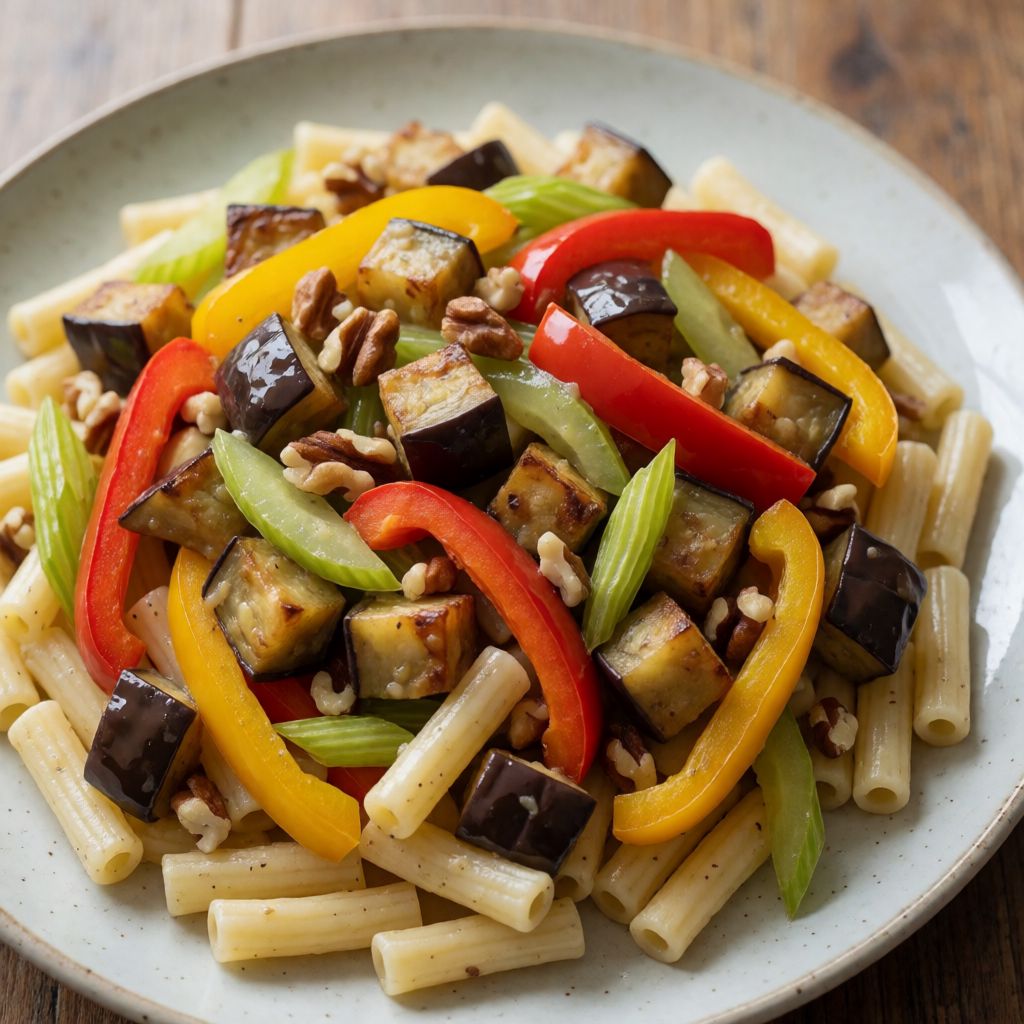
 AI photo
Cold Pasta Salad with Peppers, Aubergine and Nuts
A refreshing cold pasta salad with roasted aubergine, peppers, celery and a nutty olive oil dressing.
Labels are worked out automatically from the ingredients and can be wrong. Check the packaging if it matters to you.
Ingredients
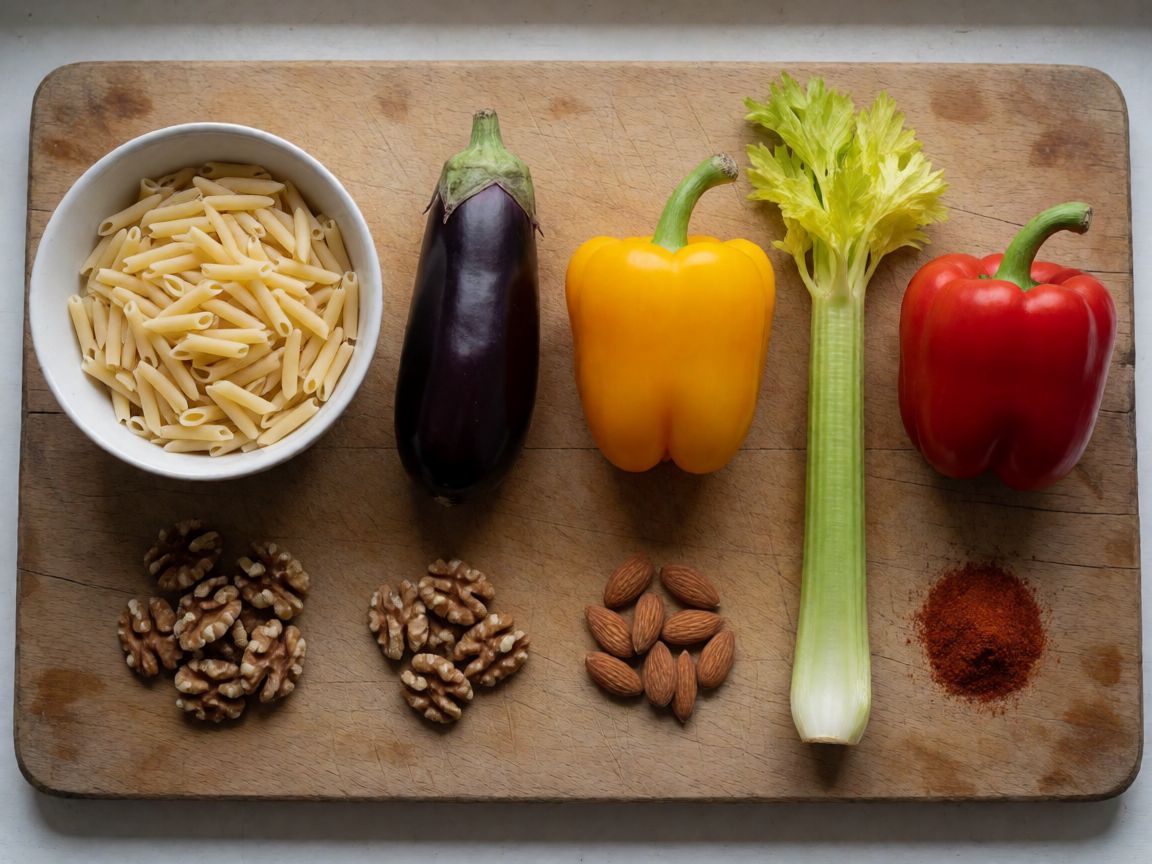







Steps
Wash all the vegetables thoroughly under running water. Slice the aubergine, sprinkle with coarse salt and set aside.
Prepare the nut cream: put the walnuts, almonds and olive oil into a blender and blend until smooth.
Rinse and pat dry the aubergine slices, then coat them with a mixture of olive oil, paprika and salt.
Roast the aubergine in the oven at 160°C for about 10 minutes until golden, then leave to cool and slice.
10 minDeseed the peppers and cut into thin strips, slice the celery. Put the vegetables in a bowl and mix.
Bring water to the boil, add salt, cook the pasta until al dente, then drain and rinse under cold water.
Add the pasta to the vegetables, mix well and dress with the nut cream. Serve immediately or chilled.
This isn't really a dish you cook — it's three separate little jobs (pasta, aubergine, nut cream) that only meet once, in a bowl, cold. That's the whole point of a pasta salad: you do the heat work in advance, let everything come down to room temperature on its own time, and the result tastes just as good tomorrow as it does today. No sauce is reducing on a hob while you wait anxiously — it's a dish built around patience, not speed.
What decides whether it works is two things, and they share a cause: the aubergine must not turn into a wet little oil sponge, and the pasta must not set into a cold, clumped brick once it cools. Both problems start before any heat is involved — at the salting stage for the aubergine, and at the rinsing stage for the pasta.
Some say you salt aubergine to draw out bitterness — no, not really, not with the aubergines sold in most shops now; the properly bitter varieties were bred out decades ago. What the salt actually does is pull water out of the flesh, so you're left with a dry, slightly collapsed structure that drinks oil in a controlled way during roasting instead of flooding with it the moment the cell walls give in the oven. Skip the salting and you don't get a bitter dish — you get a greasy one, slices that slump instead of holding their shape.
A word on the pasta shape, since the recipe just says 'short pasta' and leaves you to choose: you want something with a surface that can hold a thick, blended dressing rather than let it slide off — fusilli's spirals, penne's ridges, the little cups of conchiglie. Smooth shapes, and definitely nothing long like spaghetti, go slack and separate once cold with nothing but a creamy coating to hold them, since there's no simmering sauce to cling to. And on doneness: cook it properly al dente, maybe even a touch firmer than you would for a hot dish served straight away, because pasta keeps tightening as it cools — what feels right at the pot will feel slightly firmer again by the time it's chilled.
For the aubergine, choose one that feels heavy for its size and has tight, glossy skin with no give when you press a thumb into it — that's dense flesh, not the airy, seedy kind that's started to go spongy with age. Salt it, let it sit until you see beads of water standing on the surface — that's your cue it's done its job, not a clock — then pat it properly dry before the oil and paprika go on, because wet flesh plus oil in a hot oven is exactly the slick you're trying to avoid.
On the oven number: 160°C is a fair target, but UK ovens, especially small fan ones in flats, often run warmer than the dial says. Watch the edges of the slices instead of the clock — you want them turning a shade gold and just starting to shrink inward, softened enough to bend, not blacken. If your oven runs hot, check at the lower end of the time given; the recipe's 10 minutes is a floor, not a guarantee.
The nut cream is doing the job a vinaigrette or mayonnaise would do in a Western pasta salad — binding everything with fat, but without eggs or an emulsion to split in the fridge. Walnuts and almonds give body and a mild, slightly bitter edge; if you've only got cashews, hazelnuts or pine nuts in the cupboard, any raw, unsalted, properly oily nut will blend into the same kind of cream — just avoid roasted or salted ones, because they bring their own strong flavour and will fight the paprika instead of carrying it. The olive oil here is different from the oil you'd use just to coat the aubergine for roasting: in the cream, its own fruitiness is part of the flavour, so don't swap it for a neutral oil in this one spot, even though a flavourless oil would do perfectly well for roasting the slices.
Pepper and celery are the only raw, uncooked textures in the bowl, and that's deliberate — against soft roasted aubergine and a thick nut cream, you need something that still snaps. Use young, inner celery stalks if you can, since the outer ones carry tough strings that catch between your teeth; for the peppers, any thin-walled sweet variety works, yellow or red, the colour matters more than the type — it's there to break up the dish visually as much as to add a faint sweetness. Thick-walled peppers meant for stuffing will taste fine but sit oddly firm next to everything else.
None of this needs a special kazan or a kitchen set up for restaurant work — a wide pan for the pasta water and an ordinary jug blender or hand blender for the nuts is all the equipment this asks for. The only ingredient this dish genuinely can't do without is time: time for the aubergine to shed its water before it meets oil, and time for the whole bowl to sit and cool properly before you call it finished.