
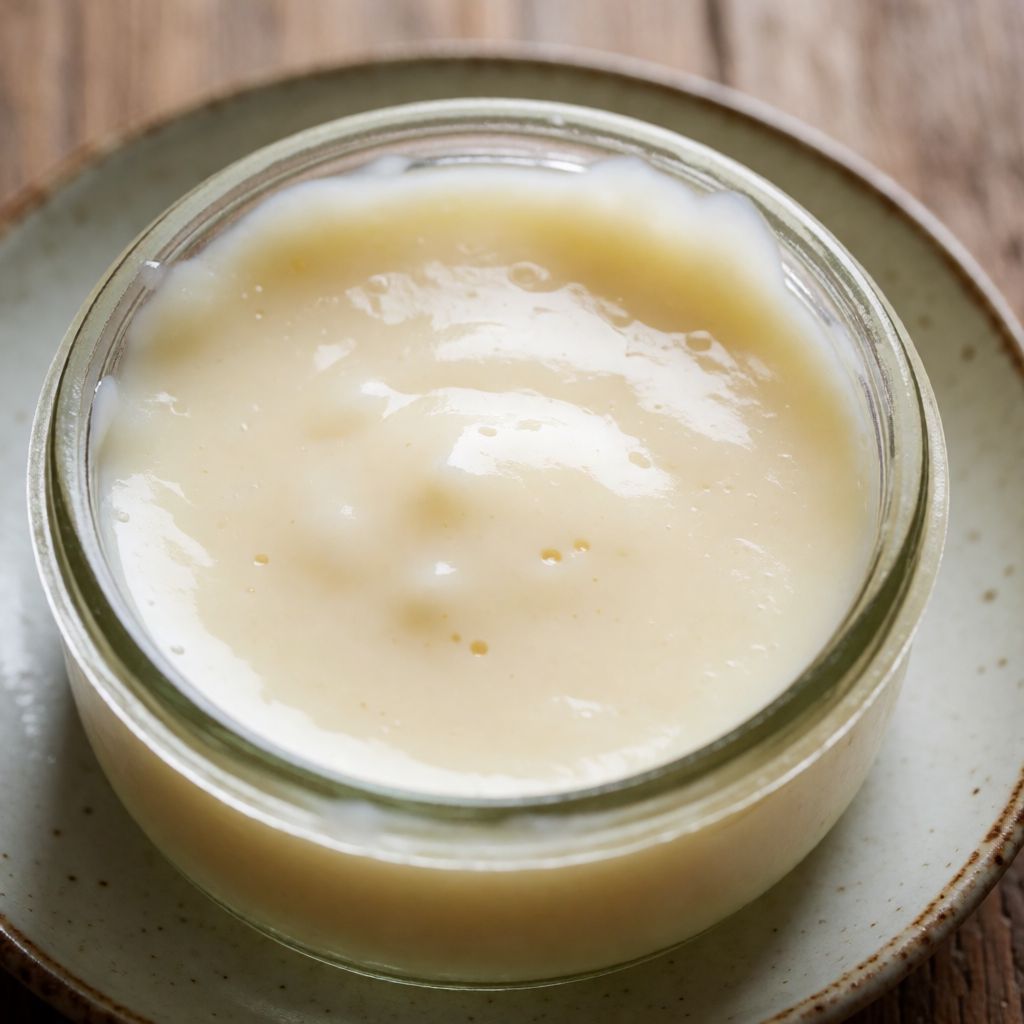
 AI photo
Homemade Condensed Milk
A simple homemade condensed milk made by simmering milk, icing sugar and butter until thick and golden.
Labels are worked out automatically from the ingredients and can be wrong. Check the packaging if it matters to you.
Ingredients
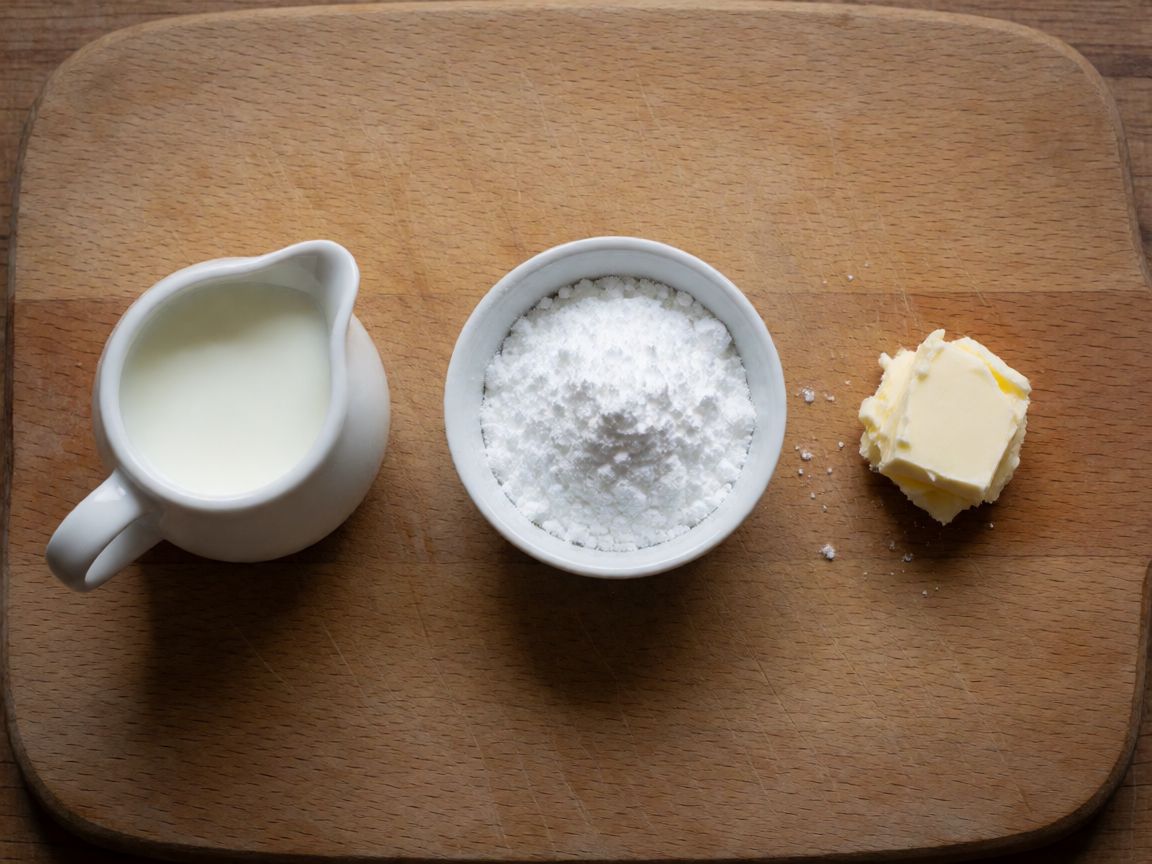
- 250 ml Milk
- 250 g Icing Sugar
- 60 g Butter



Steps
Pour the milk into a saucepan over the heat, add the icing sugar and stir.
Add the butter, bring to the boil and stir.
Continue stirring until you reach the desired consistency.
15 minLeave the condensed milk to cool to room temperature, then pour it into a jar for storage.
This is not a recipe so much as a trick: you're turning ordinary milk into tinned condensed milk by doing at home what a dairy does in a vacuum evaporator — driving off water until what's left is thick, sweet, and keeps. The tin version exists because someone industrialised exactly this pan of milk and sugar; it wasn't always a cupboard staple, it's a Victorian invention that solved the problem of milk going off before refrigeration. You're just running the process backwards into a saucepan, on a Sunday afternoon, because you ran out and the shop's shut.
What decides whether this works isn't the clock, it's what's happening at the bottom of the pan. Sugar dissolved in hot milk is fine; sugar sitting undissolved on hot metal is where it goes wrong — it catches, scorches, and tastes bitter before the rest of the pan has even thickened. So the heat you want is gentle and steady, enough to keep a lazy simmer going, not a hard rolling boil that throws milk solids against the sides. Stir because you're moving the sugar through the liquid, not because the recipe says to.
Forget minutes. The fifteen in the method is a floor, not a target — it tells you "don't even check before this," nothing more. What you're actually watching for is the mixture starting to coat the back of the spoon instead of running off it, and slowing down as it moves, the way honey is slower than oil. Drop a little on a cold plate: if it sits and thickens rather than spreading thin, you're there. It will go on thickening a touch more as it cools, so pull it off heat just before it looks fully done.
Milk: use whole milk if you can get it. The fat in it is doing real work — it's what gives the finished jar body and a faint creaminess instead of a thin, sugary syrup. Semi-skimmed will still condense, it'll just taste leaner and run thinner, which is why the butter in this recipe isn't decoration — it's putting back the fat that a lower-fat milk doesn't have.
Icing sugar, not granulated, and that's not fussiness. Icing sugar is already ground to a powder, so it dissolves into hot milk almost on contact — there's barely a window for it to sit undissolved at the bottom and scorch. Granulated sugar is coarser; it takes longer to go into solution, and in that time it's the thing most likely to catch and turn your condensed milk bitter. If icing sugar isn't in the cupboard, caster sugar is the next best — finer than granulated, stir harder and longer and watch the bottom of the pan more closely than you would with icing sugar.
Butter: any butter with a clean, sweet-cream taste works, salted or not — just know that salted butter will give you a faint savoury edge, pleasant in some things, wrong if you're after something to go straight into tea. If you're out of butter, a neutral cream — single or double — does the same fat-and-richness job, though it'll change how much liquid you're evaporating off, so go a little further before you call it done.
The reason this keeps in a jar at all, without a sterilising process or a tin seal, is sugar. Once the water content drops and sugar concentration rises enough, you've made an environment most bacteria can't grow in easily — that's the actual mechanism behind every jam, preserve and condensed milk that sits on a shelf rather than in a fridge for a week. Still, in a British kitchen without a proper preserving setup, I'd keep this one in the fridge once it's cool and not push my luck past a week or two — it hasn't been through the heat treatment a tin goes through, so it isn't shelf-stable the way a shop one is.
For the use most people actually have for this in this country — stirring it into tea, or a banoffee pie, or spooned onto something that needs sweetening without the graininess of sugar — this version with butter is a touch richer and rounder than the tinned kind, which has no fat beyond what's naturally in the milk. That's the trade you're making: slightly less shelf-stable, slightly more like something you made, not something you opened.