
 AI photo
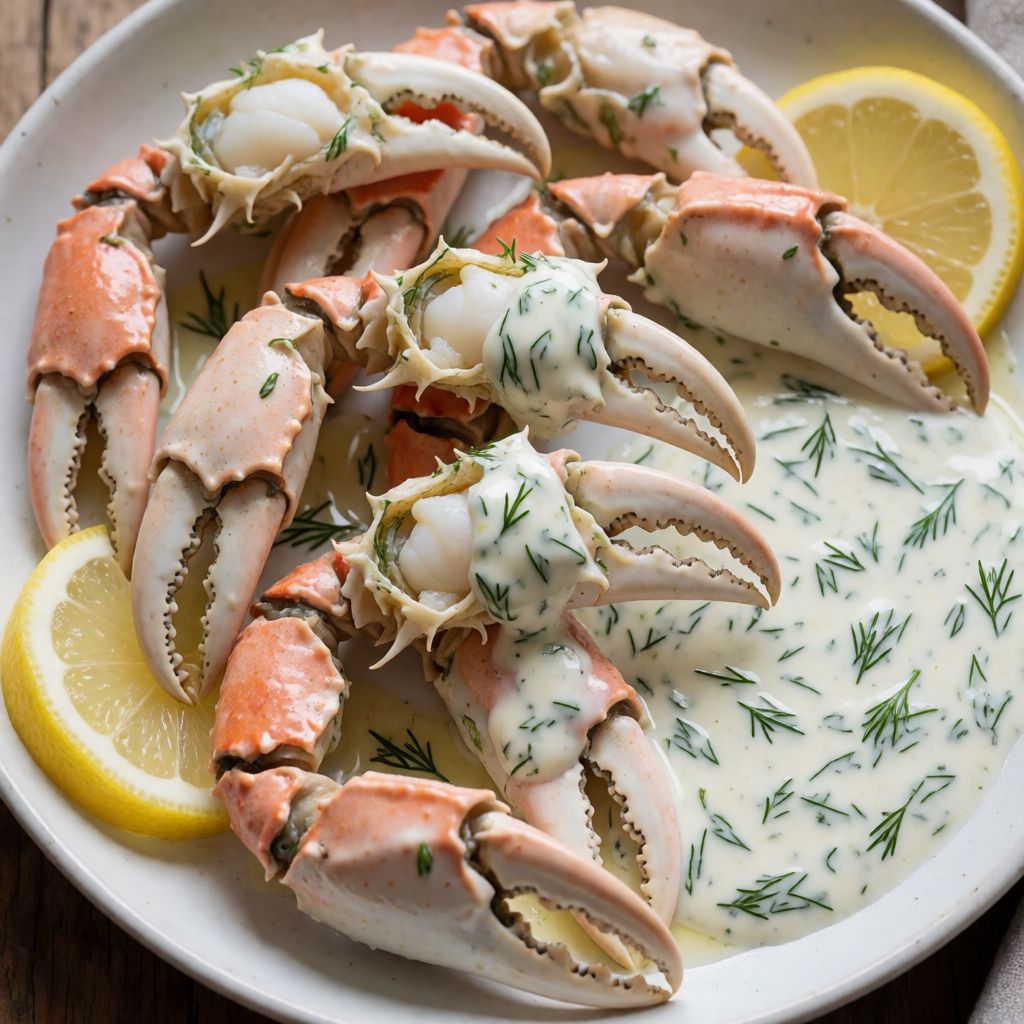
Crab Claws with Dill Dressing
Boiled crab claws served with a creamy, fresh dill dressing.
Labels are worked out automatically from the ingredients and can be wrong. Check the packaging if it matters to you.
Ingredients
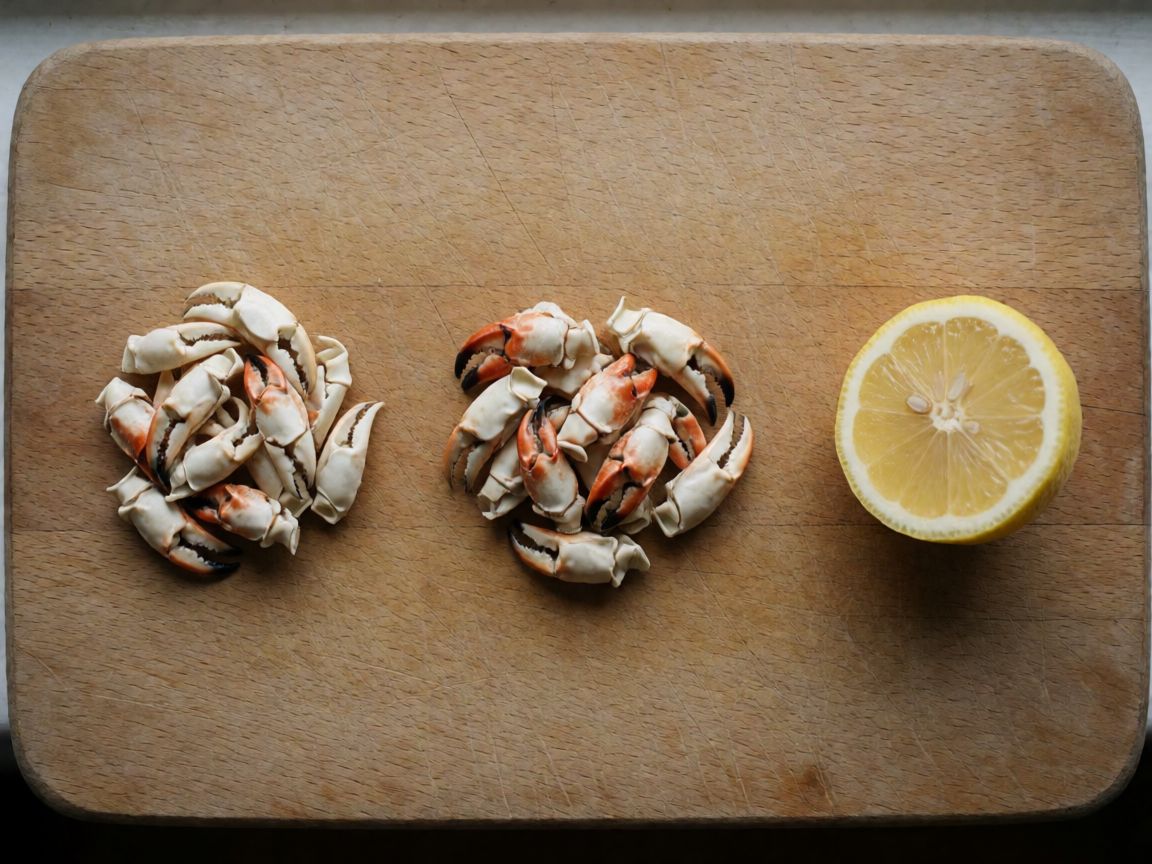




Dill dressing
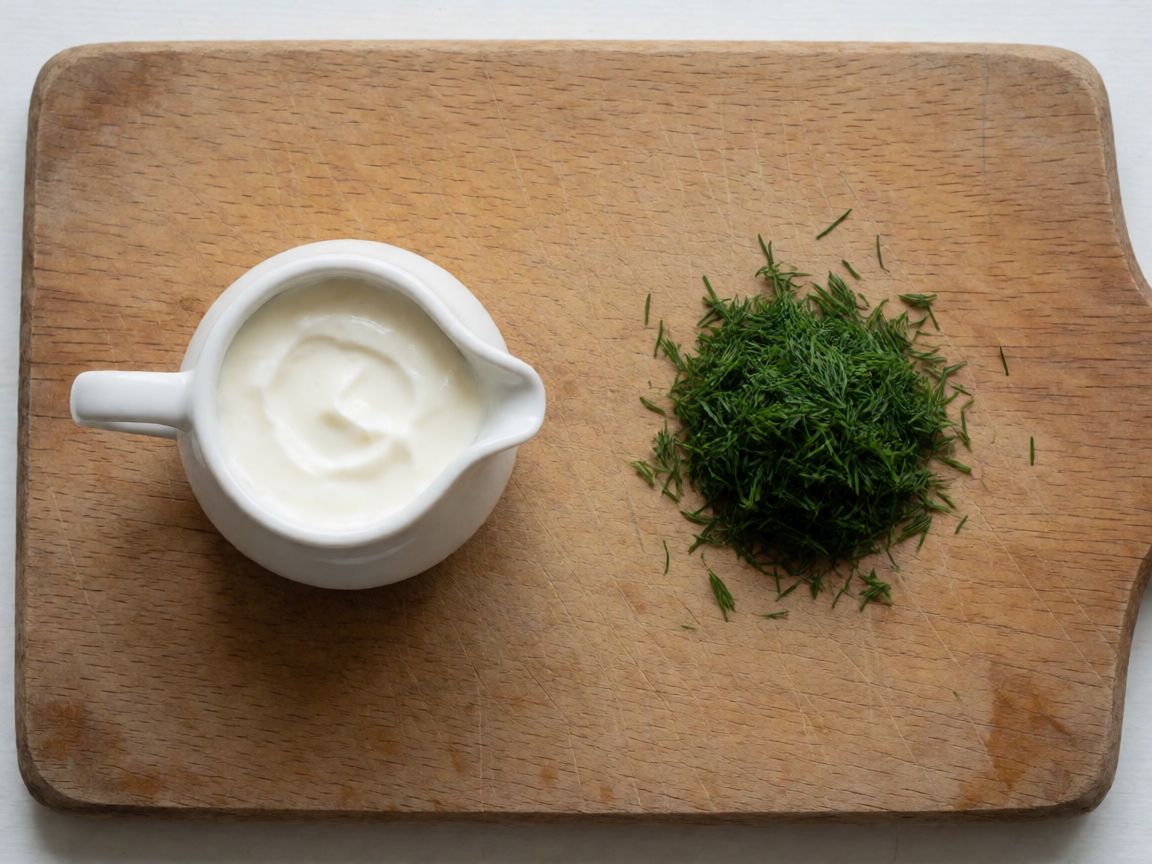
- 200 ml Crème fraîche
- 200 ml Dill finely chopped
- Salt to taste
- Black pepper to taste, freshly ground



Steps
For the crab claws: bring a large pot of water to the boil, then add the salt, lemon wedges and crab claws.
Cover with a lid, bring back to the boil and simmer the claws gently for 20 minutes.
20 minTurn off the heat and let the claws sit for a further 10 minutes – they are now ready to be lifted out and served.
10 minCrack the shell with a hammer, if you don't have a proper tool, and pick out the delicious crab meat with long, thin forks.
For the dill sauce: mix the crème fraîche, dill, salt and pepper in a bowl and season to taste.
This is a coastal plate, not a kitchen trick: claws from a crab, boiled hard enough to cook but not hard enough to toughen, then cooled under a cold, herby cream. Two things decide whether it works. First, how gently the water moves once it's boiling — not how long. Second, whether you trust the pot to keep working after you've switched off the gas, during those ten minutes it sits.
Some say you have to boil crab hard and fast or it won't cook through. No — because claw meat is muscle built for pinching, dense and thin, and a violent boil seizes the outside of it before the middle has caught up. You get a shell full of string. A steady simmer, water just rolling, gets heat into the claw evenly, and the ten minutes off the heat finish the centre using the heat already stored in three litres of water — carry-over cooking, the same thing that makes a roast rest before carving. Skip that rest and the middle is undercooked while the outside is already going rubbery; that's the real fault line, not the clock.
The lemon in the pot is not decoration and it is not really for flavour either. Crab, even very fresh, carries a faint ammonia note that gets stronger the longer it's out of the sea — a breakdown product in the flesh, same family of chemistry as in old fish. Acid calms it. The salt in the water does a quieter job: it seasons the meat through the shell while it cooks, so you're not salting bare flesh afterwards and missing half of it.
On the claws themselves: buy them as fresh as the counter allows, and don't be put off if they're already a dull grey-brown rather than glossy red — that colour only appears after cooking, when a pigment called astaxanthin, normally masked by protein in the raw shell, is set free by heat. If what you can get is pre-cooked claws (very common in UK fishmongers and supermarkets, since most crab is cooked at sea or at the quay within hours of landing), you're not really cooking them in this recipe, you're reheating and seasoning them gently — in which case shorten the simmer and watch instead of timing: you want the meat warmed through, not cooked twice.
Water and salt: three litres for one kilo of claws is about right because a pot that large doesn't lose heat when you drop cold shellfish into it — the claws barely dent the temperature, and the water goes straight back to a simmer. A smaller pan, which is what most flats have instead of anything resembling a kazan, will sulk and drop to a lukewarm wobble the moment the claws go in, and you'll end up stewing rather than simmering. Use the widest pan you own, even if it's shallow, over the deepest one that's narrow. A plate set over the pan does the lid's job well enough if your lids don't fit — the point of covering is to keep the water at a steady simmer, not a ceremony.
Lemon: half a lemon in wedges is plenty for three litres; more doesn't season, it just turns the water sour and leaves a tang on the meat that fights the cream later. Any citrus with real acid and no overpowering perfume of its own would do the same job — a splash of vinegar at a pinch, though lemon is kinder because it's quieter.
Crème fraîche: what you actually need is a cultured cream, thick enough to coat a spoon and sour enough to cut through rich shellfish, but with enough fat that it won't split or weep when it meets salt and acid. Crème fraîche is simply the French answer to this with roughly 30–40% fat, which is why it behaves. Soured cream is close and cheaper, though thinner — drain it in a sieve for twenty minutes if it looks loose. Thick Greek yoghurt works if you're short, but add a spoon of oil or let it sit at room temperature first, otherwise it tastes a little flat and clinical next to warm crab.
Dill: fresh, with that faint aniseed sharpness still in it — if the leaves have gone grey-green and limp, the oils that carry the flavour have already gone with them, and you're adding texture, not taste. If dill genuinely isn't in the shop, don't reach for dried — dried dill tastes of hay. Go instead for something else green, fresh and a little assertive: chives, or the soft fronds off a fennel bulb, judged by the same rule — bright, not bitter, added at the very end.
Pepper, ground fresh at the table rather than from a pre-ground tin, matters more here than almost anywhere else, because the sauce is otherwise soft — cream, dill, nothing sharp — and pepper is the only texture and bite it has. One kilo of claws for four is modest in meat once you've cracked through shell that's mostly empty space, so treat this as a starter with bread on the side, not a rival to a Sunday roast's authority on the table. And give it its ten minutes off the heat without fiddling — that rest isn't dead time, it's the step that actually finishes the dish.