
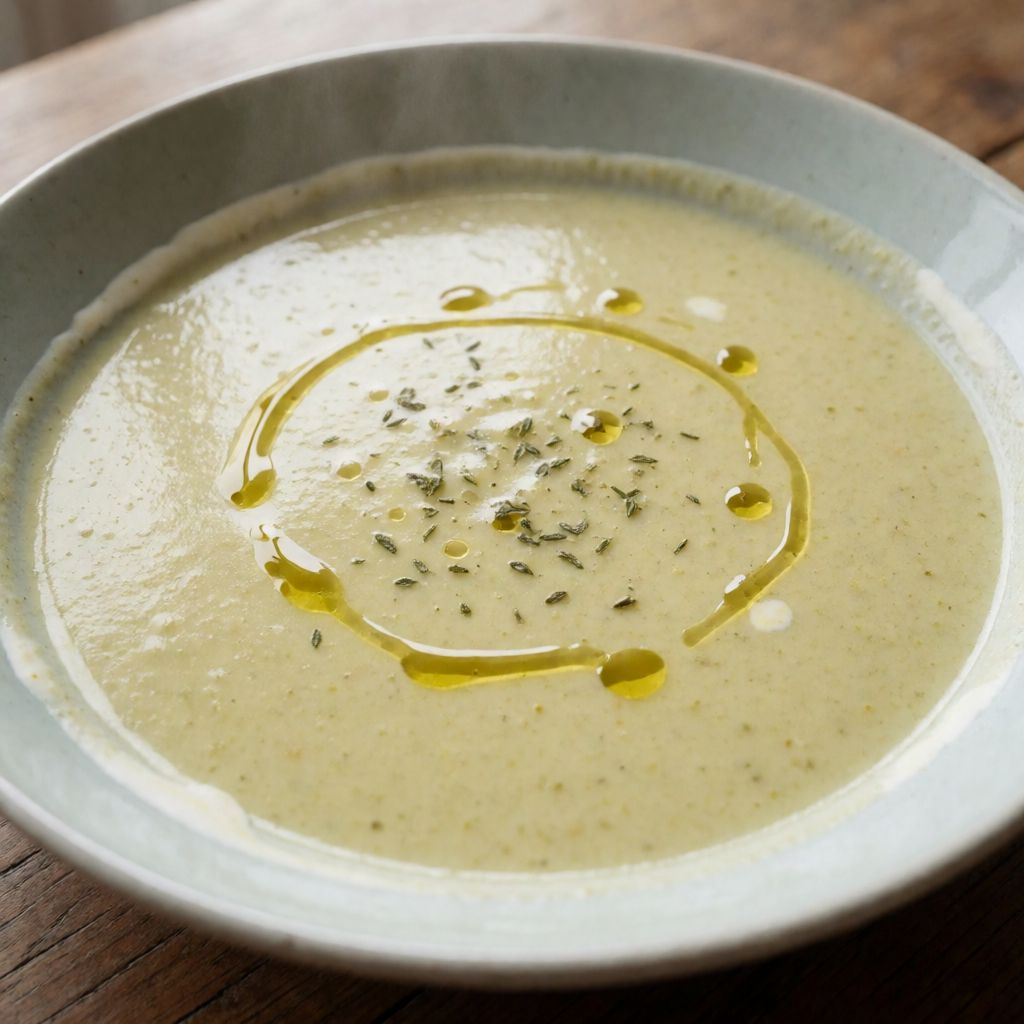
 AI photo
Vegetable Cream Soup
A smooth, puréed vegetable soup finished with a splash of warm milk.
Labels are worked out automatically from the ingredients and can be wrong. Check the packaging if it matters to you.
Ingredients
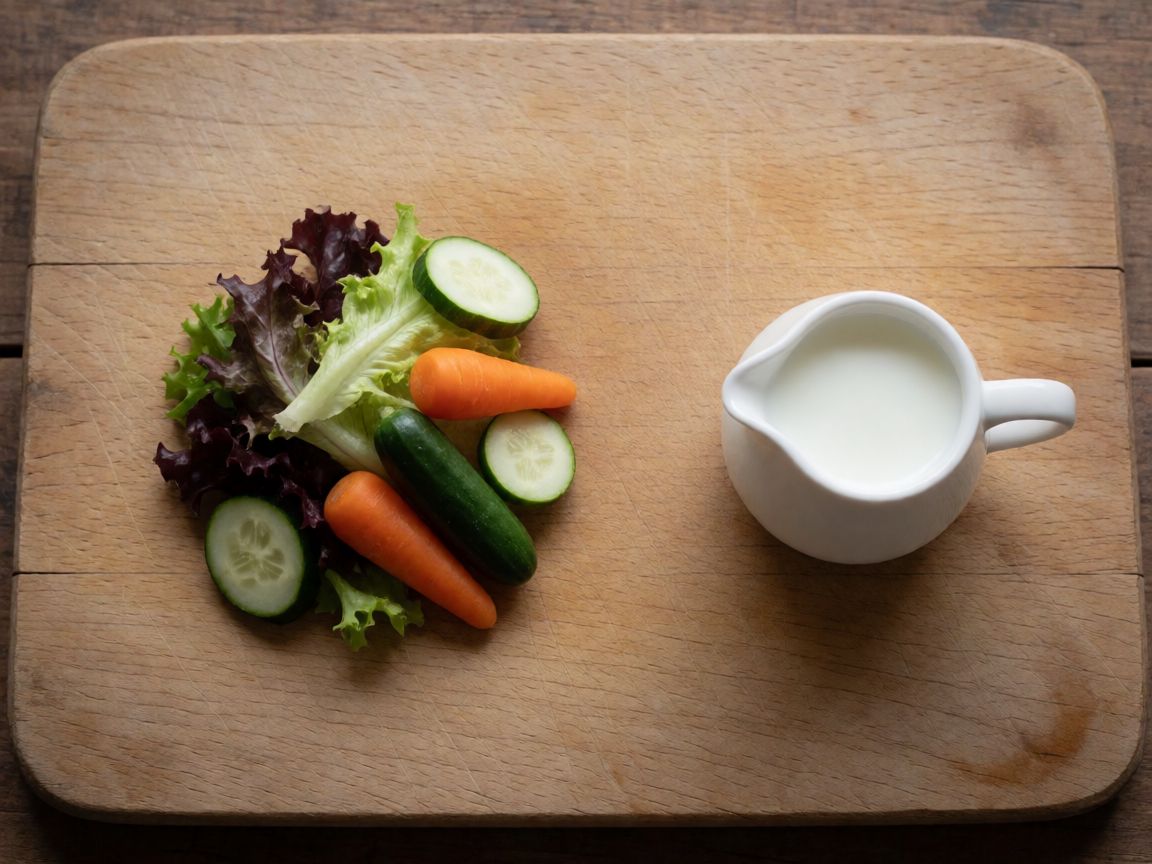




Steps
Wash the vegetables thoroughly and cut them into pieces. Shell the beans and clean the cabbage.
Pick over the spinach and wash it. Clean and wash the parsley, basil and garlic, then chop finely.
Wash and chop the onion, carrot and celery, and peel and deseed the tomatoes.
Wash, peel and chop the courgettes and potatoes.
Pour water into a pot, add salt, olive oil and all the prepared vegetables. Bring to the boil.
Cook the vegetables until tender.
Drain the vegetables, keeping the cooking liquid. Blend the vegetables or pass them through a vegetable mill.
If needed, thin the soup with the reserved liquid. Adjust the salt to taste.
Reduce the soup over high heat. Stir in the warm milk and cook for a further 5 minutes.
5 minBefore serving, drizzle the surface of the soup with warm milk.
Despite the name, there's no cream in this "cream soup" — the cream is something you make, not something you pour in from a carton. Boil enough vegetables, blend them, and the starch they let go in the water does the work a tub of double cream would otherwise do. That's the whole trick of the dish, and it's why it costs almost nothing and forgives almost everything.
The real engine here is the potato. Carrot, courgette, celery, tomato, cabbage, beans, spinach — all of them bring flavour and colour, but it's the potato's starch, released slowly as it softens in the boiling water, that turns thin vegetable broth into something that sits on a spoon rather than running off it. Leave the potato out and you'll get a tasty vegetable water, blended fine, still thin — no amount of extra blitzing fixes that, because there's nothing in the liquid to hold body.
You boil everything together in one pot, no staggering by cook time, and that's deliberate rather than lazy: the blender at the end forgives uneven doneness. A courgette that's gone to mush and a carrot that's merely tender both disappear into the same purée. The only test that matters is the potato and carrot giving way without resistance when you press a piece against the side of the pot — bend, not snap. Rush that and you get a gritty purée no sieve will rescue, because raw starch never dissolves properly; it just gets chopped smaller.
"Mixed fresh vegetables, to taste" isn't vagueness, it's the actual recipe. This is a fridge-clearing soup, cousin to minestrone, and the ingredient list — courgette, tomato skinned and deseeded, basil, cabbage, shelling beans — gives away its Italian, market-garden ancestry: whatever's ripe, cheap, and otherwise destined for the compost. You're not betraying the dish by swapping leek for celery or using what's left over from Sunday's roast tray of carrots and onions. You are the dish, working as intended.
Potato is the one vegetable you shouldn't swap out entirely, because nothing else gives the same starch so reliably. If you want a different flavour under the hood, swede or pumpkin will also thicken as they break down, but they bring their own sweetness with them — taste as you go. Courgette and tomato, by contrast, are mostly water; they bulk the pot and add brightness, but they won't thicken a thing on their own.
Deseed the tomatoes because the seeds and the jelly around them carry most of the bitterness and most of the wateriness — leave them in and you dilute the purée while souring it slightly, a flat note you can't fix later with salt. Shell the beans for the same reason you top-and-tail green beans: the pod is fibrous, won't soften to a purée, and will show up as thread in your spoon. Fresh broad beans are traditional here; frozen ones work without apology, and tinned butter beans, well rinsed, will do in a pinch, though they soften faster so watch them rather than the clock.
Olive oil's job is simply to be a fat with no voice of its own that carries the aromatics and keeps the vegetables from catching on the base of the pan before the water's properly boiling. Any neutral oil does this — light rapeseed, sunflower, whatever's in the cupboard. Olive oil adds a faint fruitiness on top, which is why it's named, not because the chemistry demands it specifically.
Milk, likewise, isn't fixed. Any milk with enough fat to leave a trace of a sheen on the surface works — whole milk is kindest to your nerves, since lower-fat milks split more readily under heat. If you're avoiding dairy, oat milk behaves itself far better here than soya, which curdles almost on sight next to anything acidic. You already trust this instinct every time you make tea — milk goes in once the kettle's done its violent part, not while it's still roaring.
One honest note on scale: this recipe gives you no grams, no millilitres, because it isn't that kind of soup. Serves four means enough vegetables to loosely fill whatever wide pan or pot stands in for a stockpot in a normal flat — you don't need a cauldron, and you don't need to weigh anything. What you do need is patience at the boiling stage; that's the one ingredient with no substitute. I haven't stood over this exact mix of courgette, basil and deseeded tomato, but the mechanism — starch, timing of dairy, forgiveness of the blender — is the same one behind every vegetable purée soup I've made, and it doesn't change with the guest list of vegetables.