
 AI photo
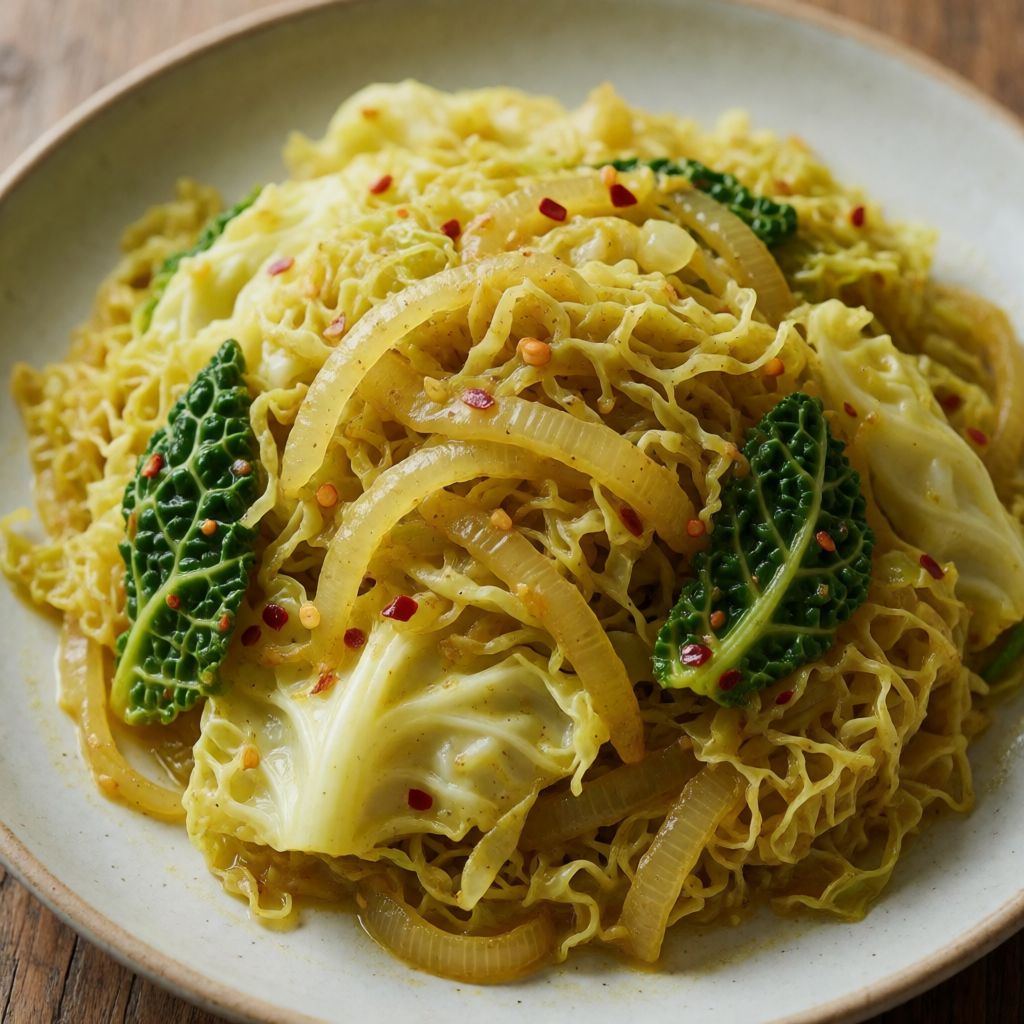
Savoy Cabbage with Curry
A simple side dish of tender savoy cabbage sautéed with onion, curry powder and a hint of chilli.
Labels are worked out automatically from the ingredients and can be wrong. Check the packaging if it matters to you.
Ingredients
- 1 pcs Savoy cabbage
- 0.5 pcs Onion
- Olive oil to taste
- Salt to taste
- Curry powder to taste
- Chilli flakes to taste






Steps
Remove the tough outer leaves from the savoy cabbage, wash the leaves thoroughly one by one under running water, and pat dry.
Sauté the onion in a generous amount of olive oil until golden.
Add the savoy cabbage to the onion in small batches.
Pour a few ladlefuls of hot water into the pan and cook until the cabbage is tender.
Add the curry powder, salt and a little more olive oil once the water has almost completely evaporated.
Stir to distribute the spices evenly, then continue cooking over medium heat.
Serve the dish hot.
This is savoy cabbage, braised with onion and finished in curry powder — a side that moves fast because savoy itself is built for speed. Its leaf is loose and crinkled, not packed tight like a white cabbage, so water gets in and out of it quickly. That's the whole reason this dish takes fifteen minutes and a tight white cabbage version would want twice that.
What decides whether it works has nothing to do with the spice jar and everything to do with order. Cabbage goes in batches, not all at once — dump a full head into a pan with hot oil and onion and you crash the temperature, the onion stalls, and the cabbage sheds water immediately instead of taking on a coat of oil first. Batch by batch, each handful gets its moment to glisten before the next lot arrives.
The real hinge of the recipe is when the curry powder goes in: only once the water has nearly gone. Some people think spice improves the longer it simmers, as if it were a paste deepening in a sauce — no, because a ground spice blend is already roasted; what's left to lose is its top aromatics, and liquid at a rolling bubble boils them straight off, leaving you with the flat, slightly bitter turmeric note underneath and none of the lift. Added dry, into fat, at the end, curry powder blooms instead of dissolving.
Start with the cabbage. Savoy is picked here specifically, not any green cabbage, because its leaf is loose and blistered rather than tight and waxy — that structure means steam and oil can actually move between the layers instead of just scalding the outside. The tough outer leaves come off because they're the ones exposed longest to soil, slugs and weather; the crinkles in every leaf trap grit, which is why each one gets washed on its own under a running tap rather than the whole head dunked and hoped for. Skip that and you're serving grit, not cabbage. If savoy isn't on the shelf, ordinary white or green cabbage will do — just shred it thinner, since its leaf is tighter and takes longer to give.
Onion goes in first, in a generous pour of oil, and "golden" is the word to watch for, not a time. Golden means the sugars in the onion have started to caramelise without tipping into bitterness; past golden toward brown, and that bitterness will sit under the curry flavour later with nowhere to hide. The oil needs to be generous because the cabbage, once it's in, will drink a fair bit of it — a stingy pan here just means a dry, sticking pan in ten minutes.
Olive oil is specified, but the real criterion for any oil in this kind of dish is simple: something with no strong character of its own that would fight the curry. Olive oil is fine, a light groundnut or sunflower oil works just as well and is more neutral if you want the spice to speak alone.
The water that goes in after the cabbage is hot, not cold, for the same reason the onion matters: cold water dropped into a hot pan kills the temperature stone dead and you spend the next five minutes just getting back to where you were, with the cabbage sitting in tepid liquid going grey. Hot water keeps the pan working — it's there to steam the cabbage tender, not to boil it into a soup, which is why it's a few ladlefuls and not a kettleful. Think half a mug, enough to lift steam, not enough to swim in.
Salt waits until near the end, with the curry, and this isn't fussiness — salt pulls water out of vegetables by osmosis, so salting early would draw moisture out of the cabbage on top of the water you've already added, and you'd be braising in a puddle rather than finishing in a glaze. Added once most of the water's gone, salt just seasons what's left.
Curry powder itself is worth a word, because it isn't a spice — it's a British trading-post invention, a standardised blend (usually turmeric-heavy, with coriander, cumin, fenugreek, a little chilli) built in the colonial era to let a home cook approximate, in one jar, what would otherwise mean grinding and roasting half a dozen separate spices. That history is exactly why it needs a short, hot, fatty finish rather than a long simmer: it's pre-roasted convenience, not a raw spice that needs cooking down. If you've only got garam masala in the cupboard, it'll do, though it leans warmer and less yellow — add it the same way, dry, at the end.
Chilli flakes are there for heat you can see and control, added with the curry so they don't have time to scorch and turn acrid. Fresh chilli, finely chopped, is a fair swap — put it in with the onion instead, so its heat spreads through the whole dish rather than sitting on top.
This is a side, four people's worth from one head of cabbage, the kind of thing that sits well next to a Sunday roast in place of the usual boiled greens — same slot on the plate, a different mechanism entirely. And the one ingredient not listed anywhere on the sheet is patience: rush the batches, and you've made boiled cabbage with curry powder sprinkled on afterwards, which is a different, much sadder dish.