
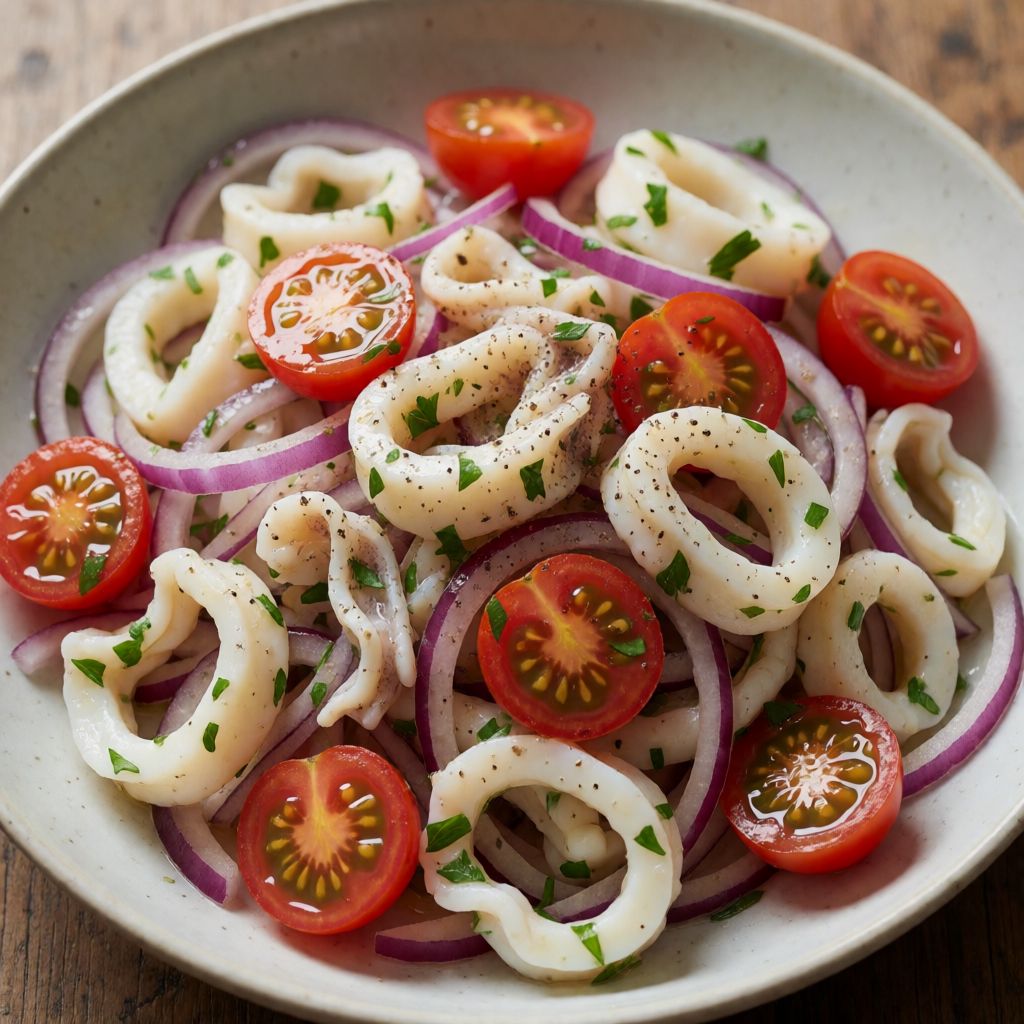
 AI photo
Cuttlefish Salad
A light, fresh salad of seared cuttlefish with cherry tomatoes, red onion and a lemon-olive oil dressing.
Labels are worked out automatically from the ingredients and can be wrong. Check the packaging if it matters to you.
Ingredients
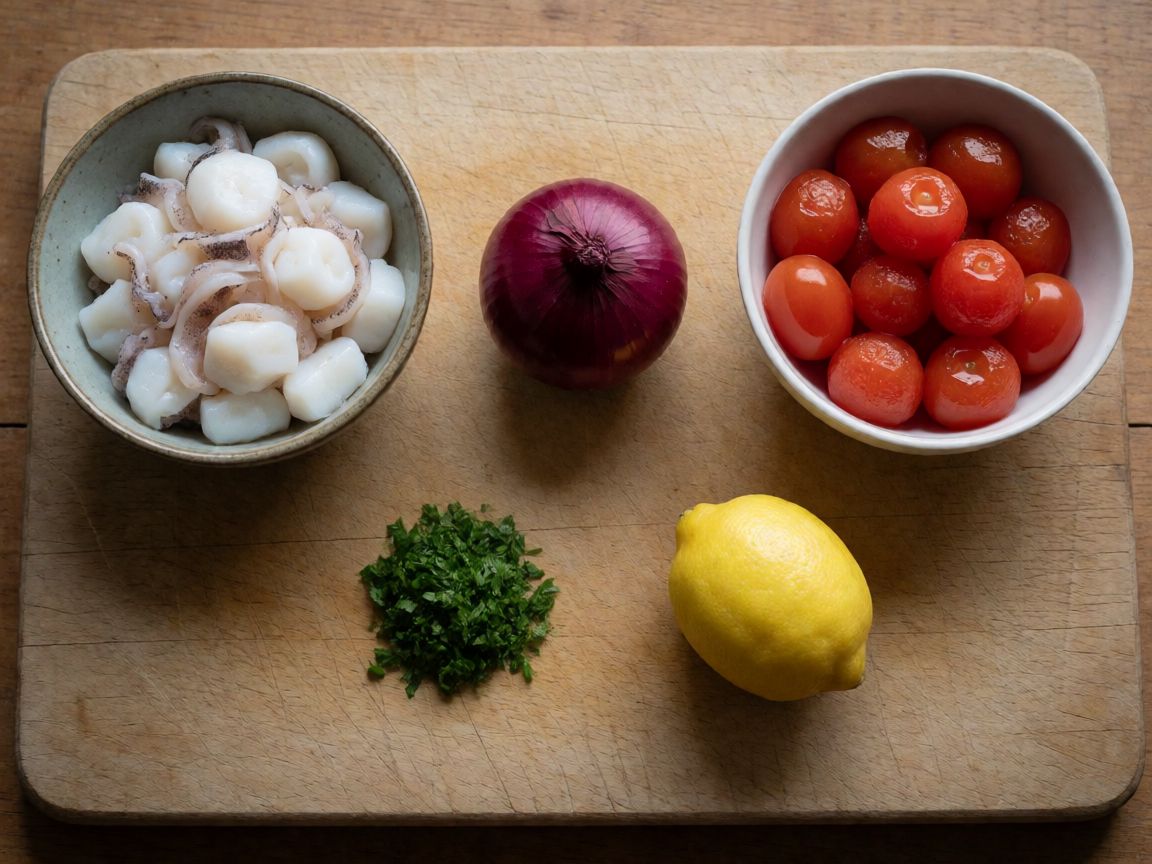






Steps
Sear the cuttlefish for a few minutes in a preheated non-stick frying pan or griddle pan. It is ready when the thickest part reaches 63°C.
5 minCut the cherry tomatoes and red onion into wedges.
5 minPut the seared cuttlefish and vegetables in a bowl, season with salt to taste and ground black pepper.
2 minDress with an emulsion of lemon juice and olive oil, then sprinkle with chopped parsley.
2 minServe immediately.
Cuttlefish salad is essentially a race against a single number: the moment the inside of the cuttlefish hits around 63°C. Everything else — onion, tomato, lemon — sits around waiting, almost decorative, while the real decision happens in the pan in under five minutes, for four people.
Some say squid and cuttlefish need a long simmer, like an old rubber band that has to be worked soft before it will stretch. No — that's the logic of connective tissue in red meat, where long slow heat melts collagen into gelatine. Cuttlefish has almost none of that. Its muscle is short and simple, already tender raw. Heat it gently for a short burst and it stays tender; push past that narrow window and the same proteins that were relaxed suddenly clamp down, wring out their own water, and what you get is an eraser with a sea smell. There's no rescue for overcooked cuttlefish — no simmer brings it back, because you've already pushed it past the stage simmering would help.
So the whole dish organizes itself around protecting that few seconds. You sear hard and briefly rather than low and long, you salt after cooking not before — salt pulls water out of raw flesh and that water steams instead of searing — and once it's dressed with lemon and oil you eat it straight away, before the acid and salt start drawing juice out of the tomato and the crunch out of the onion.
Cuttlefish — small ones, as the recipe asks, because size here is physics, not aesthetics: a thin piece crosses from raw to overdone in a breath, and a thick one gives you a dangerous spread between a cold centre and a rubbery edge. If you can't get cuttlefish, squid works on the identical principle — same short-fibred mantle, same narrow heat window, same crime if you overcook it. A firm white fish fillet won't do; different muscle structure, different rules, and you'd just be guessing with someone else's recipe.
The pan: a non-stick frying pan or a ridged griddle, because on a domestic hob you're not getting the fierce, even blast of a professional flattop or a kazan over open flame — you're working with a surface that heats unevenly and cools the moment cold cuttlefish hits it. Preheat it properly; the test is sensory, not timed — the pan should shimmer, and the cuttlefish should hiss the instant it lands, not sit there quietly weeping. If it weeps, the pan wasn't hot enough, and you'll steam rather than sear — and steamed cuttlefish, even briefly, is already heading toward the eraser end of the scale.
Red onion earns its place by being milder than white or yellow — less of the sulphur sting raw onion usually brings — and by holding its wedge shape, so you get a crisp interruption between the softer cuttlefish and the juicy tomato. Cherry tomatoes rather than a big tomato: in a British kitchen that's not just taste, it's reliability. A greenhouse-grown cherry tomato holds sugar and acidity through the year better than a large tomato out of season, which from October to May is usually watery and flavourless.
Olive oil and lemon here aren't dressing in the bland sense — the oil is the flavour, not a neutral carrier, so don't reach for anything odourless. If you substitute, look for an oil that actually tastes of something and can stand next to citrus without vanishing — a good rapeseed oil, if that's what's in the cupboard, does more for this salad than a flavourless vegetable oil ever would. One tablespoon for four people tells you it isn't meant to coat, only to carry the acid and bind it to the surface of the seafood.
Salt and pepper go on after the sear, for the reason already given — salt before cooking draws moisture out by osmosis, and that moisture then sits between the cuttlefish and the hot metal, steaming it instead of searing it. Parsley goes on last and raw, because its aroma is volatile — heat or time just lets it evaporate before it ever reaches a fork.
Patience here isn't about waiting it out — it's about not touching the cuttlefish while it sears, not stirring, not flipping three times out of nerves. And once it's dressed, patience runs out the other way: eat it immediately, because lemon and salt start pulling water out of the tomato and onion within minutes, and the clean crunch this whole salad depends on ends up as a pool at the bottom of the bowl.