
 AI photo
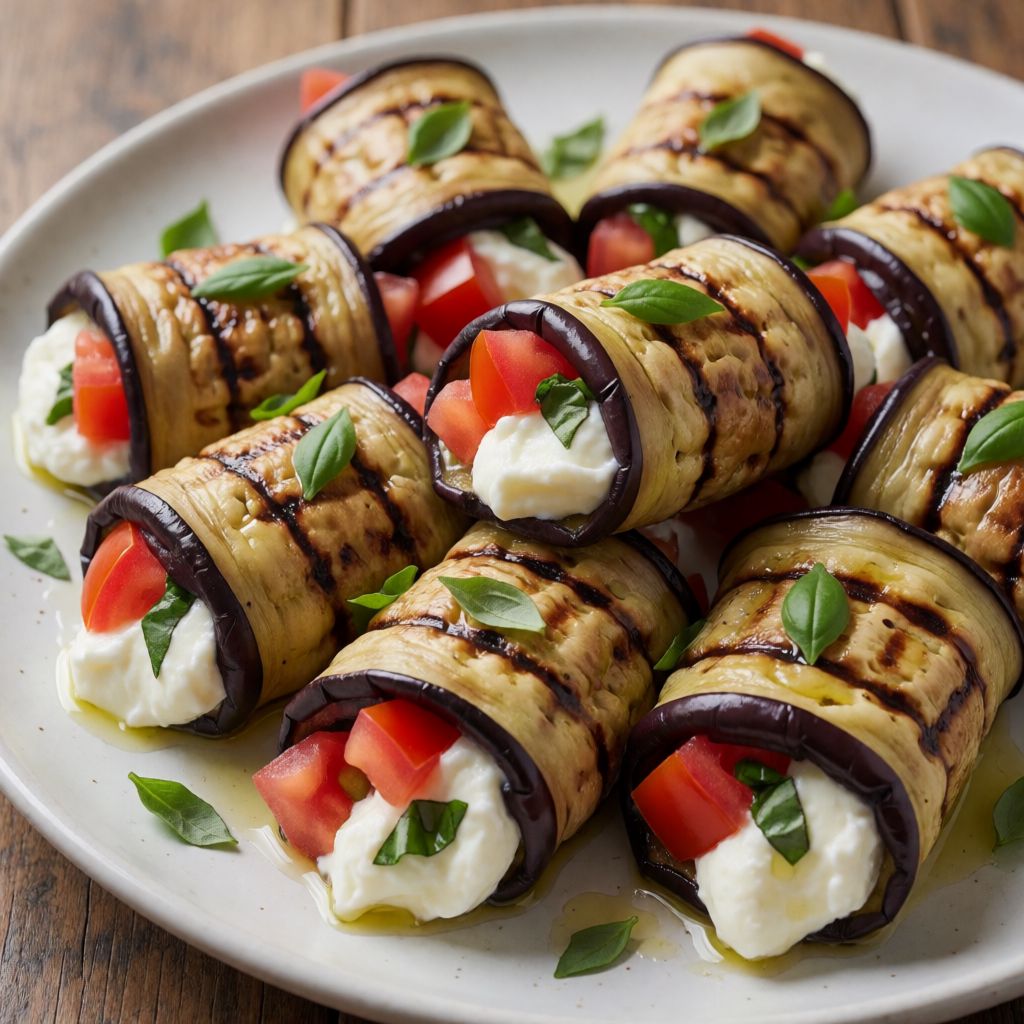
Aubergine Rolls with Cheese, Tomatoes and Basil
Grilled aubergine slices rolled with mozzarella, cherry tomatoes and basil, then baked until golden.
Labels are worked out automatically from the ingredients and can be wrong. Check the packaging if it matters to you.
Ingredients
- 1 pcs Aubergine
- 2 pcs Mozzarella
- 20 pcs Cherry tomatoes
- 1 bunch Basil
- 2 tbsp Olive oil for frying and drizzling
- 1 pinch Salt






Steps
Wash the aubergine, trim the ends and slice thinly, a few millimetres thick.
Place the slices in a colander, sprinkle with salt and leave for at least 30 minutes.
30 minHeat a generous amount of olive oil in a frying pan and fry the aubergine slices. Season with a pinch of salt, then transfer to a plate lined with paper towel.
Cut the cherry tomatoes into quarters.
Pat the mozzarella dry with paper towel and cut into cubes.
Wash and dry the basil leaves.
On each fried aubergine slice, place pieces of tomato, mozzarella and a basil leaf, roll up and secure with a cocktail stick.
Place the rolls in a baking dish.
Drizzle the rolls with olive oil and bake in an oven preheated to 200°C.
15 minServe the rolls hot.
This is a Mediterranean idea wearing a Sunday-dinner coat: fried aubergine slices rolled around mozzarella, tomato and basil, then baked just long enough for the cheese to soften. Think of it as a warm starter that got ambitious and became a side. Nothing exotic in the ingredients — the whole dish lives or dies on what you do to the aubergine before it ever meets the pan.
The decider is the salting. Aubergine flesh is mostly water held in a loose sponge of cells. Fry it straight from the chopping board and the oil doesn't fry the vegetable — it tries to replace the water, slice by slice, and you end up with something greasy and grey rather than browned. Thirty minutes in a colander with salt pulls a good part of that water out by osmosis, so what hits the oil is denser flesh that actually takes colour instead of drinking fat.
Some say the salt is there to "take out the bitterness." Not really, not with the aubergines sold in a UK supermarket — they're bred mild, bitterness isn't the problem it was fifty years ago. The salt's real job now is drainage, and that's reason enough to do it.
The second thing that decides the dish is thickness and heat together. Slice too thick and the roll won't bend without cracking; slice thin and fry in oil hot enough that it hisses on contact, and you get a slice pliable enough to roll like a bandage, cooked through without turning to mush. A cold pan is the enemy here — it's the same sponge problem as the salting, just happening a second time, with oil instead of water.
Aubergine: look for one that's heavy for its size, skin tight and glossy with no give when you press a thumb into it. A light, slightly wrinkled one has already lost moisture to storage and will behave unpredictably in the colander — sometimes the salting won't do enough work, sometimes the slices fall apart from frying. One medium aubergine, sliced thin, gives you enough for about eight to ten rolls — plenty for four as a side, less if everyone decides it's actually the main event, which happens.
Mozzarella: use the kind that sits in its own whey, a ball, not the pre-shredded bags meant for pizza — those are dried out on purpose so they don't weep in the oven, and here you want the opposite, a cheese that still has some softness to give when it meets heat. Pat it properly dry before cubing; wet mozzarella inside a hot roll means a small flood of whey pooling in the baking dish instead of cheese melting where you want it. If mozzarella isn't to hand, any mild, fresh, soft cheese that melts gently rather than turning rubbery will do the job — a soft goat's cheese works, though it brings its own tang along with it.
Cherry tomatoes: their point is sweetness and a bit of acid cutting through the fried oil and the cheese. Quartering rather than slicing keeps the pieces from sliding out when you roll. Any ripe tomato cut small does the same work — cherry tomatoes just happen to be reliably sweet year-round, which a big tomato in a British February often isn't.
Basil: tear it, don't chop it with a knife if you can help it — bruised leaf edges blacken faster in the oven and taste faintly of hay rather than basil. If your basil has gone leggy and pale on the windowsill, that's not a basil problem, that's a light problem, and no recipe fixes it; buy a fresher bunch.
Olive oil: you need two different jobs from it here, and it's worth separating them. For frying, any oil with a high enough smoke point and no strong flavour of its own will do — a plain olive oil, sunflower, even a mild vegetable oil, since the frying oil's job is heat transfer, not flavour. Save the extra virgin, the one with actual character, for the drizzle before baking, where it sits on top and you taste it directly rather than through a slice of fried flesh.
At 200°C the oven isn't cooking the aubergine — that already happened in the pan. It's there purely to soften the mozzarella and let the oil and tomato juice run together a little, which is a short job, closer to a quarter of an hour than a roast dinner's worth of patience. Watch for the cheese losing its sharp edges and starting to slump rather than for a clock. The patience that matters here already happened earlier, in the colander, while the salt did its quiet work and you did something else entirely.