
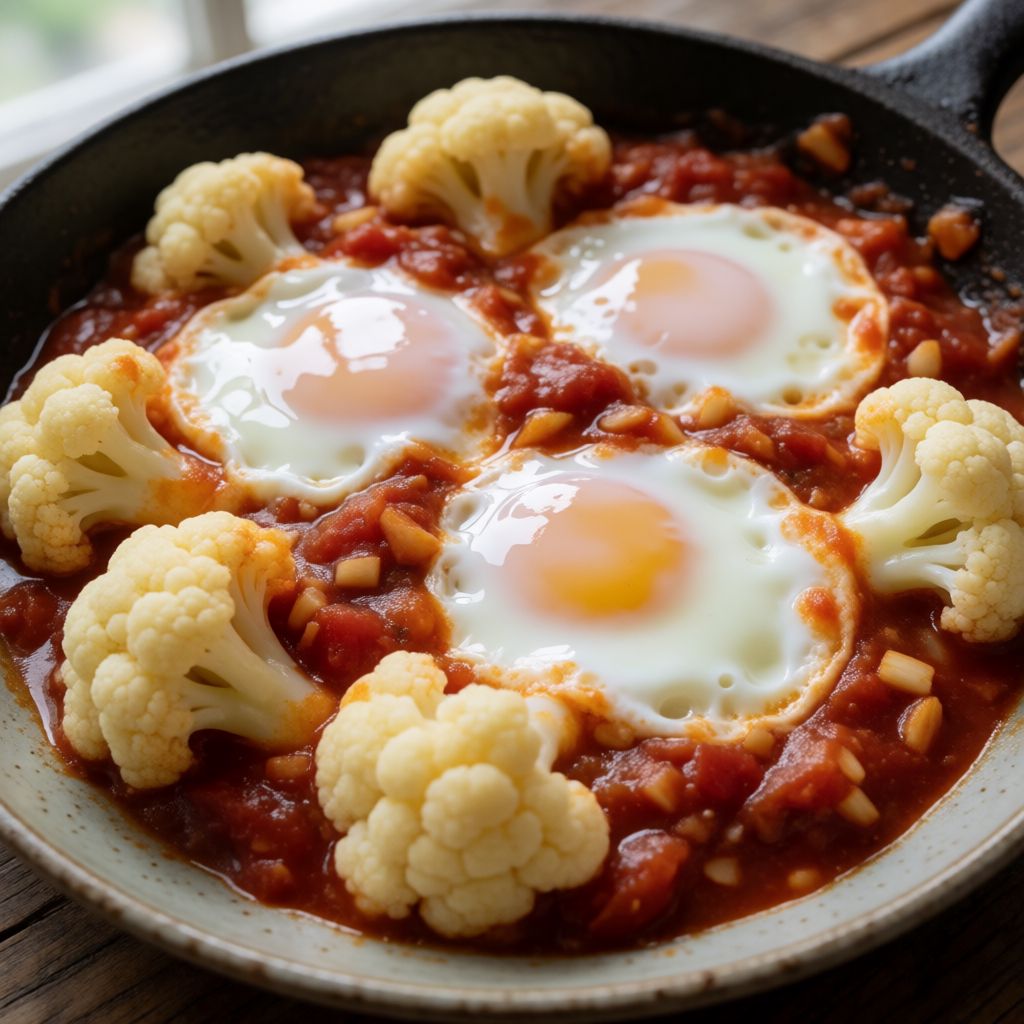
 AI photo
Eggs with Cauliflower
A simple skillet dish of cauliflower simmered in a tomato sauce with eggs poached on top.
Labels are worked out automatically from the ingredients and can be wrong. Check the packaging if it matters to you.
Ingredients
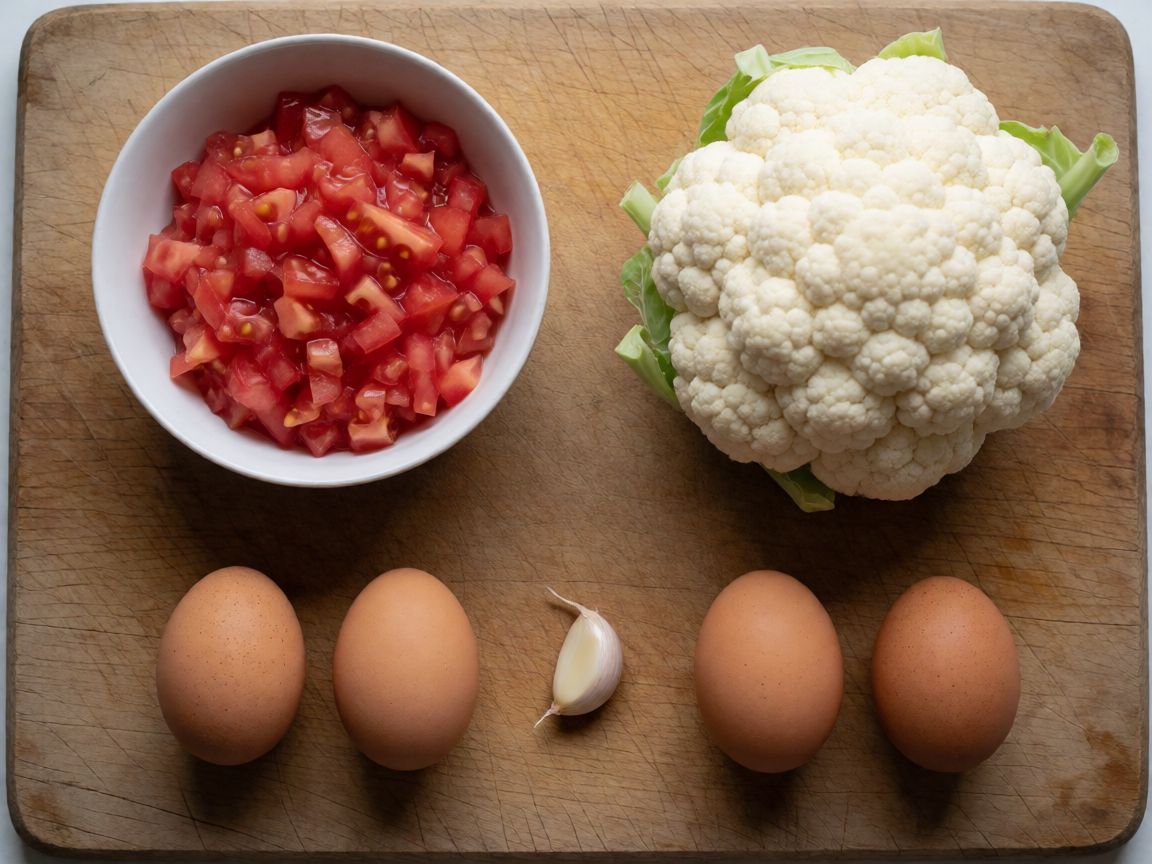
- 250 g Tinned chopped tomatoes
- 1 pcs Cauliflower
- 4 pcs Eggs
- 1 clove Garlic
- 4 tbsp Olive oil
- Salt to taste
- Black pepper to taste







Steps
Clean the cauliflower, removing the outer leaves and the hard part of the stalk. Break it into florets.
Put the florets in a pot of water, add salt and bring to the boil.
Boil for about 7–8 minutes, then drain in a colander.
8 minIn a frying pan, fry a garlic clove in a little olive oil.
Add the tinned chopped tomatoes and mash them with a spoon until smooth.
Cook the sauce over low heat until it thickens slightly.
Add the boiled cauliflower to the sauce, adding a spoonful of the cooking water if needed.
Season with salt and black pepper to taste.
Crack the eggs directly into the middle of the cauliflower, on top of the sauce, and cook everything together until the eggs are fully set.
Serve the dish hot.
This is the vegetable end of the shakshuka family — eggs set into a reduced tomato sauce, with cauliflower doing the job peppers or aubergine usually do elsewhere. Four eggs, one tin of tomatoes, a head of cauliflower: it looks modest, and it is, but two decisions decide whether it's a dish or a watery mess with eggs floating in it.
First decision: the cauliflower is boiled separately, briefly, before it ever meets the sauce. Some say — no, boil it till it's properly soft, otherwise it's raw in the middle. Don't. A floret that's gone soft in water goes to mush the moment it sits in hot sauce for another few minutes, and worse, the longer brassicas cook, the more sulphur compound they throw off — that's the cabbage smell everyone blames on cauliflower itself, when really it's blaming the cook. Seven, eight minutes of boiling is there to get the stalk from snapping to bending, no further. The sauce finishes the job gently, and gently is the only way it won't smell of a school dinner hall.
Second decision: the sauce has to lose its water before the eggs go in. Tinned tomatoes come wet by design — that's how they survive the tin — and if you tip the eggs in while it's still loose, the whites won't hold a shape, they'll run thin across the pan and cook ragged at the edges while the middle stays glassy. Mash the tomatoes, let them sit over low heat till the spoon leaves a trail instead of a puddle, and only then make room for the eggs. That's the whole trick of this dish: a sauce thick enough to hold an egg the way a plate holds an egg.
Tinned chopped tomatoes are not a compromise, they're the honest choice. A British kitchen in February has no ripe tomato worth the name, and a tin picked and processed at the height of season beats a pale supermarket tomato nine months of the year — that's just arithmetic, not nostalgia. If you want to upgrade, use tinned whole plum tomatoes and crush them yourself; the texture holds a bit more body. What you should not reach for is fresh tomatoes out of season — all water, no sugar, and your sauce will never thicken, only evaporate.
Cauliflower: buy it heavy for its size, white or faintly cream, florets closed tight with no brown freckling and no give when you press the head. Brown spots mean it's been sitting since last week and starting to break down on its own — you don't want it doing that work before you do. If cauliflower isn't to hand, broccoli does the same job by the same logic — boil briefly, finish in the sauce — though it brings its own flavour, greener and more assertive, so taste before you add extra pepper.
Eggs want to be fresh enough that the white sits up around the yolk rather than spreading flat the second it hits the pan — crack one onto a saucer first if you're unsure, and judge by how far the white travels. Stale eggs aren't dangerous here, they're just disobedient; they'll thin out and merge into the sauce instead of holding their own shape, and you'll end up with tomato-egg soup instead of eggs nested in sauce.
Garlic, one clove, fried only until the oil smells of it — past that point it turns bitter, and bitterness in a tomato sauce reads as burnt, not savoury. The oil is olive oil for a reason beyond habit: it carries the garlic's aroma and sits well against tomato's acidity, giving the sauce a rounded edge rather than a sharp one. If you've only got a neutral oil — sunflower, rapeseed, anything with no smell of its own — it will still work, you'll just lose that backdrop; make it up with a little extra black pepper.
You don't have a kazan, you have a wide frying pan, and that changes one thing: heat is strongest where the pan touches the hob, which in a domestic kitchen is usually dead centre, so eggs cracked at the edge of the pan will lag behind the ones in the middle. Nestle them into slight hollows pressed into the cauliflower and sauce so they don't slide to the cooler rim. A plate set over the pan does the job of a lid well enough — it traps the steam that sets the tops of the whites without you having to flip or stir anything, and stirring is exactly what you must not do once the eggs are in. Patience here isn't poetic, it's structural: disturb the eggs and you get scrambled eggs in tomato sauce, which is a different, lesser dish.