
 AI photo
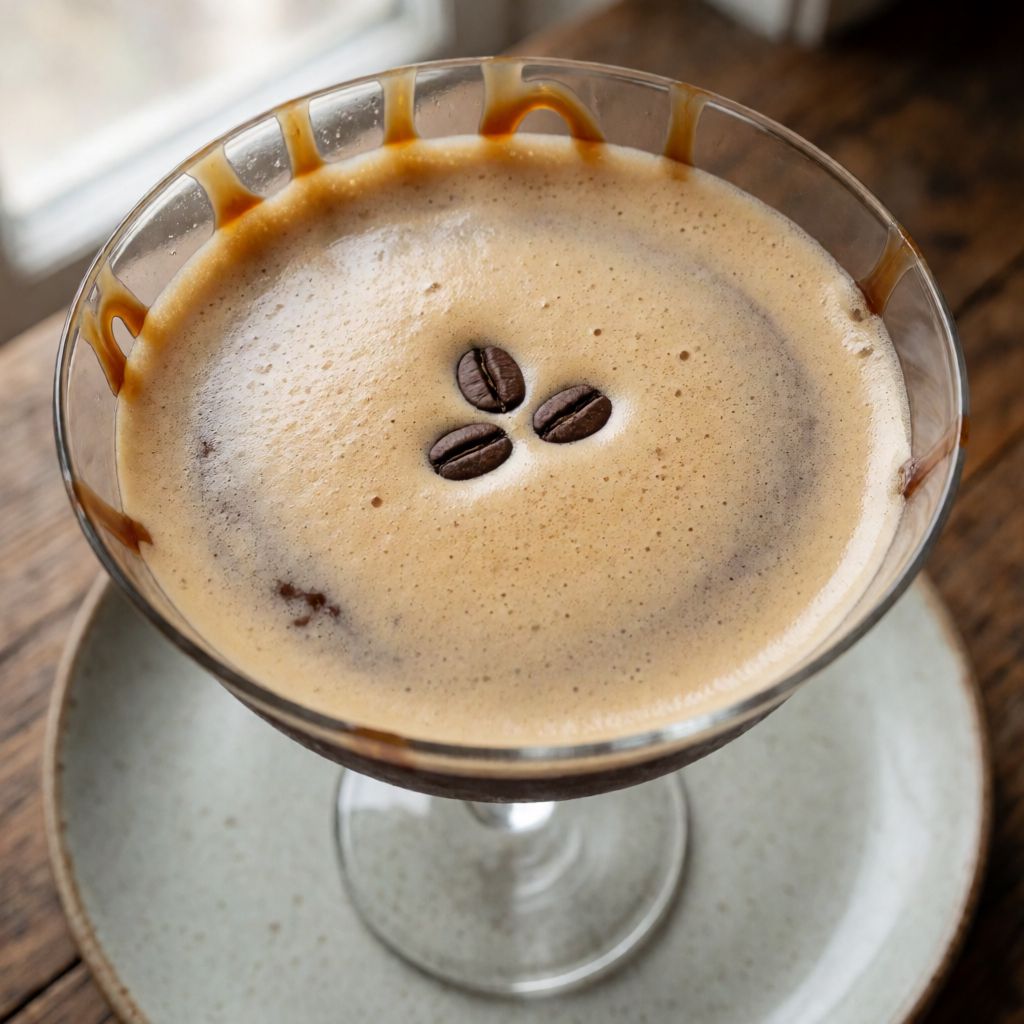
Espresso Martini with Salted Caramel
A classic Espresso Martini finished with a salted caramel rim for a sweet, bitter kick.
Labels are worked out automatically from the ingredients and can be wrong. Check the packaging if it matters to you.
Ingredients
- 2 pcs Espresso shots
- 60 ml Vodka
- 30 ml Kahlúa
- pcs Ice cubes to taste, for the shaker
- 100 ml Double cream
- 50 g Caster sugar
- 0.5 tsp Butter
- 1 pinch Salt plus a little extra for garnish








Steps
Slowly melt the sugar in a saucepan, quickly stir in the butter, then add the double cream and simmer gently for 10–15 minutes until the caramel is thick enough to hold on the rim of a glass.
12 minRemove the pan from the heat and let the caramel rest briefly.
Stir the caramel, dip the rims of the martini glasses into it, twist so the top edge is coated in a thin layer of caramel, then sprinkle with flaked salt.
Pour the espresso, vodka and Kahlúa into a shaker or a lidded jar.
Add ice and shake well, then strain into the chilled martini glasses, leaving the ice behind, and serve immediately.
This is two small operations stitched together, not one recipe: a dry caramel you make like a cook, and a shaken coffee cocktail you make like a bartender. The caramel's only job is to sit on the rim and hold — it is garnish with teeth. The shake's only job is to force air into espresso oils until they turn into a stable brown foam. Everything that can go wrong, goes wrong at one of those two points, nowhere else.
The sugar stage is the one people rush and ruin. Melting dry sugar means the crystals dissolve from heat alone, with no water to help them along — and if you stir too soon, before enough of it has gone liquid, you are dragging dry crystals through wet syrup, and that seeds the whole pan into a gritty, grainy mess that never goes smooth again. Some say stir caramel constantly from the start — no, because that is exactly how you get sugar that crystallises back into sand instead of melting into glass. Let it melt mostly on its own, then move fast only when the butter goes in, because hot sugar plus fat foams up hard and fast, and a thin domestic saucepan with high sides will save you a burn here.
Espresso: use it freshly pulled, still faintly warm, with the crema intact on top. That crema is what gives the final foam its first push — espresso made hours earlier, or instant coffee dissolved in hot water, has none of the oils that whip into foam, so the drink will taste right but look flat and thin on top. If you have no machine, a strong stovetop moka pot gets you close enough; filter coffee, however good, won't do this particular job.
Vodka here is a blank canvas, not a flavour — its only criterion is that it smells of nothing. Anything neutral and clean works; an expensive vodka buys you nothing in a shaken drink this loaded with coffee and sugar, so don't spend there. Kahlúa supplies sweetness, body and a second layer of coffee flavour, and the viscosity in it helps the foam hold its shape a little longer in the glass. Any coffee liqueur with real weight to it — Tia Maria, a supermarket own-brand coffee liqueur — does the same job; thin, watery ones won't carry the foam as well.
Double cream is the only cream rich enough in fat to survive hitting hot sugar without curdling or splitting — that high fat content is exactly what stops the caramel turning grainy or watery when it cools. Single cream, lower in fat, risks separating when it meets heat this direct; if double cream is what's missing, go up in fat, not down. Caster sugar melts evenly because the crystals are fine and small — granulated sugar, with its larger grains, tends to brown and even scorch on the outside before the centre of each grain has melted, which is a direct route to bitter, burnt caramel rather than amber caramel.
Butter does two things: it stops the caramel from setting bone-hard once it cools on the rim, and it gives the sauce its shine. Use unsalted — you're adding salt separately and deliberately, and salted butter makes that measurement a guess rather than a control. The pinch of salt in the caramel, and the extra flaked on the rim, is not decoration for its own sake: salt genuinely mutes sweetness on the tongue, which is why salted caramel outlasted being a trend — it solves a real problem with sugar-heavy sauces, not an invented one.
Ice is doing more than chilling. As it's shaken hard against the liquid, a little of it melts and that extra water is part of what helps whip the espresso oils into foam — which is also why you discard it afterward rather than serving the drink over ice; its job was done in the shaker, not in the glass. If you have no proper cocktail shaker, a clean, lidded jar does exactly the same thing — the mechanism needs a sealed vessel and your own shoulder, nothing branded.