
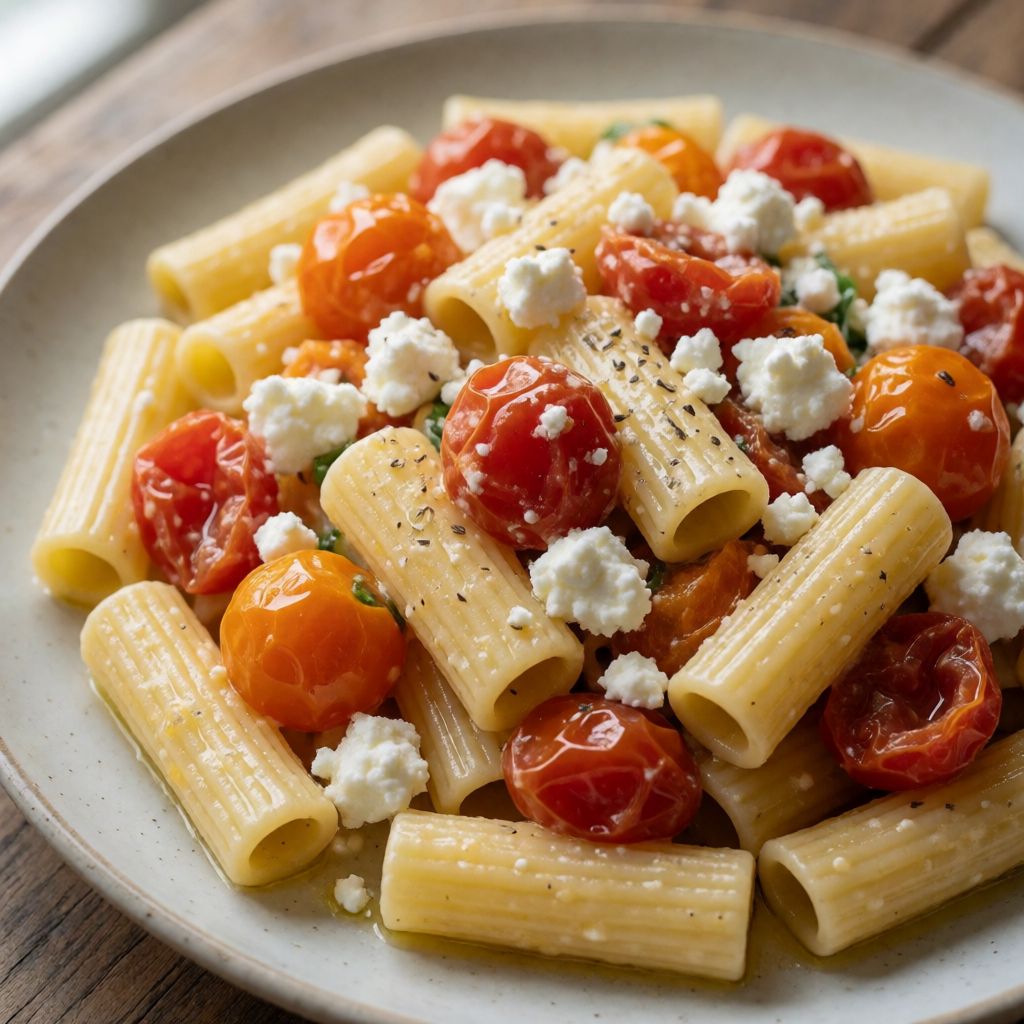
 AI photo
Pasta with Feta, Cherry Tomatoes and Rocket
A simple baked feta pasta with roasted cherry tomatoes, olive oil and peppery rocket.
Labels are worked out automatically from the ingredients and can be wrong. Check the packaging if it matters to you.
Ingredients





Steps
Bring a large pot of unsalted water to the boil.
In a large baking dish, place the feta block in the centre and add the whole, washed and dried cherry tomatoes around it.
Drizzle everything with a thin stream of olive oil and bake at 200°C for about 25 minutes.
25 minWhile the dish is baking, cook the rigatoni in the boiling water.
Remove the cheese and tomatoes from the oven — they should be golden and creamy.
Gently mash the cheese and tomatoes together with a spoon to form the base of the sauce.
Drain the pasta and add it to the sauce, stirring until well combined (add a spoonful of pasta water if needed).
Add fresh rocket and serve immediately.
What was changed
Rigatoni to match the tube-shaped pasta used in the original recipe.
This isn't a recipe with a century behind it — it's recent, invented, and it works because it asks almost nothing of the cook. You put a block of cheese and a pile of tomatoes in a dish, into the oven, and go put the pasta water on. The oven does the cooking that a saucepan usually does while you stand over the hob stirring. Feeds four, generously, as a Sunday-night dinner where nobody wants to be chained to the stove.
What decides if it comes together is whether the feta stays in one piece. Cut it into cubes first and each cube dries at the edges before the inside softens — too much surface exposed to dry oven air. Leave it whole, and only the outside toasts while the inside turns from firm and crumbly to soft enough to fall apart under a spoon. That's the sauce, right there — not made separately, just released.
The tomatoes do a different job. At 200°C their skins split, the water inside turns to steam and pushes out, and what's left behind is juice and sugar, concentrated rather than watery. That juice meets the oil already sitting in the dish and the softened cheese, and together — mashed, not blended — that's your sauce. No cream, no stock, no reduction on the hob. The tomato water and the oil are doing the whole job between them.
Some people expect feta to melt the way mozzarella does, pulling into strings. It won't — feta is a brined cheese, firmer protein, lower moisture, set with acid rather than rennet alone. It softens; it doesn't liquefy. If you're hoping for that stretchy first bite, you've misjudged the cheese, not the oven.
Feta itself: buy the block sitting in brine, not the pre-crumbled tub sold for salads. The tub version is already drying out — sold in air, with nothing holding its moisture — and it turns chalky in the oven instead of soft. Sheep's milk feta, the Greek kind with the protected name, carries more fat and holds together better than the cheaper cow's-milk versions sold simply as 'feta-style'; either works, but the cheaper one dries faster, so pull it the moment it's gone soft, not past it. If feta isn't to be had, a similarly firm, salty, brined cheese — a mild halloumi, say, without the squeak that comes from frying it — behaves the same way under heat, though the taste shifts.
Cherry tomatoes need some sugar in them to matter here, which usually means ones still on the vine rather than loose in a bag that's been sitting on a shelf since before it ripened. Out-of-season supermarket cherries are mostly water and acid, with none of the sweetness that's meant to balance the salt of the cheese — if that's all there is, a small pinch of sugar scattered over them before baking does what the tomato can't do for itself.
Olive oil's only job is to carry flavour and give the tomato juice and the cheese something to bind into, rather than sitting as two separate liquids in the dish. Use any oil with no smell of its own that can sit at 200°C without turning bitter — a middling olive oil does fine; save the good bottle for drizzling raw at the end if you want it. Don't leave it out thinking you're saving fat: without it the sauce splits, oily cheese on one side and watery tomato on the other, instead of coming together into one thing.
Rigatoni's ridges and hollow tube aren't there for looks — they hold a loose, broken sauce like this one on the surface and inside it, rather than letting it slide off the way it would off spaghetti. Any short pasta with ridges or a rough surface, penne or fusilli, does the same job. Smooth pasta leaves half the sauce in the bowl.
The pasta water you save before draining isn't a backup plan, it's starch and salt dissolved in hot water, and it's what lets the sauce cling to the pasta rather than pool at the bottom of the bowl. A spoonful loosens the mashed cheese and tomato just enough to coat everything, without watering down the taste the way plain water would.
Rocket goes in last, off the heat, because the whole point of it is the raw pepperiness — cook it and you've lost exactly what you added it for. The residual heat of the pasta and sauce wilts it just enough to soften without stewing it into something limp and spinach-like. If there's no rocket, baby spinach does something close, though milder — use a bit more than you would rocket, since it doesn't carry the same bite.
One honest note for a kitchen here: most domestic ovens in the UK run fan-assisted, and a fan oven at 200°C cooks faster and drier than a conventional one set to the same number. Check the tomatoes nearer 20 minutes than 25 if that's what you've got, looking for split skins just starting to blister, not waiting for a timer to end. And resist opening the door every few minutes to peer in — each time you do, the oven loses heat and the whole process slows, which is the opposite of what checking was meant to achieve. Patience, here, means leaving it shut.